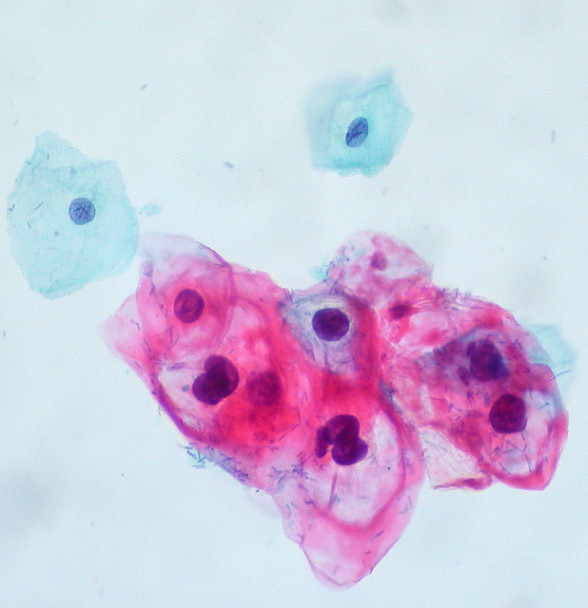
Roughly 80% of women will get human papillomavirus (HPV) in their lifetime. For many, especially those who have gotten an HPV vaccine, the virus will go away on its own within two years. But for others, the infection could lead to cervical cancer. In fact, more than 90% of cervical cancer cases are caused by an HPV infection.
Despite these figures, many women don’t get tested for HPV. CDC guidelines say that women should be tested regularly from ages 21-65 — yet only 1 in 4 women of screening age get screened. Not only do many women struggle to find access to this exam, but many patients find the method for HPV screening — most commonly known as a pap test or pap smear — to be uncomfortable and invasive.
On Thursday, a company seeking to address this problem raised $10 million in seed funding. The San Francisco-based company, named Teal Health, is on track to commercialize the first-ever at-home cervical cancer test.


Esperion Sets Its Sights on New Areas While Maintaining Commitment to Cardiovascular Health
In a recent interview, Esperion president and CEO, Sheldon Koenig talks about the reality of statin intolerance and his company’s expansion into new diseases
Teal’s latest venture capital round takes its total funding to date to $23 million. The round was led by Emerson Collective and Forerunner, with participation from Labcorp, Serena Ventures and Metrodora.
Teal, founded in 2020, has developed an at-home screening kit and telehealth platform to increase the rate of screening engagement and adherence to follow-up care.
Once a user has requested an at-home collection kit from Teal, their order is reviewed to ensure eligibility. After this, they have a short visit with a Teal provider, who prescribes them the kit and explains the process of collecting at home. Then Teal ships a kit to the patient’s home.
Using Teal’s screening device, called the Teal Wand, the patient then self-collects a cervical sample, seals the sample, and sends it to the lab. Teal’s support team is available to answer any questions patients may have along the way, pointed out Kara Egan, Teal’s CEO and founder.


Enhanced Direct Enrollment: Georgia Access and the Power of Partnership
Across the nation, state-based health insurance exchanges are searching for ways to better serve their communities while making enrollment easier, more personal, and more accessible for everyone.
Once the sample is processed by the lab, Teal’s clinicians review the results, which are then shared with the patient via their secure Teal account.
If a patient receives a positive result, they can connect virtually with a Teal provider to discuss next steps — and if additional follow-up care is needed, Teal will help coordinate the referral, Egan explained.
Teal submitted its test to the FDA for approval in October. The test was granted breakthrough device designation by the FDA, which means its review is prioritized. Egan said Teal hopes to have FDA approval sometime later this year.
If approved, Teal anticipates the test being covered by most major insurers.
“The USPSTF [U.S. Preventive Services Task Force] has issued cervical cancer screening an ‘A’ grade, meaning insurers are required to cover it without copay. Teal wants to ensure the Teal Wand is accessible and inexpensive for any woman who prefers to screen at home. We are working to get in-network with all major insurance providers, and cash pay will also be an option,” Egan stated.
Teal plans to acquire customers through direct marketing — and will also pursue partnerships to help reach a broader audience through trust channels like providers, employers and payers, she added.
“By removing barriers like time, cost and limited access to gynecological care — especially in rural areas and underserved communities — we make it easier for women to stay on top of critical health screenings,” Egan declared.
Photo: Flickr user Ed Uthman