
Note: This is the second article of a three-part series.
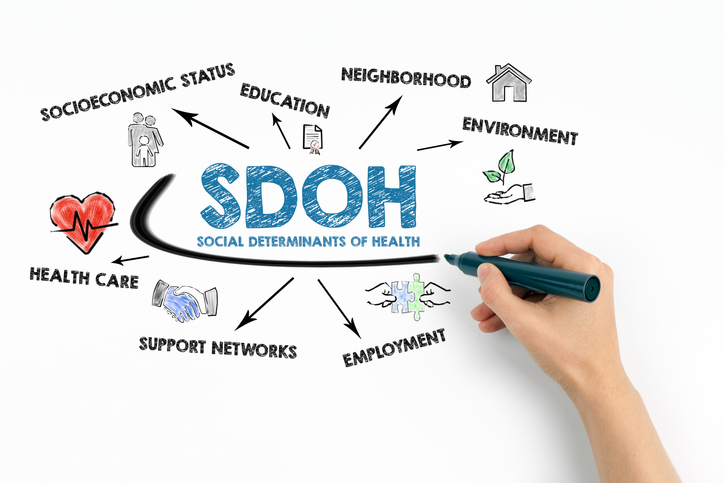
In order to improve healthcare generally and clinical trial recruitment specifically, it is critical to understand the far-reaching consequences that non-medical factors contribute to an individual’s health. Geography, education, racial disparities, ethnicity, income, and age can all influence health outcomes. In oncology, these social determinants of health (SDOH) are believed by some analysts to account for a significant number of cancer occurrences. They have a direct influence on cancer risks, the likelihood of survival, effectiveness of early intervention and health equity.
The digitization of data has made it easier to aggregate and analyze patient data and connect the health outcomes for different people based on their zip codes and other related data. In a webinar presented by MedCity News and PurpleLabⓇ, Steve Emrick, PurpleLab Senior Vice President of Clinical Informatics Solutions and HealthNexus(™), made this observation:
“We know that based on your zip code in this country, you might be prone to different types of diseases like asthma or cancer or other things versus other zip codes. Because we’ve got more data today, it’s easier to do these analyses than it was before. But then the question is, what do you do with all that data and how are you going to incentivize all the different stakeholders to change the paradigm from living in a country where your zip code determines your health outcomes? That’s a big challenge.”
So how do socio-economic barriers affect people with non-small cell lung cancer (NSCLC) and what can be done to improve their outcomes? There is a strong correlation between socio-economic adversity and higher lung cancer rates, later-stage diagnoses and poor survival outcomes.
To ensure the best outcomes for cancer patients, early detection is critical. The quality of schools in a zip code and income are directly connected to whether a person is diagnosed at an early stage or advanced stage. People living in rural areas typically have limited access to facilities that offer low-dose computed tomography scans – medical imaging tests that use a lower amount of radiation than a standard CT scan. They are used to screen for lung cancer in high-risk individuals, such as current or former smokers. Limited financial resources and access to transportation can also hinder timely screening and diagnosis. Disparities in testing may mean a lack of access to molecular genetic testing to spot potential mutations such as Epidermal Growth Factor Receptor (EGFR) that could drive treatment decisions and access to targeted therapies.
Medicaid recipients, people who are uninsured or underinsured are also vulnerable because they tend to have less access to care and have a delayed start for treatment. Lowering the age people are screened for lung cancer is warranted, especially in light of data that suggests racial and ethnic minorities are frequently diagnosed at younger ages for NSCLC. Yet non-white and Hispanic patients are less likely to undergo essential imaging such as PET and CT scans at the time of diagnosis.
SDOH factors such as having to travel a long distance to medical facilities, spending more than 30% of their income on housing, and having lower broadband Internet access, can have a direct impact on when treatment for their condition begins. The greater the social vulnerability, the less likely they are to start treatment within 30 days of diagnosis. For individuals diagnosed with NSCLC, each additional week from diagnosis to treatment initiation is tied to an increased mortality risk.
Where NSCLC patients live also informs access to treatment options. Living in an area, especially away from a metropolitan area, where there’s either a primary care shortage or physicians are not taking new patients may lead to increased likelihood of being treated with radiation therapy, even when surgery is the standard of care for resectable NSCLC.
The financial commitment for cancer patients creates an economic health-related social need. This designation can prevent a patient’s ability to access prescribed treatments. The risk is that Medicaid beneficiaries are shut off from emerging, promising therapies.
Disparities in the quality of surgical care could lead patients to receive fewer lymph node resections and fewer minimally invasive procedures. They may be less likely to be operated on by a thoracic surgeon.

Source: CDC
The Social Vulnerability Index refers to the demographic and socioeconomic factors (such as poverty, lack of access to transportation, and crowded housing) that adversely affect communities that encounter hazards and other community-level stressors, according to the CDC’s website. Patients in the highest segment of the index initiate surgery at a median of 34 days after diagnosis. That figure is double those in the lowest quartile of the Index (17%).
Housing stability is also an important consideration in the context of SDOH. A lack of stable housing or transportation options create logistical challenges to keeping medical appointments or impacting the start of treatment. It can also impact medication or care plan adherence, treatment effectiveness and patient well-being.
All of these SDOH factors can make the already complicated task of clinical trial recruitment for NSCLC patients significantly more difficult, even with substantial advancements in cancer treatment. Historical mistrust — stemming from examples such as the notorious 1932-1972 Tuskegee studies, which denied Black prisoners treatment for syphilis — also plays a large role.
This mistrust ties into health literacy, another aspect of SDOH. Lower health literacy amplifies challenges in understanding healthcare and accessing timely care. Along with some of the factors referenced earlier in the article, it can limit access to information to support medical decisions. It can lead to a poor understanding of screening benefits, treatment options and clinical trials, leading to missed opportunities for early intervention and optimal care, therefore increasing health disparities.
Healthcare providers and policy makers need real-world data (RWD) platforms that can collect and analyze SDOH data to identify specific barriers and vulnerable patient populations, which can enable them to develop targeted interventions to improve health equity. The social responsibility to improve health equity is obvious. But life science companies could transform so many lives by using RWD platforms to improve outcomes for NSCLC patients by developing a better understanding of the hurdles facing underserved patients and then working with healthcare organizations and regional governments to address them.
Photo: tumsasedgars, Getty Images