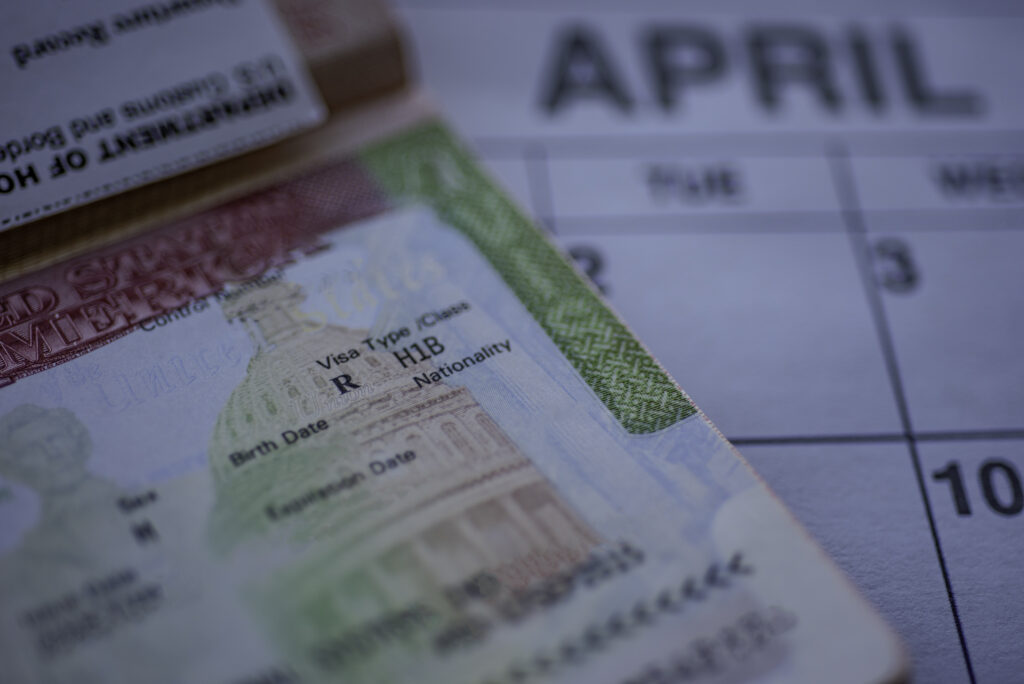
The Trump administration’s recent changes to the H-1B visa application process are causing concern among healthcare experts, with many worried that the plan could make the industry’s workforce crisis and care access gaps more severe.
Last month, the White House imposed a $100,000 fee on new H-1B visa petitions. Before, the fee typically ranged between $2,000 and $5,000, depending on the employer. This new fee applies only to new H-1B visa applicants, not current H1-B holders whose employers are seeking to renew their visas.
The H-1B program, established in 1990, was created to allow U.S. employers to temporarily hire foreign professionals in specialized fields like healthcare, technology and engineering to fill workforce gaps — but the White House argues that the program has “been deliberately exploited to replace, rather than supplement, American workers with lower-paid, lower-skilled labor.”

The Hidden Administrative Tasks Draining Small Practices
Small practices play a critical role in healthcare delivery, but they cannot continue to absorb ever-increasing administrative demands without consequences.
In addition to the fee, the White House’s plan also aims to prioritize international workers with higher skills. The administration is establishing a weighted lottery system that favors H-1B applicants with higher wages, saying this will protect domestic employees from wage competition as well as ensure that H-1B visas are used to fill roles that require highly skilled professionals.
While these changes are intended to curb abuse of the program, the blanket fee applies to all industries and has prompted legal concerns about the administration’s authority and its adherence to policymaking procedures. Multiple lawsuits have already been filed to contest the measure.
For instance, a coalition of healthcare employers, unions and religious groups filed a lawsuit to block the change on October 3, and a group of higher education organizations did the same on October 6.
The American Hospital Association has urged the Department of Homeland Security to make healthcare professionals exempt from the new H-1B visa changes, arguing that they would worsen staffing shortages and increase burnout, particularly in rural and underserved communities.

Beyond Analytics: How Sellers Dorsey is Hard-Coding Value into Medicaid Policy [Video]
How to turn analytics into actual policy outcomes.
Steep costs imposed on providers that can’t afford them
The U.S. healthcare system relies heavily on clinical workers from across the world, with data from the Census Bureau and Bureau of Labor and Statistics showing that the industry employs about 262,000 foreign-born physicians and about 500,000 foreign-born nurses, though the vast majority are not H-1B visa holders.
The nation is supplementing its clinical workforce with international workers at this scale out of dire necessity. According to the Health Resources and Services Administration’s most recent data, the U.S. is expected to have a shortfall of 187,130 full-time equivalent physicians by 2037, with rural areas experiencing the most severe gaps. For nurses, projections from the National Center for Health Workforce Analysis indicate a 6% nationwide shortage by 2037, rising to 13% in non-metro areas.
Most of the country’s foreign-born clinicians are not recipients of H-1B visas — with many of them holding green cards, using other temporary visas like J-1 or TN visas, or being naturalized as U.S. citizens. During the fiscal year 2024, only 8,492 of the approved 141,205 H-1B visa applications went to workers in the healthcare field, and another 8,445 of 258,190 the H-1B visas approved for renewals went to workers in this sector, according to the Department of Homeland Security.
Still, many providers still rely on H-1B workers to keep critical services running, noted Jimmy Lai, CEO of Oklahoma City-based Lai & Turner Law Firm.
Unless the Department of Homeland Security grants an exemption for healthcare providers, the new fee would expose these provider organizations to “seven- or even eight-figure annual liabilities,” Lai said.
“For community hospitals, clinics and mid-size practices, $100,000 per new hire is often prohibitive. These employers typically rely on H-1B clinicians to fill critical shortages,” he stated.
Another healthcare immigration attorney — John Dawson of Cincinnati-based law firm Musillo Unkenholt — agreed that very few healthcare providers will be able or willing to pay the new $100,000 fee per H-1B hire.
Instead, hospitals could be forced to freeze hiring, increase shifts for existing staff or rely more on costly travel nurses — or, in extreme cases, close departments or facilities, Dawson explained.
He finds some hope in the legal challenges underway to block the imposition of the new fee. The lawsuits are challenging whether the executive branch has the authority to institute the fee without approval from Congress, with plaintiffs arguing the change violates the Administrative Procedure Act.
Various institutions — including healthcare staffing firms, unions, higher education groups, nonprofits and religious organizations — have filed lawsuits, and Dawson thinks more legal challenges could be on the way, though many are waiting for clarification on exemptions.
“One important thing that we’re looking at is that the proclamation talks about the national interest exemption,” he remarked. “We still don’t have basic guidance from the government as to what that’s going to look like, but we’re hoping that there will be a number of healthcare-related occupations that are included on that exemption list that goes through.”
Until the White House clarifies which roles qualify for exemptions, hospitals and clinics could be forced to delay hiring or reduce services.
International clinicians stabilize U.S. providers
Healthcare providers rely on foreign-born clinicians not only to address workforce shortages, but also to fill experience gaps, pointed out Kara Murphy, president of healthcare staffing firm PRS Global. Her firm focuses on international recruiting and integration, primarily for Filipino nurses working in U.S. hospitals.
H-1B visas cover positions that require at least a bachelor’s degree, and in healthcare, workers receiving this visa are typically specialty nurses, physicians, medical laboratory scientists and physical/occupational therapists, Murphy explained. She said the hospitals that PRS Global works with usually hire international staff for areas like the intensive care units, emergency department and other departments that use floating staff to help with shortages.
Murphy noted that hospitals often need international hires to mentor new domestic graduates, explaining that having these experienced clinicians to lean on can help reduce burnout.
“For the hospitals [we work with], as they bring in international nurses, they actually become preceptors pretty quickly. That ends up supporting the new grads to increase retention,” Murphy explained.
Hospitals are facing high turnover rates among nurses who are recent graduates — with about 30% leaving during their first year — due to rising burnout and violence within hospital units, she added.
One Filipino nurse recruited through PRS Global — who spoke anonymously due the sensitive nature of current immigration issues — said she knows firsthand that rural hospitals will struggle to fill shifts if the pipeline of foreign-born workers diminishes.
At the hospital she works at in rural Missouri, about 30% of the nursing staff comes from overseas, she stated.
“Without international nurses, staffing shortages would get worse very quickly. That would lead to higher burnout among the remaining staff, potentially affecting patient safety and satisfaction,” she declared.
Potential innovation slowdown
In addition to having a negative impact on the nation’s clinical workforce, the new H1-B visa fee could also slow down the pace of innovation in the domestic healthcare sector.
About 65% of H-1B visa holders work in the tech sector, which often has significant overlap with the digital health, medical device and pharmaceutical industries. The majority of these H-1B workers hail from India.
Making it more difficult for foreigners to work in the tech sector could disrupt the speed of innovation in healthcare — including the development of new drugs, medical devices and healthcare AI tools — because a meaningful portion of the workforce driving this R&D is made up of immigrant talent, noted Sujay Saha. Twenty years ago, he came to the U.S. from India on a H-1B visa to work as an IT consultant, and he currently serves as president of Cortico-X, a business consulting firm.
“The U.S. is going to lose some of its edge, so to speak, in the healthcare tech and healthcare innovation space,” Saha remarked.
Down the road, U.S. companies may respond to the new fee by setting up satellite innovation centers abroad if costs become too prohibitive to bring international workers to the U.S., he added.
Until the Trump administration clarifies exemptions or Congress steps in, the impact of these changes is still unclear. But without clear guidance, the combined pressures of staffing shortages and innovation slowdowns might ripple across U.S. healthcare for years to come.
Photo: Evgenia Parajanian, Getty Images