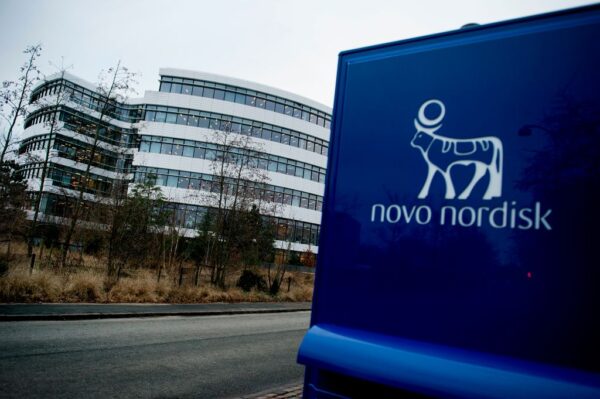
Novo Nordisk can reach MASH patients with the recent FDA decision expanding approval of its GLP-1 drug Wegovy to the treatment of moderate-to-advanced cases of the fatty liver disease. Now it’s acquiring Akero Therapeutics in a multi-billion-dollar deal that brings a late-stage drug candidate with the potential to help patients in the most severe stage of MASH.
According to deal terms announced Thursday, Novo Nordisk will pay $54 in cash for each Akero share, valuing the biotech at $4.7 billion. A contingent value right in the deal makes the Danish pharmaceutical giant responsible for paying an additional $6 in cash per share upon FDA approval of Akero’s drug, efruxifermin, for the treatment of compensated cirrhosis due to MASH. Achieving that goal would add another $500 million to the payout.
Speaking during a Thursday conference call, Novo Nordisk CEO Mike Doustdar noted that the Akero deal is the largest R&D acquisition in the history of the company. It’s also the first one since he took over as chief executive in August. Doustdar said part of his job is ensuring Novo Nordisk maintains a leadership position in diabetes, obesity, and their related comorbidities.

NEMT Partner Guide: Why Payers and Providers Should Choose MediDrive’s TMS
Alan Murray on improving access for medical transportation.
“We can only do that by raising the innovation bar to bring innovative medicines to the market, and thus, impact millions of patients worldwide,” he said. “Today’s acquisition further strengthens the possibility to do so.”
MASH, short for metabolic dysfunction-associated steatohepatitis, develops as fat builds up in the liver, leading to inflammation and the formation of scar tissue. The extent of this liver scarring, called fibrosis, is measured according to a scale ranging from F0, representing no fibrosis, to F4, which is cirrhosis. According to the FDA, about 14.9 million Americans have MASH. Globally, Novo Nordisk estimates the disease affects more than 250 million people.
Akero’s efruxifermin is a protein engineered to be a long-acting analog of fibroblast growth factor 21 (FGF21), a liver-secreted hormone that regulates energy expenditure and metabolization of fat. The half-life of native FGF21 is less than two hours. South San Francisco-based Akero engineered efruxifermin with a half-life lasting days, enabling once-weekly dosing of the injectable drug. Earlier this year, Akero reported Phase 2 results showing treatment with efruxifermin over 96 weeks achieved a statistically significant reversal of cirrhosis with no worsening of MASH. So far, efruxifermin is the only drug to show this level of effect in patients with F4 fibrosis.
Novo Nordisk’s obesity drug Wegovy, which works by activating the GLP-1 receptor, added MASH to its label in August. That FDA decision only covers MASH patients with F2 and F3 fibrosis. The company says there’s still an unmet medical need. In addition to the untreated population of F4 patients, some of those with moderate-to-severe disease may not respond to a GLP-1 drug, the company said in an investor presentation.


RCM Outsourcing: Balancing Human Expertise & Smart Technology
Greenway Health blends smart technology with human expertise to elevate revenue cycle.
MASH was once a graveyard for drug research, but that’s changed in recent years. In 2024, Madrigal Pharmaceuticals landed the first approval in MASH for Rezdiffra, an oral small molecule designed to activate THR-beta, a receptor that mediates metabolic activity in the liver. Rezdiffera’s accelerated approval covers the treatment of moderate-to-advanced MASH.
The Akero acquisition agreement comes three weeks after Roche announced a deal to buy 89bio and its late-stage MASH drug for $2.4 billion. Like Akero’s drug, 89bio’s pegozafermin is a protein engineered to mimic FGF21. Made with technology giving the drug a longer half-life, the every-two-weeks injection would offers a patients a dosing advantage compared to weekly injections of Akero’s drug. Two Phase 3 tests of the 89bio drug are ongoing. Meanwhile, GSK has mid-stage drug candidate efimosfermin, which it acquired earlier this year in a $1.2 billion deal with Boston Pharmaceuticals. This FGF21 analog’s longer half-life is intended to support once-monthly dosing.
In a note sent to investors, Leerink Partners analyst Thomas Smith pointed out the Akero deal marks the third MASH-related acquisition this year — all for FGF21-targeted assets. These transactions reinforce Leerink’s view that this drug class is one of the most compelling for addressing fibrosis in MASH. Smith added that the Akero acquisition comes two months after Novo discontinued its internal FGF21 program due to a failed Phase 2 study, underscoring that not all FGF21 analogs are equal. While Leerink expects the deal will close, Smith said there may be some Federal Trade Commission scrutiny given the pipeline overlap of the companies. There may also be political scrutiny.
Of the three FGF21 MASH drug acquisitions this year, the Akero deal is the biggest. Martin Holst Lange, executive vice president, R&D, and chief scientific officer, said the premium Novo Nordisk is paying is justified. Just as Novo Nordisk sees differences across the GLP-1 space, it sees differences in FGF21 drugs, he said. Efruxifermin was not only different from Novo’s internally developed FGF21 drug candidate, it has shown superior efficacy and potentially better safety and tolerability compared other FGF21 drugs so far.
“So we believe that with this acquisition we not only have healthy potential to be best in class, but also, and this is obviously a timing perspective, first in class because it is a more progressed program,” Lange said.
Three Phase 3 studies are underway for efruxifermin with a total enrollment of approximately 3,500 participants. The first readout, from a real-world study, is expected as early as next year with the other studies yielding data in years to come. In the meantime, Lange said the company plans to explore potential combinations of efruxifermin with its GLP-1 drug portfolio. The company will also investigate applications of the Akero drug in other indications.
The $54 per share price Novo is paying for Akero is just a 16% premium to the stock’s Wednesday closing price, but it’s a 42% premium to Akero’s closing price on May 19 before speculation emerged about an acquisition. The terms of the contingent value right require efruxifermin to secure FDA approval by June 30, 2031.
The acquisition has been approved by Akero’s board of directors but still needs shareholder and regulatory approvals. The companies expect to complete the transaction by the end of this year.
Photo: Liselotte Sabroe/Scanpix Denmark/AFP, via Getty Images