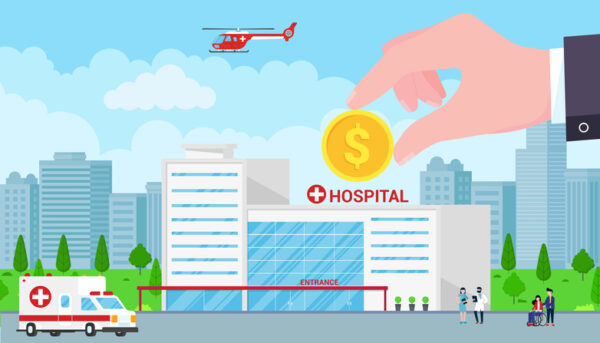
Tariffs are bad news for hospitals. The American Hospital Association (AHA) recently warned that tariffs could have “significant implications” for healthcare, in part, because a substantial portion of medical goods comes from international sources.
These internationally sourced supplies include essential items like pharmaceuticals, medical devices, personal protective equipment (PPE), and low-margin, high-use essentials such as syringes, needles, and blood-pressure cuffs.
Inevitably, tariffs will create additional pressure on hospitals’ already narrow margins. Labor expenses for hospital suppliers are likely to rise as domestic supply chains adjust to higher costs. For hospitals, tariffs’ effects will likely be felt in rising per-patient operating costs and additional difficulty in managing operating budgets as numerous expenses climb.


5 High-Impact Tax Strategies Every Physician Should Use in 2026 to Reduce Their Tax Bill
AI-native tax firm Gelt combines top human tax experts with AI to help physicians and healthcare practices use data-driven tax strategies to lower liabilities, improve profitability, and future-proof their finances.
Tariffs will likely affect patients, too, as cost pressures may drive higher out-of-pocket expenses, reduced access to needed care, and longer waiting times as hospitals struggle to develop new approaches to procurement and staffing.
How hospitals can relieve pressure from tariffs
To reduce tariffs’ impact, hospitals should adopt a proactive approach to managing their supply chains. For example, diversifying supplier bases can help ensure that critical products are purchased across multiple geographies rather than relying on any one region of the world. By sourcing from different continents, hospital purchasing professionals can mitigate risk and increase flexibility when tariffs disrupt trade with specific countries or regions.
Additionally, hospitals may consider joining group purchasing organizations (GPOs), which can lock in specific pricing terms in contracts. Due to their purchasing power, GPOs may have the leverage to obtain better prices from suppliers to protect hospitals from rapid cost increases resulting from tariffs.

The Power of One: Redefining Healthcare with an AI-Driven Unified Platform
In a landscape where complexity has long been the norm, the power of one lies not just in unification, but in intelligence and automation.
Hospital purchasing leaders may also seek to explore forward-buying strategies, such as stockpiling essential items, particularly low-cost supplies, as another means of protection from price hikes.
Finally, another essential step for hospital purchasing leaders is to strengthen their supply analytics capabilities. Advanced data tools help purchasing experts model and visualize trends to identify supplies that tariffs are most likely to impact. Armed with this knowledge, leaders are empowered to make more strategic purchasing decisions to reduce their organizations’ dependence on high-cost supplies.
How AI can help
Artificial intelligence (AI) and advanced analytics can assist hospitals as they endure the uncertainty caused by tariffs. In contrast to traditional supply tools that focus more narrowly on line-item expenses, leading AI platforms can integrate numerous types of data, including clinical, financial, and operational, to create a 360-degree view of costs.
AI supply chain tools can also spot exactly where tariffs are delivering the greatest negative effect to margins, examining all product categories, vendor contracts, and service lines. These systems also help purchasing leaders quantify the downstream effects of higher supply costs, such as how more expensive surgical supplies could affect operating room margins and staffing costs, for example.
In addition to helping supply chain leaders spot current areas of concern, AI-based tools can enable hospitals to quickly and easily model potential cost scenarios that may arise in the future. By identifying vulnerabilities to potential tariff increases, leaders can develop contingency plans to adjust sourcing, find substitute supplies, and get ahead of potential supply chain shocks before they occur.
With AI-based solutions, hospital supply chain leaders can evolve from reactive to proactive cost management. These systems combine financial, operational, and clinical data at the patient, event, and item level to offer new insights as tariff-driven pressure on supply chains grows.
Building resilience
Hospitals are already operating in a climate of narrow margins and tight budgets. Tariffs don’t make it any easier. To blunt the effects of tariffs, hospital leaders should diversify suppliers and regions, invest in advanced analytics, explore GPO memberships, and develop forward-buying plans.
Additionally, supply chain leaders today have a new option unavailable to their predecessors – AI-based tools that enable them to anticipate the effects of tariffs, model future cost scenarios, and quickly pivot to new suppliers and regions when cost escalations warrant adjustment. By following this recipe, hospitals can build resilience for a future of supply chain surprises and tariff-driven cost increases.
Photo credit: Mironov Konstantin, Getty Images

Ralph Keiser is Chief Executive Officer and Founder of ArcheHealth. Keiser is an experienced healthcare IT entrepreneur and has a history of founding, managing and growing successful technology companies, including EPSi and @Outcome. Keiser also played key roles in the formation and launch of Eclipsys’ Performance Improvement, Cerner’s PowerInsight and Deloitte’s ConvergeHEALTH platforms.
This post appears through the MedCity Influencers program. Anyone can publish their perspective on business and innovation in healthcare on MedCity News through MedCity Influencers. Click here to find out how.