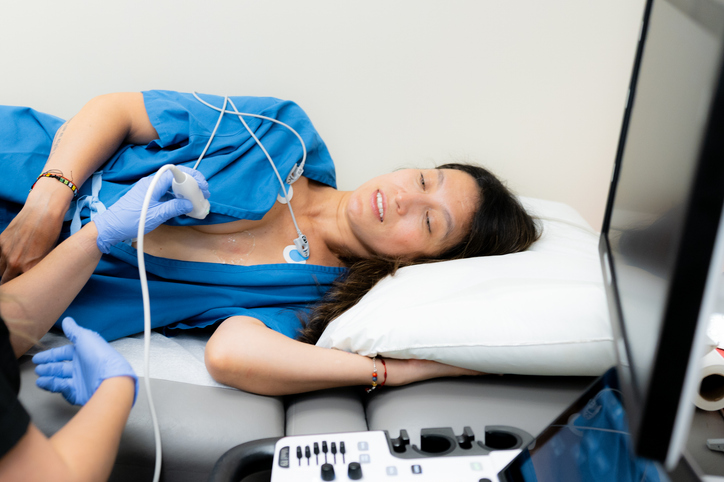
Over the past decade, healthcare leaders have increasingly recognized the fact that cardiology has a major gender bias problem.
Heart disease is the leading cause of death for women, yet it remains widely underrecognized, misdiagnosed and undertreated. Women are more likely than men to present non-“classic” symptoms and less likely to be referred for diagnostic tests or aggressive treatments, in part because research has historically centered on male patients. As a result, women often experience delays in care and worse outcomes.
Last week, the American Heart Association invested in a British startup selling an AI model to help close the diagnostic gap in heart failure. The investment was made through the AHA’s Go Red for Women Venture Fund, which was launched last year to help address longstanding gender disparities in heart disease diagnosis and treatment.


Could QuantalX’s Device Make Managing Brain Health Easier?
CEO and neuroscientist Dr. Iftach Dolev on how the new device can bring a powerful tool to psychiatrists and neurologists alike.
The startup, named Ultromics, was founded in 2017 by Ross Upton, who currently serves as its CEO and chief scientific officer. He said the company is based on work from his PhD in cardiovascular medicine at the University of Oxford, where he trained as a cardiac sonographer and saw firsthand how subjective echocardiogram interpretation can be — and how easily diagnoses are missed.
“Many cardiovascular conditions are not missed because patients are going untested. They’re missed because the tests we already do, at scale, are not consistently giving clinicians a clear answer for certain conditions,” Upton declared.
Two of the most important examples are cardiac amyloidosis and heart failure with preserved ejection fraction (HFpEF), he noted.
These conditions can be difficult to recognize early on a routine echocardiogram, even for experienced clinicians, and they often present with nondescript symptoms, Upton explained. This leads to symptoms that persist, workups that stay inconclusive and treatment that starts later than it should.


5 High-Impact Tax Strategies Every Physician Should Use in 2026 to Reduce Their Tax Bill
AI-native tax firm Gelt combines top human tax experts with AI to help physicians and healthcare practices use data-driven tax strategies to lower liabilities, improve profitability, and future-proof their finances.
“That gap hits women particularly hard in HFpEF. Symptoms like fatigue, shortness of breath and swelling are more likely to be dismissed or attributed to non-cardiac causes,” Upton stated.
Research shows women are more likely than men to develop HFpEF, and up to 64% of cases go undiagnosed in clinical practice, he added.
Ultromics’ technology seeks to enable earlier, more consistent identification of HFpEF by using AI to analyze echocardiograms. Instead of relying solely on what a person can spot visually in a quick review of the echocardiogram video, the model examines the motion patterns across the full clip.
“Technically, it is analyzing millions of pixels across multiple heartbeats and learning whether those patterns match what we see in patients with known disease,” Upton remarked.
The platform is currently being used in health systems including Northwestern Medicine, University Hospitals and University of Chicago Medicine. To date, Ultromics has processed more than 430,000 echocardiograms worldwide.
HeartFlow offers a close analogous technology, but Upton does not consider the company a direct competitor. Its platform is similar, he noted, in the sense that it takes a standard, widely used cardiac imaging test and extracts additional clinically useful signals from it — without asking the hospital to change how the scan is acquired.
Ultromics also seeks to accomplish this — but in a different modality and disease space.
“We work from echocardiography, which is typically much higher volume than CT, and we return results in minutes rather than hours, so the output fits naturally into routine workflows,” Upton declared.
Ultromics focuses on hard-to-diagnose diseases, particularly HFpEF and cardiac amyloidosis, where earlier detection can transform a patient’s trajectory, he added.
He said the company will use its new capital from the AHA to scale its platform’s adoption across U.S. hospitals, with the aim of addressing some of cardiology’s most persistent blind spots.
Photo: Jaime Grajales Benjumea, Getty Images