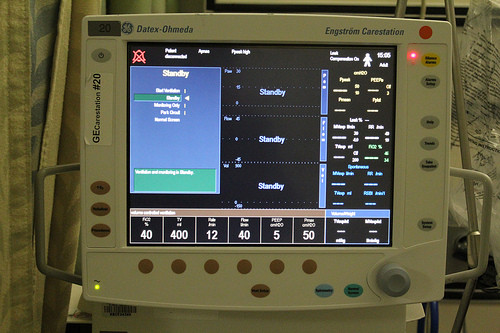
Statistics around mechanical ventilation tell a sobering story.
Every year, 2.5 million U.S. patients require mechanical ventilation in order to support breathing in a variety of life-threatening situations. Intensive care unit beds for these patients contribute up to $96 billion in yearly costs, averaging $5,000 per patient per ICU Day.
Nearly 40% of patients spend four days on mechanical ventilation. Patients often linger on machines long after the underlying condition that put them on the ventilator has resolved – after having a ventilator breathe for them around the clock, the muscles that support independent breathing have weakened so severely that they cannot breathe on their own.


5 High-Impact Tax Strategies Every Physician Should Use in 2026 to Reduce Their Tax Bill
AI-native tax firm Gelt combines top human tax experts with AI to help physicians and healthcare practices use data-driven tax strategies to lower liabilities, improve profitability, and future-proof their finances.
Strengthening those muscles, especially the diaphragm, proves challenging. There have not been any interventions that have proven to support diaphragmatic strength and improve ventilator weaning.
But all this will change soon. Recent studies show promise for temporary transvenous neurostimulation devices that stimulate the nerves that activate the diaphragm muscles in ventilated patients, preventing diaphragm atrophy and creating better outcomes for patients and for ICU departments.
The challenge of weaning from mechanical ventilation
Complications of mechanical ventilation — lung injury, infections, cognitive impairment — are widely recognized. Another critical, and sometimes overlooked complication is rapid diaphragm atrophy, which plays a primary role in patients’ struggles to wean from mechanical ventilation.
When patients arrive in the ICU with pneumonia and physicians place them on mechanical ventilation, for example, ventilators do the work of the diaphragm entirely, rendering it unnecessary for breathing. The underlying condition may resolve, but patients often cannot wean because their diaphragm has weakened significantly during that brief period.


Could QuantalX’s Device Make Managing Brain Health Easier?
CEO and neuroscientist Dr. Iftach Dolev on how the new device can bring a powerful tool to psychiatrists and neurologists alike.
When patients are sedated to prevent them from fighting the machine, the brain stops sending the signals to the diaphragm to contract. When the muscle isn’t used, muscle proteins break down faster than they can be remade.
Studies show the diaphragm suffers significant atrophy after just 18 to 24 hours on a ventilator. As one of the two muscles in our body that’s constantly working, the diaphragm can lose about 50% of its mass when rested for just a few days.
The problem extends beyond muscle weakness. Mechanical ventilation creates uneven air distribution in the lungs. In healthy breathing, the diaphragm expands the lungs from the bottom up, allowing air to reach different areas of the lungs. On a ventilator, positive-pressure air delivered through the airway inflates upper lobes while under-ventilating other regions. This imbalance contributes to:
- Over-distention & over-pressurization of upper lungs
- Lower lung collapse
- Increased risk of ventilator-associated lung injury
The hidden impact of current weaning processes
The weaning process itself can traumatize patients. After breathing mechanically for days, patients come off sedation and expect to breathe independently. Their bodies struggle, gasping for air and causing significant distress and anxiety.
Respiratory therapists play a critical role in safely weaning patients but face significant barriers. Staffing shortages in hospitals force therapists to treat more patients than ideal. They typically check patients twice daily, attempting spontaneous breathing trials that require patients to breathe with weakened diaphragms while awake and anxious.
When patients fail to breathe on their own, therapists stop the weaning process and resume mechanical ventilation. This cycle repeats daily and is the standard of care. Respiratory therapists also have limited time to tailor weaning strategies, which can lead to weaning delays, inconsistent monitoring, and increased stress for patients and staff.
Current alternatives for diaphragm pacing to exercise the diaphragm muscles, such as surgical options, have serious limitations requiring nerve cuffs or implanted electrodes and are a poor option for high-risk ICU patients.
The promise of neurostimulation and clinical impact
Neurostimulation is well established in medicine, using small electronic pulses to activate specific muscles or nerves. In recent years, researchers have explored whether temporary stimulation of the phrenic nerves could help preserve diaphragm activity during mechanical ventilation and support patients’ ability to breathe independently. Early clinical studies suggest that maintaining diaphragm engagement during ventilation may reduce muscle atrophy, strengthen breathing mechanics, and improve the chances of successful weaning — an area of growing interest across critical care disciplines.
In many ICUs, this growing interest has begun to focus on a simple, persistent question: what happens to the diaphragm while a patient is mechanically ventilated, and how much does that loss of activity shape what comes next? For clinicians who manage ventilated patients every day, the observation itself is not new. The diaphragm weakens quickly, sometimes within a day or two. What has changed is the willingness to treat that decline as something that can be addressed, rather than accepted as an unavoidable side effect of lifesaving care.
Neurostimulation offers a physiologically grounded way to address that problem. In other areas of medicine, stimulating nerves to preserve or restore function is already routine, from chronic pain and epilepsy to movement disorders and bladder control. In each of those settings, the underlying idea is straightforward: when normal neural signaling is disrupted, targeted electrical stimulation can help keep critical pathways active. The diaphragm, driven by the phrenic nerves, fits naturally into that same framework.
What makes critical care different is not the underlying biology, but the environment in which that biology is suppressed. Mechanical ventilation dampens the brain’s signals to the diaphragm at the very moment patients need respiratory strength the most. At present, Neurostimulation does not replace the ventilator; it works alongside it, activating the diaphragm while the machine manages gas exchange. The goal is to prevent the diaphragm from weakening and build muscle strength and endurance, so that when weaning begins, the body is better prepared to breathe independently.
Clinicians are drawn to this approach not only because it promises dramatic breakthroughs, but because it reflects what they already see at the bedside. A patient who has not used their diaphragm for a week does not ease into spontaneous breathing. The struggle often begins within minutes, weaning trials fail, sedation resumes, and the cycle repeats. Neurostimulation offers a way to interrupt that pattern by keeping the diaphragm engaged during ventilation, rather than forcing it to recover all at once after days of inactivity.
The potential benefits may appear first in modest but practical ways. Breathing trials might last longer. Patients may be less likely to immediately gasp when sedation lifts. There may be fewer abrupt failures that force a reset of weaning plans. None of this is guaranteed, but in ICUs where progress can unravel quickly and every setback carries real cost, even incremental gains can matter.
This shift does not reject mechanical ventilation; it changes how it is supported. For decades, critical care focused almost exclusively on the lungs, accepting diaphragm weakness as an unavoidable side effect. That assumption is beginning to shift. As neurostimulation moves beyond research settings and into use in the ICU, it reframes ventilation as a system that can support both gas exchange and muscle function together.
If these efforts continue to bear out, the impact may be gradual rather than dramatic. Fewer weaning attempts may fail. The length of ventilation courses may shorten. Transitions to independent breathing may become smoother. In a field where fundamental practices evolve slowly, even modest gains can matter. Neurostimulation, long established elsewhere in medicine, may find its place in critical care as a physiologically sound extension of existing practice.
Photo: flickr user quinn.anya

Viral Thakkar, PEng, is Chief Operating Officer at Lungpacer Medical Inc., a company dedicated to developing therapeutic solutions for patients requiring mechanical ventilation. He has over 20 years of experience in the medical device industry, specializing in the design and development of innovative medical technologies. Viral has led the development of critical care, cardiovascular, robotic surgery, respiratory, and neurostimulation devices. He has been instrumental in bringing to market first-of-their-kind products, including power-actuated surgical stapling devices, cardiovascular and peripheral stents, stent delivery systems, embolic protection devices, and catheter-based intra-vascular temperature management devices. He has successfully led the concept-to-commercialization of seven regulated Class II and III medical devices. With over 100 global patents his extensive experience includes leadership roles at ZOLL Medical Corporation, Boston Scientific Corporation, Radiant Medical, SMTPL, and Power Medical Interventions. Viral’s commitment to innovation has contributed to the advancement of the medical device industry, helping improve patient outcomes.
This post appears through the MedCity Influencers program. Anyone can publish their perspective on business and innovation in healthcare on MedCity News through MedCity Influencers. Click here to find out how.