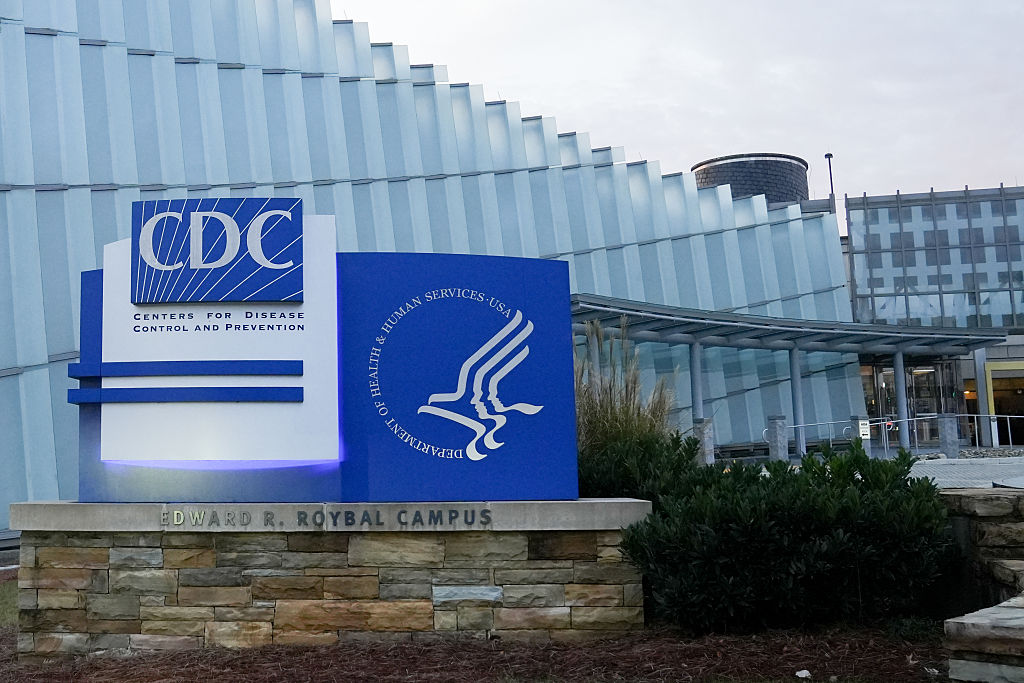
The Centers for Disease Control and Prevention has cut its list of recommended immunizations to 11, down from the 17 the agency had previously recommended. While Trump administration officials say this revision puts the U.S. in line with other developed countries, some who work in public health contend it unnecessarily puts children at risk of developing preventable diseases.
CDC vaccine recommendations typically result from a deliberative process that involves a review of scientific literature and input from clinicians through meetings of the agency’s Advisory Committee on Immunization Practices (ACIP). The removal of six vaccines from the childhood vaccine schedule follows a December memorandum from President Trump, who directed the heads of the Department of Health and Human Services and the CDC to review childhood vaccine practices.
Acting CDC Director Jim O’Neill approved the changes to the vaccination schedule on Monday. That decision was based on a report authored by Tracy Beth Høeg, the acting director of the FDA’s Center for Drug Evaluation and Research, and Martin Kulldorff, chief science and data officer for the HHS’s assistant secretary for planning and evaluation. Kulldorff previously served as ACIP chair. He was one of the new members selected to serve on the ACIP by HHS Secretary Robert F. Kennedy Jr. after Kennedy fired the entire committee last June.

The Power of One: Redefining Healthcare with an AI-Driven Unified Platform
In a landscape where complexity has long been the norm, the power of one lies not just in unification, but in intelligence and automation.
The report concluded that vaccines for six disease should come off the schedule: respiratory syncytial virus (RSV), hepatitis A and B, meningococcal B and ACWY, and dengue. The recommendation for these vaccines remains in place for high-risk groups, such as those with weakened immune systems or an underlying medical condition. But for others, the decision to vaccinate will be based on “shared clinical decision making,” in which patients and their parents consult with physicians.
“Each disease addressed by the U.S. child immunization schedule poses a health risk, but the level of threat varies widely by disease and sometimes by individual underlying risk factors,” the CDC decision memo states. “The mere existence of a vaccine does not automatically make it appropriate for every child, nor does it necessarily justify universal vaccination.”
Remaining on the schedule are vaccines for measles, mumps, rubella, diphtheria, tetanus, pertussis, polio, Haemophilus influenzae type B (Hib), pneumococcal disease, human papillomavirus, and varicella (chicken pox). For these diseases, there is broad-based international consensus that vaccines are recommended for all children, the report states. But for the HPV vaccine, the CDC now supports a single dose instead of two when given to children. The decision memo notes that Australia, parts of Canada, Ireland, Spain, and the United Kingdom have changed their recommendations to one dose. Those countries were among the 20 peer developed nations selected for comparison to the U.S.
The Høeg and Kulldorff report concluded that the U.S. is an outlier in the number of diseases included in its childhood vaccination schedule and in the total number of recommended vaccine doses. Denmark figures prominently in the report, which says that country in 2022 became the first of this peer group to remove its universal recommendation for the Covid-19 vaccine for children. The report also notes that Denmark is able to immunize children against 10 diseases with only 30 total doses, a feat accomplished by using multivalent vaccines.


RCM Outsourcing: Balancing Human Expertise & Smart Technology
Greenway Health blends smart technology with human expertise to elevate revenue cycle.
To Dr. Robert Hopkins, medical director of the National Foundation for Infectious Diseases (NFID), comparing the U.S. childhood immunization schedule to that of Denmark or other countries is inappropriate due to differences in population size, diversity, healthcare access, and infectious disease risk.
“These differences matter,” Hopkins said in a email. “U.S. immunization policies must be guided by a transparent, evidence-based process and grounded in U.S. epidemiology and real-world risk. As we are already seeing signs of a severe respiratory season, this is not the right time to make changes that are not supported by clear evidence.”
Hopkins noted that the 280 children who died from influenza in the last flu season marked the highest total in more than a decade. Furthermore, RSV remains the most common cause of hospitalization among U.S. infants. NFID continues to recommend annual flu vaccination for everyone age 6 months and older, and RSV vaccination for all infants whose mothers did not receive an RSV vaccine during pregnancy.
Dr. Sandra Adamson Fryhofer, a member of the American Medical Association’s board of trustees, said in prepared statement that the organization is “deeply concerned” by the changes to the childhood immunization schedule.
“Changes of this magnitude require careful review, expert and public input, and clear scientific justification,” she said. “That level of rigor and transparency was not part of this decision. When longstanding recommendations are altered without a robust, evidence-based process, it undermines public trust and puts children at unnecessary risk of preventable disease.”
Fryhofer added that the scientific evidence for vaccines remains unchanged and the AMA supports continued access to childhood immunizations recommended by national medical specialty societies.
Susan Dentzer, president and CEO of America’s Physician Groups (APG), said the administration’s revision of the vaccination schedule disregards scientific evidence on vaccine safety and efficacy as well as the longstanding U.S. recommendations about immunization.
“As APG has repeatedly emphasized, vaccines are key to prevention, and prevention is key to value-based care,” Dentzer said in an emailed statement. “Not only is the administration’s move dangerous, but it also threatens the very efforts in which our physician groups and many others engage to provide health care that is fully accountable for costs and quality.”
Photo: Megan Varner/Bloomberg, via Getty Images