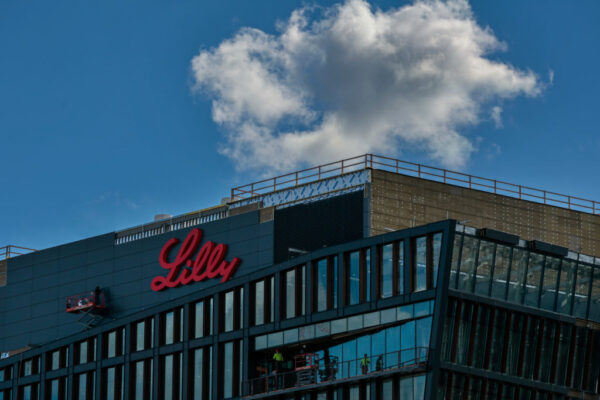
Eli Lilly is building its prospects in immunology through the $1.2 billion acquisition of Ventyx Biosciences, a clinical-stage company with drugs addressing a promising target offering the potential to treat a range of inflammatory disorders.
The deal announced after Wednesday’s market close follows Ventyx’s fall release of mid-stage data for lead program VTX3232, a drug in development for treating inflammation that contributes to cardiovascular disease. That data readout triggered discussions with Sanofi, whose prior investment in Ventyx gave it the right of first negotiation on the program. But Lilly won out with a deal to buy the entire company.
Ventyx develops oral small molecule drugs for inflammatory disorders. In recent years, the San Diego-based biotech honed its R&D focus to drugs that inhibit the NLRP3 inflammasome, a protein complex that regulates inflammatory signaling. There are currently no FDA-approved drugs that target NLRP3.


RCM Outsourcing: Balancing Human Expertise & Smart Technology
Greenway Health blends smart technology with human expertise to elevate revenue cycle.
In October, Ventyx reported preliminary data from a Phase 2 study that enrolled patients with cardiovascular risk and obesity. The readout showed treatment with VTX3232 reduced levels of a liver protein associated with inflammation along with reductions in a range of biological measures indicative of cardiovascular risk. The drug was safe and well tolerated. But VTX3232 does not appear to have a future as an obesity drug. This study included a cohort that evaluated the study drug alongside Novo Nordisk’s GLP-1 weight loss drug, Wegovy. Results showed VTX3232 did not lead to weight loss as a monotherapy or in addition to Wegovy.
The cardiovascular results followed the summer release of encouraging data from a separate Phase 2 test of VTX3232 in Parkinson’s disease. In this indication, Ventyx is leveraging the brain-penetrating properties of the molecule as a way to treat the neurodegenerative disorder.
The Ventyx pipeline also includes VTX2735, a peripherally restricted NLRP3 inhibitor in Phase 2 testing for recurrent pericarditis. Beyond NLRP3, Ventyx has compounds in mid-stage clinical development for inflammatory bowel disease: the S1P1R modulator tamuzimod and the TYK2 inhibitor VTX958. Lilly sees broad potential applications for Ventyx’s drugs.
“There is increasing evidence that inflammation is a key driver of many chronic diseases,” Daniel Skovronsky, Lilly’s chief scientific and product officer and president of Lilly Research Laboratories, said in a prepared statement. “Ventyx’s clinical-stage pipeline addresses a critical need for better treatment options across diseases mediated by chronic inflammation and further strengthens our ability to deliver meaningful advances for patients living with challenging diseases across focus areas of cardiometabolic health, neurodegeneration and autoimmunity.”


Enhanced Direct Enrollment: Georgia Access and the Power of Partnership
Across the nation, state-based health insurance exchanges are searching for ways to better serve their communities while making enrollment easier, more personal, and more accessible for everyone.
Lilly’s main metabolic medicines rival, Novo Nordisk, has an NLRP3 inhibitor licensed from startup Ventus Therapeutics. Novo’s pipeline lists an NLRP3 inhibitor in Phase 1 development for the fatty liver disease MASH and cardiovascular disease. Roche also has a clinical-stage NLRP3 inhibitor in its pipeline. Other companies with NLRP3 inhibitors include BioAge Labs and startup Nodthera.
The financial terms of the acquisition agreement call for Lilly to pay $14 in cash for each share of Ventyx, an approximately 62% premium to the stock’s average trading price in the 30 days leading up to Jan. 5. Shares of Ventyx spiked earlier this week after the Wall Street Journal reported Tuesday that Lilly was close to striking a deal for the biotech.
The boards of directors of both companies have approved the transaction, which still requires approvals from Ventyx stockholders and regulators. Lilly expects to close the acquisition in the first half of this year.
Photo: Craig F. Walker/The Boston Globe, via Getty Images