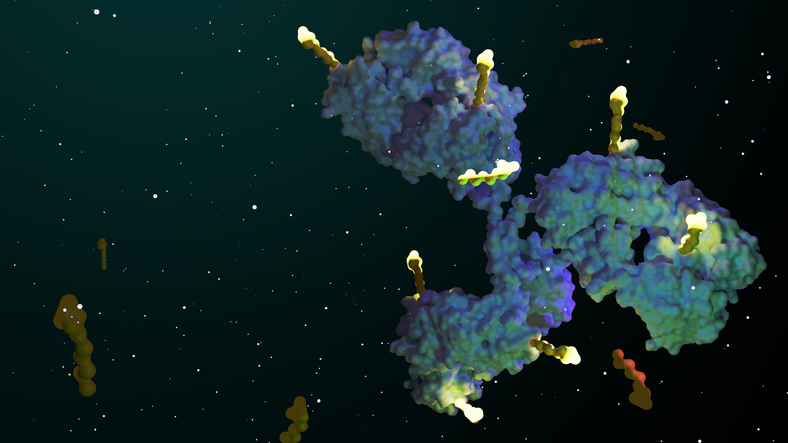
Antibody drug conjugates have cemented their place among the treatment options for many cancers, but one problem with this type of targeted therapy is drug resistance. The scientists at Fortitude Biomedicines believe combining ADCs with another type of emerging cancer therapy can overcome resistance. The startup launched on Monday, revealing its approach in this emerging class of medicines that has already sparked investment from companies such as Bristol Myers Squibb and Pfizer.
An ADC is comprised of an antibody that’s linked to a toxic drug. For cancer ADCs, that drug payload is usually a chemotherapy. Fortitude’s launch brings it into a group of companies exploring the use of other drug payloads. The Waltham, Massachusetts-based startup focuses on ADCs that are conjugated to targeted protein degraders, a type of drug that gets disease-causing proteins to go to a cellular system that eliminates old or damaged proteins. ADCs that use a degrader as their payloads make up a new class of medicines called degrader antibody drug conjugates, or DACs.
For targeted protein degradation to work, a molecular tag needs to mark a protein for disposal by the cell’s waste disposal system. Some proteins lack binding pockets where a small molecule drug can attach. That problem can be overcome with a so-called molecular glue, a molecule that fosters the interaction between the tag and the target protein.


Esperion Sets Its Sights on New Areas While Maintaining Commitment to Cardiovascular Health
In a recent interview, Esperion president and CEO, Sheldon Koenig talks about the reality of statin intolerance and his company’s expansion into new diseases
Fortitude’s drugs come from a platform technology called GLUE-DAC, which the company describes as a next-generation ADC platform powered by proprietary molecular glue payloads. The startup says this technology has the potential to expand the therapeutic window of ADCs, which is the dose range that balances safety and efficacy. Fortitude also believes its approach could overcome resistance mechanisms and expand ADCs to new therapeutics targets, including targets for autoimmune disease.
No targets have been disclosed so far. The Fortitude pipeline lists the DAC codenamed FORT-101 in the discovery stage for cancer. This company says this drug promotes degradation of transcriptional coactivators, a type of protein that is key to cancer cell survival. Fortitude’s most advanced program is FORT-202, a bispecific antibody that has reached investigational new drug application-enabling studies.
Fortitude is based on the research of Jin Wang, a professor of pharmacology at the Baylor College of Medicine and director at the university’s Center for NextGen Therapeutics. Wang co-founded the startup with CEO Jesse Chen, who was most recently chief technology officer at TRIANA Biomedicines, a startup developing molecular glue degraders for difficult-to-treat cancers.
“Resistance is increasingly emerging as a challenge in the current ADC therapeutic landscape,” Wang said in a prepared statement. “The field urgently needs payloads with distinct mechanisms of action. GLUE-DAC technology meets this unmet need by combining the validated delivery capabilities of antibodies with the transformative potential of targeted protein degradation.”


RCM Outsourcing: Balancing Human Expertise & Smart Technology
Greenway Health blends smart technology with human expertise to elevate revenue cycle.
Large pharmaceutical companies are showing interest in developing DAC drugs. In 2023, Bristol Myers Squibb paid $100 million up front to license a DAC from Orum Therapeutics. This drug, BMS-986497 (formerly ORM-6151), goes after the cancer target CD33. It’s currently in Phase 1 testing as a potential treatment for acute myeloid leukemia or myelodysplastic syndrome.
Pfizer is pursuing DACs through its ADC subsidiary Seagen, which is partnered with Nurix Therapeutics, developer of targeted protein degradation drugs. The agreement inked in 2023 calls for Nurix to develop targeted protein degraders addressing targets nominated by Pfizer; the pharma company will be responsible for conjugating those degraders to antibodies and advancing the therapies through preclinical and clinical development. The targets remain undisclosed. Seagen paid $60 million to begin the collaboration. Through the end of August 2025, Nurix reported having received $10 million for research milestones. Under the deal terms, total R&D and milestone payments from Pfizer could reach up to $3.4 billion.
Fortitude’s seed financing was co-led by K2 Bio Partners, Shanghai Healthcare Angel Capital, and Elikon Venture, with additional investment from Everjoy Fortune and Taihill Venture. The startup said the funding will support advancement of its lead immune cell-targeting biologic through the preclinical research that could support an investigational new drug application. The capital will also support development of the company’s technology platform.
Illustration: Getty Images