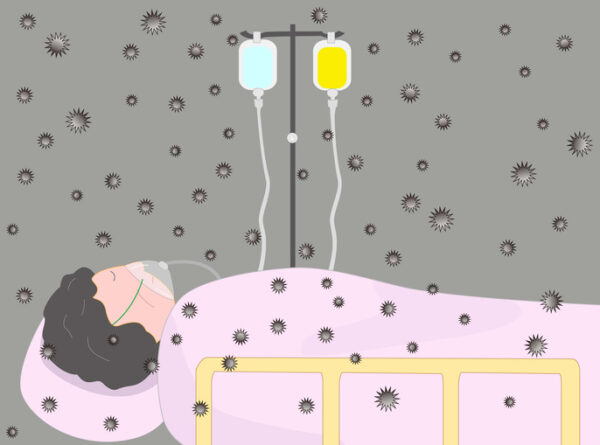
The first 72 hours after upper respiratory infection (URI) symptoms clinically appear — or even 96 hours, as emerging evidence suggests, shape the trajectory of both care delivery and operational demand. When patients receive the right diagnosis within that window, they can start treatment sooner and avoid unnecessary escalation to minimize burden on healthcare systems.
They can also take measures to prevent viral transmission among families and communities, further preserving capacity. Yet this timeframe is also when diagnostic clarity is hardest to achieve.
Early signs and symptoms tend to look similar for flu, RSV, Covid-19 and other URIs — and that overlap presents critical challenges, especially when nasal swab antigen tests don’t provide the accuracy needed for timely, confident decisions.


Inside an Automated Healthcare Practice: Redesigning Care Around People, Not Paperwork
By reducing administrative burden and redesigning workflows around human needs, it creates space for what matters most: connection between clinicians and patients.
The Centers for Disease Control (CDC) revealed false negative rates with these antigen tests average an astounding 30% to 50%, leading to missed diagnoses, delayed antiviral treatment and increased risk of long-term complications, plus lack of proactive isolation measures to prevent the spread of infection. Ultimately, that uncertainty drives preventable cost and staffing strain.
When accuracy matters most, relying on nasal swabs alone leaves a significant gap between the precision that early intervention requires and what default testing methods can deliver. Shifting the focus toward alternative sampling approaches that maintain convenience but elevate sensitivity and consistency will set the foundation for more effective and efficient care.
Evolved nasal lavage is one such solution — a modernized approach that channels the many clinical advantages of traditional saline washing into a compact, standardized, easy-to-use device that eliminates the mess and inconsistencies of earlier lavage methods.
Pairing this comfortable collection process with PCR’s rigor supports a clearer, faster path toward treatment while strengthening clinical bottom lines.

The Power Behind Enterprise EHR Software for Large Healthcare Systems
Enterprise EHR boosts scalability, interoperability, and governance for large healthcare systems.
The biology behind the first 96 hours
To better understand why the first 96 hours is potentially the “magic range” for productive therapeutic intervention, it’s important to first examine what occurs inside the body during this timeframe.
- 0-24 Hours: The virus enters the upper airways and begins binding to epithelial cells, then rapidly replicating. While physical symptoms are often mild or absent, the body is busy determining whether the pathogen warrants a defensive response. Since viral proteins remain low or unevenly distributed, nasal lavage is already better positioned than antigen tests to precisely detect infections in this early, pre-clinical phase.
- 24-48 Hours: Viral replication ramps up to its peak concentration in the nasopharynx. Meanwhile, the body’s natural immune response intensifies, producing more mucus and swelling to yield symptoms like sore throat, cough and congestion. This is prime time for pairing high-sensitivity sampling with PCR to capture a concentrated sample and optimize test sensitivity.
- 48-96 Hours: The adaptive immune response hones its focus toward fighting certain pathogens. Viral load may already be trending down in some individuals, which makes low-sensitivity antigen methods especially prone to false negatives.
After these time periods pass, viral activity in the nasopharynx tapers as the immune system takes over, further limiting what lower-sensitivity methods can detect.
High-sensitivity PCR testing still performs well even as levels fall, but its greatest value is earlier — when false negatives carry steeper consequences.
Where swab-based antigen tests fall short during specimen collection
Nasal swabs may be convenient, but they often underperform during the earliest and most important stage of a URI. Their role as Covid-19’s default testing method stemmed from ease of deployment and not necessarily diagnostic excellence, posing issues like:
- Inconsistent technique: Administration is highly dependent upon the user, especially when self-administered. This variability changes how much viral material is actually collected, directly influencing whether an antigen test returns a false negative.
- Poor patient experience and compliance: Deep nasal swabbing is uncomfortable and often triggers involuntary reactions like flinching, gagging or sneezing, which reduces the amount of testable specimen gathered. Moreover, the painful process can cause people to delay or avoid testing altogether.
- Shallow sampling: Because swab-based tests stop at the mid-nasal passage, they don’t capture specimen from areas where the volume of pathogen particles is more concentrated, like the upper nasal passages and sinuses.
Because of these initial collection challenges, sample quality suffers before the test even begins.
The high cost of low sensitivity
Once the specimen is gathered, the priority shifts to sensitivity — clinically defined as the ability of PCR testing to detect a true infection.
Antigen tests are inherently less sensitive than PCR because they look for viral proteins directly instead of amplifying genetic material. In other words, they require a more mature viral infection to provide a positive result.
When paired with shallow, inconsistent swab collection, the sensitivity problem compounds. CDC data has shown antigen test sensitivity as low as roughly 36% in asymptomatic people and about 64% in symptomatic individuals. For early URI intervention, that margin of error is enormous.
Missed infections and delays past the 96-hour window force a pivot toward supportive care instead of targeted treatment — increasing the likelihood of complications like secondary bacterial pneumonia, extended illness and infectious spread. So, even if targeted treatment is initiated, a PCR diagnosis past 96 hours will not affect clinical outcomes.
These missteps then ripple through the healthcare system, driving repeat visits, potential disease progression and unnecessary hospitalizations, among other costly consequences. As a solution, evolved nasal lavage delivers high-sensitivity specimens to reduce diagnostic uncertainty and tighten care pathways.
How evolved nasal lavage can deliver clear diagnostic answers sooner
While nasal lavage is the more sensitive, evidence-based option for URI sampling compared to swab-based antigen tests, this method has historically been messy, inconsistent and impractical to deploy on a wide scale.
Newly evolved nasal lavage methods help resolve these barriers, offering a standardized and reproducible process from initial collection to multi-pathogen PCR confirmation. Embedding gentle saline wash within a compact, easy-to-use device brings several benefits:
- Smoother experience: Patients don’t dread the sampling process, increasing their willingness to test when symptoms appear. Healthcare professionals also avoid variations in administration techniques.
- Deeper sampling: Flushes the full nasal cavity for a more representative specimen, including hard-to-reach sinus areas that nasal swabs miss.
- Easy lab integration: Works into existing PCR protocols, eliminating manual extraction errors for increased throughput.
- Higher sensitivity: Up to 49% more sensitive than nasal swab antigen tests, which significantly reduces false negative rates so antiviral therapies can start sooner.
Beyond the 96 hours: Looking ahead to smarter, earlier URI detection
Effective specimen collection during the pivotal collection period guides everything that follows, from individual therapeutic decisions to large-scale community outbreak control.
As healthcare leaders aim to strengthen their URI responses in a post-pandemic environment, incorporating modernized methods that capture comprehensive samples early will be paramount to clinical success — made evident both operationally and through optimal patient outcomes.
Emphasizing sensitivity and consistency in the way we test will set the foundation for a stronger diagnostic future that supports timelier answers and a more resilient respiratory-care ecosystem.
Photo: shin28, Getty Images

Michael C. Wadman, MD, FACEP, is Chief Medical Officer of University Medical Devices, developer of the MicroWash nasal lavage system. A board-certified emergency physician with more than 30 years of clinical experience in a high-volume academic health center emergency department, Dr. Wadman also holds tenured professor and endowed chair positions at University of Nebraska Medical Center (UNMC). Most notably, he also serves as the Medical Director of the National Quarantine Unit at UNMC, the only federally supported quarantine facility in the U.S.
This post appears through the MedCity Influencers program. Anyone can publish their perspective on business and innovation in healthcare on MedCity News through MedCity Influencers. Click here to find out how.