Spend a few minutes with someone in EMS, fire service, or healthcare, and you’ll likely hear some version of the same concerns: call volumes increasing, crews stretched thin, and many of the systems meant to help just end up adding extra steps to the process.
At this point, the question is no longer whether change is necessary, but whether agencies can implement change in a way that improves outcomes without increasing the burden on already-busy teams.
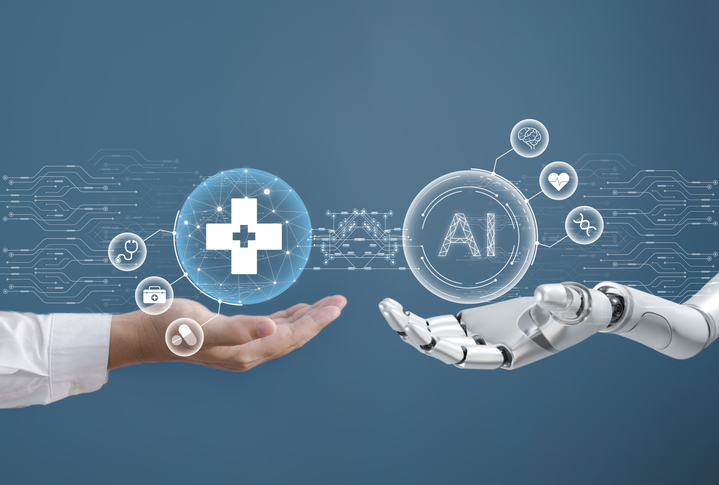
AI and predictive analytics are becoming practical tools for that work. When these solutions are designed and deployed well, they can help agencies spot risks sooner and allocate resources more intelligently to improve day-to-day workflows. With 2026 upon us, they are likely to play a central role in how emergency response and public health systems adapt.


Inside an Automated Healthcare Practice: Redesigning Care Around People, Not Paperwork
By reducing administrative burden and redesigning workflows around human needs, it creates space for what matters most: connection between clinicians and patients.
Using predictive analytics to improve emergency response
Healthcare operations are getting more complex at the same time resources are getting more limited. Many organizations still struggle to share critical information across EMS, fire, and hospitals. Field teams serve diverse populations with different levels of access to care. Fire departments respond to medical emergencies, disasters, and everything in between, often with unpredictable staffing and shifting conditions.
Predictive analytics helps agencies navigate that reality using patterns already present in their data. By analyzing historical and real-time information, agencies can:
- Forecast demand during known surge periods
- Allocate resources more effectively during high-volume windows
- Identify operational blind spots that affect response and care delivery
- Detect public health risks and prevent system-wide strain

The Hidden Administrative Tasks Draining Small Practices
Small practices play a critical role in healthcare delivery, but they cannot continue to absorb ever-increasing administrative demands without consequences.
These tools give leaders and crews a better sense of what’s coming, so they can get ahead of the curve instead of scrambling at the last minute.
AI’s role in enabling smarter, faster decisions
AI is starting to change how first responders and hospital teams get things done. It doesn’t replace anyone’s expertise, but it does make the day-to-day work less of a slog. Lots of agencies are already using AI in simple, practical ways, helping people make decisions in real time and spend less time buried in paperwork.
One of the biggest wins from AI? Less paperwork. Most EMS providers don’t mind documenting care. What drains them is the endless repetition: retyping the same info, clicking through screens that don’t match real calls.
AI-supported workflows can help by reducing the amount of typing, clicking, and re-entry required during and after a call. That can be a big deal for providers, allowing them to stay focused on patient care and shortening the time it takes to complete accurate documentation.
Hospitals also benefit when data moves more reliably from pre-hospital care into the waiting hospital’s systems. Beyond the convenience, systems enabling the seamless transfer of details such as medications, symptoms, interventions, and timelines into a patient’s electronic health record (EHR) have the potential to save lives by enabling faster triage and a clearer continuity of care.
One of the biggest barriers to coordinating effective care is fragmented data. Far too many agencies still spend their time juggling disconnected platforms across ePCRs, CAD integrations, fire reporting, and hospital systems. Even when those tools work well in a vacuum, fragmentation and silos make it harder to cobble together a full and complete picture. AI and predictive analytics improve how information follows the patient, strengthening interoperability by helping agencies link records and reduce manual matching.
In many communities, first responders make the initial contact and begin care on-scene before a transport team takes over. The EMS team then links the ePCR to the hospital EHR for a smooth handoff. This also creates a pathway for outcome data to flow back to the crews involved, which strengthens continuous quality improvement.
Interoperability enables real-time alerts for high-acuity cases such as cardiac events, trauma, or stroke activation. For example, sending an EKG from the ambulance to the hospital while the patient is still en route. This gives the receiving team time to get ready for what’s coming in and move faster when the patient arrives.
Surges often start with patterns on the street, hidden deep within EMS data. AI-supported monitoring helps agencies detect those early shifts, especially when the signal is spread across hundreds or thousands of calls.
Syndromic surveillance can track developing trends in symptoms and incident volume including increases in flu-like illness or respiratory distress. That early visibility helped teams plan for staffing and resource constraints during the COVID-19 pandemic.
Instead of replacing clinical judgment, these tools help agencies notice trends sooner and respond while there’s still room to maneuver.
Shifting toward community-driven care models
Some of the most meaningful changes over the next few years may be a shift toward more proactive care models, especially where EMS and fire services play a major role in bridging gaps in access.
When agencies use analytics to proactively head off risks and prepare for recurring demand, they can cut down on avoidable emergencies and improve outcomes for the long haul.
Rural areas face their own challenges, like fewer hospitals and longer transport times. In places like this, it’s not uncommon for EMS to serve as the main point of care. Powered by advanced analytics, community paramedicine can help agencies identify at-risk patients sooner and allow them to step in before things get worse. That could mean following up after discharge, home visits, or help with basics like food and transport. Approaching care in a more proactive way helps to prevent avoidable emergencies and keep teams from constantly operating in reaction mode.
AI and predictive analytics bring real promise, but they also require careful implementation. Leaders need to make decisions that support adoption without sacrificing trust, safety, or objectivity.
When lives are at stake, strong safeguards around AI are an absolute must. Agencies need clear policies around:
- Data privacy and security to protect sensitive patient information
- Human oversight so providers can validate recommendations and retain control
- Bias mitigation to reduce the risk of uneven outcomes across populations
The best systems use AI as backup, not the boss.
Even the best tools lose value when data cannot move between systems. Agencies will continue to face challenges around integration across EMS, fire, hospitals, and public health stakeholders.
Interoperability needs to be treated as a strategy, not a feature. When it works, agencies can track outcomes, close gaps, and improve system-wide visibility.
Getting people to use new systems requires a deeper cultural shift. Analytics systems succeed when responders and leaders trust the information being presented. That trust comes from training, transparency, and consistent results over time. It also comes from making sure insights are relevant to the decisions teams actually need to make.
Preparing for 2026 and beyond
As AI and predictive analytics are integrated into emergency response workflows, leaders should focus on three foundational priorities: coverage, connectivity, and insights.
When agencies expand data coverage, improve integration across systems, and use insights to drive operational decisions, they create a stronger foundation for long-term performance.
With connected systems, EMS and fire leaders can allocate resources more effectively during seasonal surges, large events, and disasters. They can also identify workflow bottlenecks and predict trends such as increased call volumes during flu season, facilitating faster decisions and planning that doesn’t fall apart during busy shifts.
Alternative care models like syndromic surveillance and community paramedicine have the potential to reduce the burden on emergency departments and EMS field crews. These proactive models let teams target their interventions without overloading systems already under strain.
A new era of healthcare and emergency services
The intersection of AI, predictive analytics, and emergency care marks a major turning point for EMS, fire departments, hospitals, and public health teams. Many agencies are being asked to do more with fewer resources. That pressure is not going away.
AI and analytics offer a path forward that prioritizes smarter workflows, coordination between teams, and better visibility into system performance. The organizations best positioned for 2026 will be the ones that invest in responsible innovation, interoperability, and tools that make a difference in their daily work.
The future of emergency response and healthcare will depend on more than technology adoption alone. It will depend on thoughtful design, operational alignment, and a sustained commitment to improving care for patients and communities.
Photo: Panya Mingthaisong, Getty Images

Joe Graw is the Chief Growth Officer at ImageTrend. Joe’s passion to learn and explore new ideas in the industry is about more than managing the growth of ImageTrend - it’s forward thinking. Engaging in many facets of ImageTrend is part of what drives Joe. He is dedicated to our community, clients, and their use of data to drive results, implement change, and drive improvement in their industries.
This post appears through the MedCity Influencers program. Anyone can publish their perspective on business and innovation in healthcare on MedCity News through MedCity Influencers. Click here to find out how.