
Teams now span multiple states or even countries, complicating traditional group health coverage perks. A single regional network or state-specific option may not cover nomadic workers who fall outside the network or face higher out-of-pocket costs.
When evaluating what health plan options work best for employers with many remote employees, companies need solutions that balance flexibility, compliance and cost control. The leading health insurance formats and providers support the new world of work with distributed workforces.
1. The Difference Card
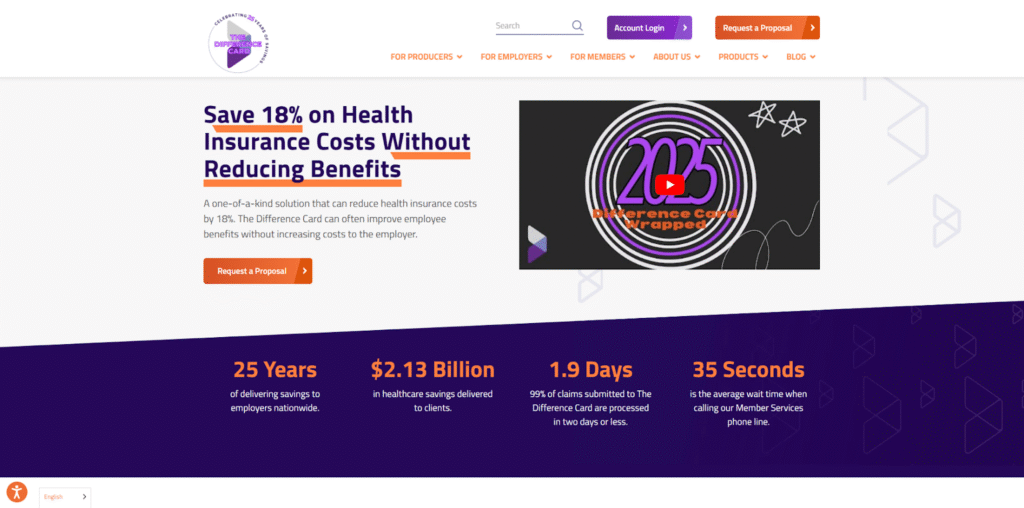
The Difference Card operates differently from traditional carriers. Instead of replacing your group health option, it overlays a medical expense reimbursement plan (MERP) on top of a high-deductible selection. The unique structure lowers premiums while reimbursing employees for eligible out-of-pocket expenses within a day or two.
Employers managing remote teams across multiple states appreciate how it preserves access to large national carrier networks while reducing overall health care spend. Its easy-to-access platform centralizes benefits administration, enabling distributed members to manage their claims and reimbursements from any location.
Key Features
- Carrier-agnostic structure: It connects with most major medical carriers and networks to provide a more comprehensive set of service delivery options.
- Significant employer savings: Companies save up to 18% on costs through strategic benefits restructuring.
- Integrated digital tools: A mobile app and online portal track balances and claims.
- Expanded benefit administration: It supports HSAs, FSAs and Lifestyle Spending Accounts.
2. Take Command
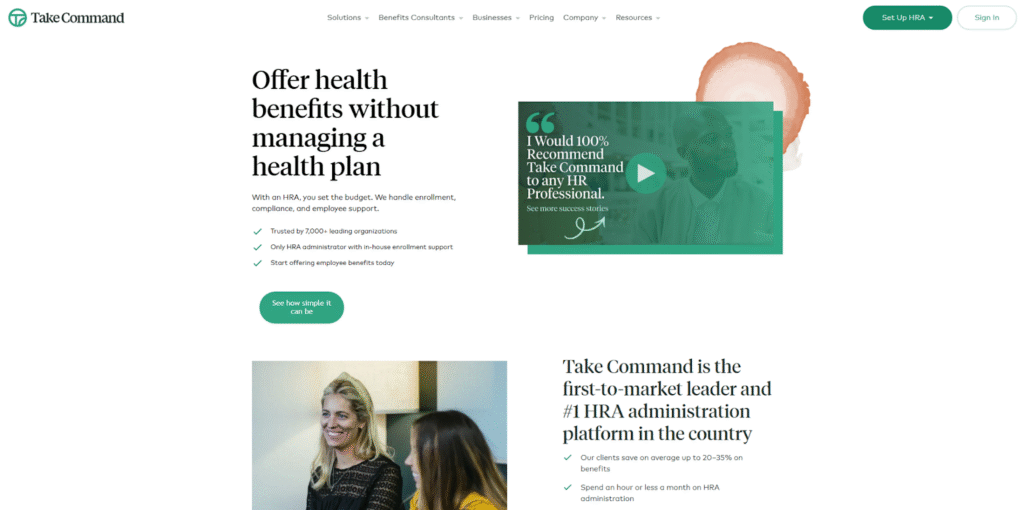
Take Command administers individual coverage reimbursement arrangements. Under this model, you provide employees with a tax-free monthly allowance to purchase their own health insurance plan that is compliant with the Affordable Care Act (ACA) on the individual marketplace.
For teams spread across diverse rating areas, this design allows each employee to select coverage aligned with their geographical and medical care needs. Employers enjoy advanced budgeting predictability while the service accommodates dispersed workforce claims.
Key Features
- Maximum employee autonomy: Beneficiaries use location-specific services.
- Defined employer contributions: Fixed pricing improves predictable cost forecasting.
- Geographic adaptability: Benefit caps may reflect local insurance costs.
- ACA-compliant structure: It is designed to meet most regulatory requirements.
3. SafetyWing
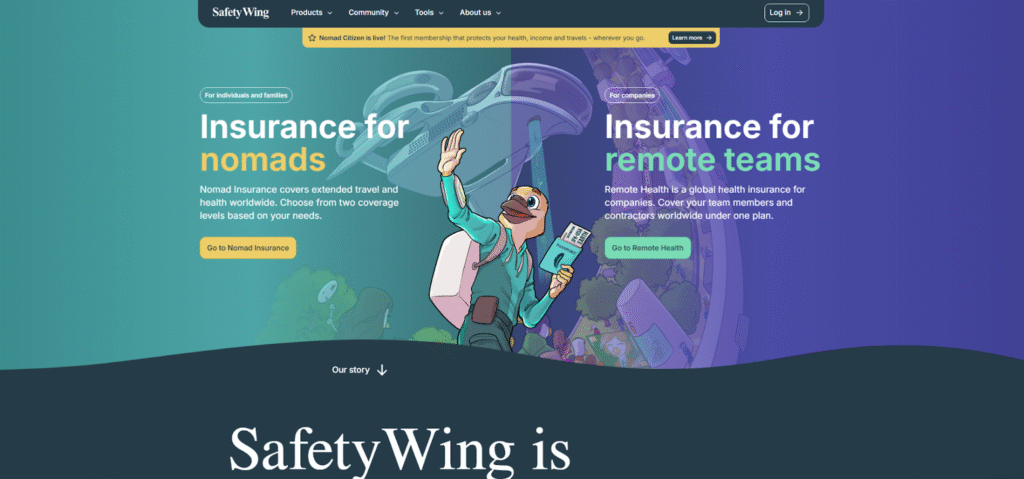
SafetyWing provides medical and travel insurance packages tailored to the needs of remote teams and globally distributed workforces. Its portable coverage suits employees who work between countries or regions.
For organizations employing international contractors or highly mobile professionals, SafetyWing’s subscription-style model simplifies enrollment and administration. Coverage typically includes medical care, emergency services and telehealth access across more than 175 countries, making it well-suited to globally mobile teams.
Key Features
- Global portability: Coverage adapts to the countries where remote workers are located, though benefits may be limited in some regions.
- Subscription-based structure: Monthly pricing models flexibly accommodate remote onboarding periods.
- Integrated telehealth access: Benefits include virtual mental health and medical consultations across time zones, ensuring better service delivery.
- Designed for digital nomads: Remote professionals receive tailored support.
4. Deel.
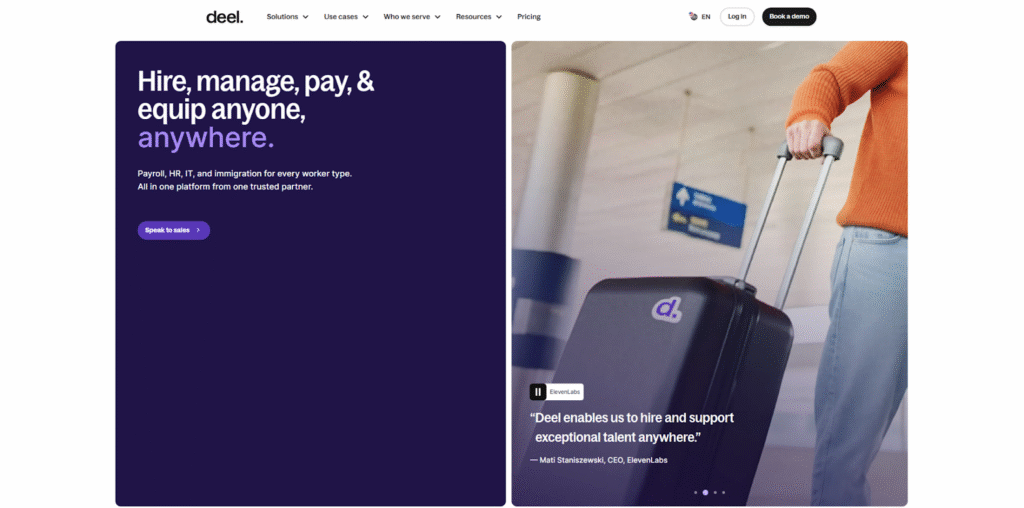
Deel. functions as an employer of record, managing payroll compliance and benefits for remote employees across multiple jurisdictions. Instead of offering only insurance, it delivers a comprehensive HR infrastructure that includes health benefits administration.
The model removes regulatory complexity for companies expanding rapidly into new states or countries. The provider assumes full responsibility for employees, meets diverse local compliance requirements and manages benefits to reduce employers’ legal exposure.
Key Features
- Multi-jurisdiction compliance: It ensures adherence to local employment laws.
- Integrated HR platform: The platform combines payroll, onboarding and benefits into one application.
- Scalable international hiring: It enables rapid geographic expansion.
- Consolidated vendor management: The solution centralizes workforce administration.
5. UnitedHealthcare
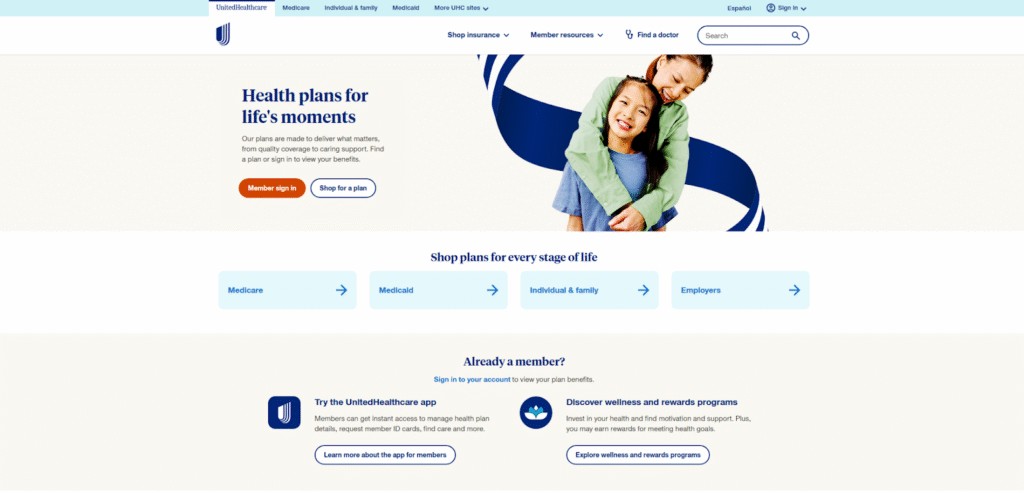
UnitedHealthcare is an example of a traditional preferred provider organization (PPO). These options are particularly relevant for those with broad national networks. The provider offers multi-state PPO plans that provide employees with access to an extensive provider network across the United States.
For U.S.-based remote workforces, the structure preserves familiarity and administrative simplicity. A single carrier provides whole-company administration, simplifying HR’s role as dispersed workers can access benefits across states.
Key Features
- Extensive national network: Users get comprehensive in-network medical provider access across the U.S.
- Established group insurance model: It provides familiar structures that remote staff feel comfortable using.
- Single-carrier administration: Employers get streamlined oversight.
- Comprehensive coverage options: It offers medical, pharmacy and supplemental benefits.
Comparing Remote Employee Medical Insurance Providers
If you’re still wondering what health plan options work best for employers with many remote employees, this side-by-side comparison can help.
| The Difference Card | Take Command | SafetyWing | Deel. | UnitedHealthcare | |
| Model type | MERP overlay | Reimbursement arrangement | Global subscription insurance | Full HR outsourcing | Traditional group plan |
| Best for | Cost-conscious multi-state employers | Maximum geographic flexibility | Internationally mobile teams | Global expansion | U.S.-based distributed teams |
| Cost control | Structured savings | Fixed allowances | Predictable subscription pricing | Service-based fees | Variable premiums |
| Administrative effort | Low, digital platform | Low, managed support | Low, online system | Very low, outsourced | Moderate |
Methodology for Selecting Top Health Plans
Each provider was assessed using four primary criteria:
- Geographic flexibility: Ability to support multi-state or international employees
- Cost management: Predictability and sustainability of employer spend
- Technology and administration: Digital tools, reporting and mobile accessibility
- Employee experience: Ease of enrollment, network access and claims transparency
Positioning Health Benefits for a Distributed Future
Remote work requires operational changes to accommodate distributed employees. Employers that rethink traditional health care benefits gain stronger cost control, broader access and improved employee satisfaction.
Whether prioritizing reimbursement overlays, individual marketplace flexibility, global portability or national PPO simplicity, the right approach aligns with each dynamic team’s geographic footprint and growth goals. A strategic plan designed today strengthens an organization’s resilience and competitiveness tomorrow.