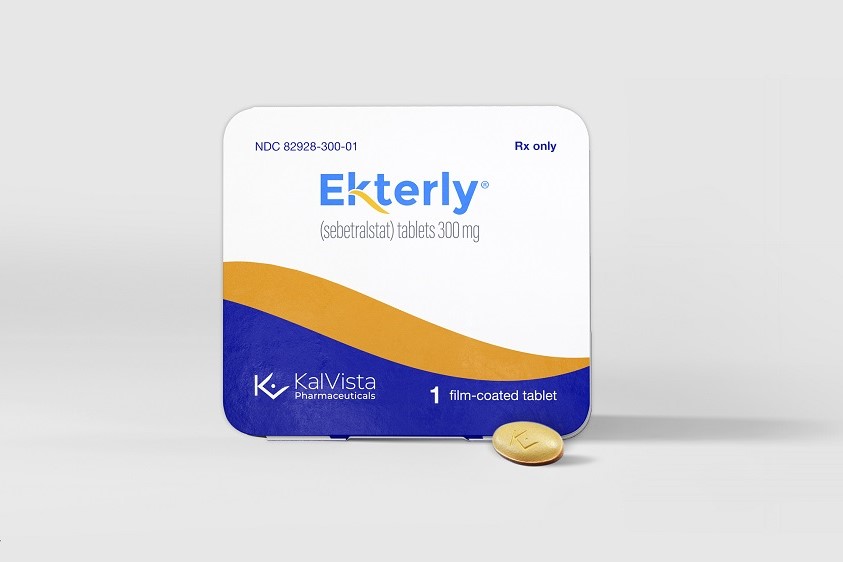
Chiesi Group built its rare disease portfolio through business deals and the company has its biggest one yet with a $1.9 billion agreement to buy KalVista Pharmaceuticals, a biotech whose newly commercialized drug is experiencing strong market uptake since landing its FDA approval last summer.
According to financial terms announced Wednesday, Chiesi will pay $27 in cash for each share of KalVista, a 40.3% premium to the company’s Tuesday closing stock price. The companies expect to complete the transaction in the third quarter of this year.
The main asset of Cambridge, Massachusetts-based KalVista is Ekterly, a drug for acute treatment of hereditary angioedema (HAE). In this rare genetic disease, patients experience sudden and painful swelling attacks in various parts of the body. An attack that restricts a patient’s ability to breathe can become life threatening.

The Hidden Administrative Tasks Draining Small Practices
Small practices play a critical role in healthcare delivery, but they cannot continue to absorb ever-increasing administrative demands without consequences.
Ekterly is a small molecule designed to block kallikrein, a protein that plays a role in HAE swelling attacks. Acute attacks can be treated by one medication marketed by Pharming Group and two from Takeda Pharmaceutical — all injections. FDA approval of Ekterly made the KalVista drug the first on-demand, oral treatment for acute HAE attacks in patients age 12 and older.
KalVista launched Ekterly immediately after the FDA approval was announced last July. For 2025, the company reported $49.1 million in product revenue. In a March research note, Leerink Partners analyst Joseph Schwartz said the Ekterly launch has been strong with the new drug securing nearly 20% market share in just a few quarters. Since the U.S. approval, Ekterly has received marketing authorizations in the European Union, United Kingdom, Switzerland, Australia, Singapore, and Japan. KalVista also aims to grow its market share by reaching younger children. An FDA submission is planned for this year that could expand Ekterly’s label to children age 2 to 11.
Chiesi is a privately held and family owned company with three business units: respiratory, rare disease, and specialty care. For fiscal 2025, Parma, Italy-based Chiesi reported €3.6 billion (about $4.2 billion) in revenue across all three divisions, an 8.2% increase compared to the prior fiscal year.
Chiesi’s rare disease division is Boston-based Chiesi Global Rare Diseases. This unit accounted for €906 million of the company’s fiscal 2025 revenue, a 22% increase compared to the prior fiscal year. The rare disease drug lineup includes Filsuvez, a rare skin disease drug from the $1.25 billion acquisition of Amryt Pharma, and the enzyme replacement therapy Elfabrio, developed in partnership with Protalix Biotherapeutics. Last year, Chiesi Global Rare Diseases began a partnership with Arbor Biotechnologies and its early clinical in vivo gene-editing therapy, marking the Italian company’s entry into genetic medicines.

Beyond Analytics: How Sellers Dorsey is Hard-Coding Value into Medicaid Policy [Video]
How to turn analytics into actual policy outcomes.
In the KalVista acquisition announcement, Chiesi said Ekterly will meaningfully contribute to its goal of reaching €6 billion (about $7 billion) in revenue by 2030. Giacomo Chiesi, executive vice president of Chiesi Global Rare Diseases, described the KalVista acquisition as a strong strategic fit with his company’s rare disease portfolio.
“In HAE, patients continue to face significant unmet needs, and KalVista’s innovation meaningfully expands our presence in rare immunology by adding a differentiated, on-demand treatment option that can bring meaningful advancement in how the disease can be managed,” he said in a prepared statement.
The HAE drug market spans both prophylactic and on-demand treatments, and both areas have seen notable developments in the past year. Less than two months after the Ekterly approval, the FDA approved Ionis Pharmaceuticals’ Dawnzera, an antisense oligonucleotide developed for preventing HAE attacks in patients age 12 and older.
The top product of BioCryst Pharmaceuticals is Orladeyo, the only pill approved for HAE prophylaxis. Last October, BioCryst expanded its scope in HAE, reaching a $700 million deal to acquire Astria Therapeutics, a company whose lead drug candidate could offer HAE prophylaxis with as few as two injections a year. And this week, Intellia Therapeutics reported Phase 3 data supporting its plans to seek FDA approval of lonvo-z, an in vivo gene-editing therapy that permanently inactivates a gene that codes for a protein involved in HAE swelling attacks. Intellia’s therapy offers the potential to be a one-time treatment for the disorder.
Direct competition looms for KalVista’s Ekterly. Pharvaris’s deucrictibant inhibits a different HAE target called the bradykinin B2 receptor. Late last year, Pharvaris reported this drug met the main goal of a Phase 3 study testing the capsule as an on-demand treatment in HAE patients age 12 and older. Pharvaris said it plans file a new drug application for deucrictibant in the first half of 2026. A long-acting version of this drug is also in late-stage testing for HAE prophylaxis; data are expected in the third quarter of this year.
Photo by KalVista Pharmaceuticals