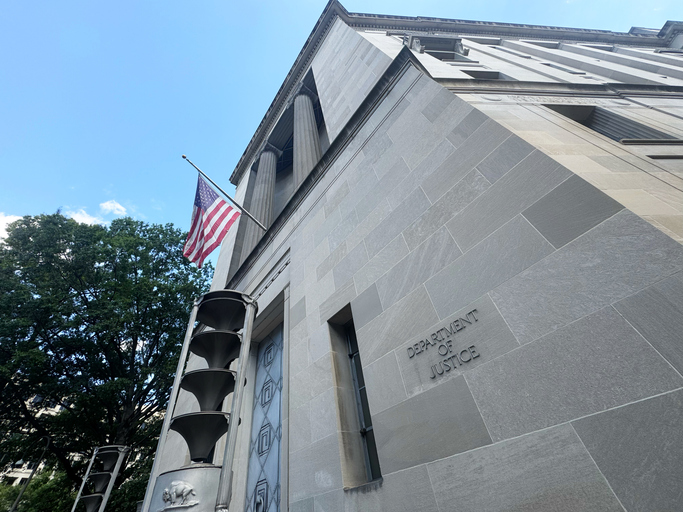
The Department of Justice is taking aim at two large health systems over contracts that the agency says stifle competition and keep patients from receiving affordable care. The lawsuits, both filed earlier this year, signal a broader crackdown on how hospitals use contracting practices to shape their market positioning.
The complaints claim that OhioHealth and NewYork-Presbyterian Hospital forced payers to contract with their entire health systems, rather than allowing them to pick and choose individual facilities. The Justice Department argues that these “all-or-nothing” contracting tactics block payers from steering patients to lower-cost providers.
Federal regulators launched the first antitrust lawsuit in February against OhioHealth, and followed with a second one in March against NewYork-Presbyterian. OhioHealth is one of the largest health systems in Ohio, spanning 16 hospitals, three joint venture hospitals and more than 200 ambulatory care sites. NewYork-Presbyterian is the largest health system in New York City, operating eight hospitals and dozens of outpatient care sites.


Inside an Automated Healthcare Practice: Redesigning Care Around People, Not Paperwork
By reducing administrative burden and redesigning workflows around human needs, it creates space for what matters most: connection between clinicians and patients.
Essentially, the agency is saying that this allegedly anticompetitive conduct insulates these health systems from price competition and allows them to maintain high prices.
The Justice Department claims that payers would have designed narrower, lower-cost networks if they had the option. These affordable providers are not identified explicitly in the complaints, but the agency generally refers to alternative, non-system providers and independent practices.
OhioHealth and NewYork-Presbyterian are cooperating with the reviews of their managed care agreements, but they both maintain that their contracting practices are lawful and benefit patients by ensuring broad access to care.
However, experts — including an antitrust lawyer, healthcare economist, patient advocate and frontline physician — believe that these types of contracting practices do drive up healthcare costs and squeeze independent doctors, as well as leave patients with fewer choices. And they say the stakes go far beyond New York and Ohio.

The Hidden Administrative Tasks Draining Small Practices
Small practices play a critical role in healthcare delivery, but they cannot continue to absorb ever-increasing administrative demands without consequences.
Inside the complaints
These cases are about competition suppression, not just high prices, said attorney Cory Talbot, a partner at Holland & Hart specializing in healthcare antitrust law.
The Justice Department is arguing that all-or-nothing contracts prevent patients from seeing cheaper or higher-quality providers, alleging that this practice decreases competition on both the price and quality fronts.
Contrast that with health systems, who think such contracting practices could expand patient access across facilities, Talbot noted.
“Somebody doesn’t have to, for instance, bypass multiple NewYork-Presbyterian facilities to get to a facility where they have coverage. They can go to any one that provides the services that they need. So from the health system perspective, that provides them with a good ability to provide a broad range of services at a number of facilities, and that provides a benefit to the patient,” he explained.
He added that he thinks this contracting behavior is “pretty common” among large health systems.
“This is not something that NewYork-Presbyterian and OhioHealth just came up with — a lot of health systems are negotiating like this,” Talbot remarked.
While these practices are common, he and the other experts still believe that the tactic does in fact raise costs and lower competition.
In order to prove that these arrangements can violate antitrust law, the Justice Department will have to show that the health system defendants have enough market power to meaningfully influence local prices and limit competition, he said.
The agency has already begun this effort in its two initial complaints. The first lawsuit stated that OhioHealth accounts for more than 35% of general acute care hospital stays in the Columbus area, and the second lawsuit said NewYork-Presbyterian’s handles more than 25% of such admissions across Manhattan, Brooklyn, Queens, and the Bronx.
Talbot said those figures are central to the Justice Department’s argument, but not sufficient on their own without showing they translate into real-world pricing power.
“Is that enough of a market that a patient would be able to say, ‘Can I go elsewhere?’ At the same time, is a patient limited by what the payer can do or what the payer can negotiate? Can a patient get services more cheaply, or is the patient stuck with what the payer negotiated with? I think the first thing [the Justice Department] needs to prove is how [the defendants] fit in the market,” Talbot declared.
Beyond proving the health system’s market dominance, the Justice Department will also need to provide evidence that the all-or-nothing contracts actually result in higher prices and severed access to better and cheaper care, he stated.
Sending a message
The lawsuits against OhioHealth and NewYork Presbyterian signify a shift in the nation’s healthcare antitrust enforcement. Historically, the focus has been on hospital mergers, but these two cases are scrutinizing contracting behavior.
Health systems have adapted to merger scrutiny, so regulators are now targeting what happens after consolidation, Talbot said.
He thinks both the lawsuits will likely end up in some kind of a settlement.
“I think that you’ll probably see both OhioHealth and NewYork-Presbyterian take a shot at getting these cases dismissed early on. And if that fails, I think you’ll see them negotiate with the DOJ and with the state to try to come up with a resolution,” Talbot remarked.
He said the lawsuits are “designed to send a message” and are likely to push health systems to rethink or abandon their all-or-nothing tactics in negotiations.
Another expert — Katie Keith, founding director at Georgetown University’s Center for Health Policy and the Law at the O’Neill Institute — agreed, saying that hospitals using these tactics “should be on notice that this might not be a sustainable strategy under this Department of Justice.”
Keith thinks the back-to-back cases signal a serious focus on contracting practices at the Justice Department. She noted that this is especially true in New York, allegations have been public for years and complaints from union health plans have helped drive scrutiny.
For years, union health plans have raised concerns that dominant health systems force them into all-or-nothing contracts, making it difficult to steer their members to affordable providers — a dynamic they say contributes to rising premiums and out-of-pocket costs for workers.
Keith also pointed out that there’s a notable amount of internal documents and communications in the Justice Department’s lawsuits, pulling back the opaque veil of contract negotiations.
“I feel like we don’t normally see that stuff in a complaint. Normally you see it after discovery, for example, but it seemed like the department already had its hands on a bunch of inside information to make its case,” Keith said.
For instance, one lawsuit cited data showing that preventing one payer from shifting colonoscopy procedures to another provider could be worth about $250,000 in retained revenue for NewYork-Presbyterian.
Citing this data shows that hospitals are financially motivated to restrict patient movement and that the Justice Department is building a data-driven case, Keith explained.
More importantly, the Justice Department is likely expanding investigations beyond these two health systems, she added.
Like Talbot, Keith thinks OhioHealth and NewYork-Presbyterian will file motions to dismiss, and then settlement is likely after that. This follows a pattern present in the other two high-profile lawsuits challenging all-or-nothing contracting in the past decade: Atrium Health’s case in 2018 and Sutter Health’s case in 2021.
Atrium settled its lawsuit with the Justice Department with no financial penalty. Sutter, on the other hand, had to pay the state of California $575 million.
Consolidation leads to higher costs
The lawsuits come as part of a larger affordability push by the presidential administration. Dr. David Eagle, a hematologist-oncologist at New York Cancer & Blood Specialists, applauded these efforts for going after hospital consolidation and contracting practices, which he said are directly raising costs and diminishing patient access every day.
Dr. Eagle noted that independent practices are being pushed out or absorbed, which reshapes the market in ways that hurt patients.
He described a before-and-after scenario from his oncology practice. It involved the same doctor, same location and same care.
Before joining a large health system, the doctor’s patients typically paid $50 to $70 per visit — but after the practice was acquired, those same visits often came with $300 co-pays and additional facility fees. Despite receiving care from the same doctor in the same location, some patients could no longer afford to return and were forced to seek care elsewhere or go without.
Dr. Eagle pointed out that independent practices typically have lower co-pays and often accept more insurance plans. His independent physician group accepts all insurance, unlike many large systems. Yet, it lacks hospital negotiating leverage and financial advantages.
“We don’t get the benefit of 340B. We don’t have the same commercial contracts. We don’t get programs like Medicaid 1115 waivers. But we’re the only major cancer provider [in the area] that accepts all Medicaid plans and accepts all insurance plans. I think that’s part of the perspective too,” Dr. Eagle remarked.
He said the disparity shows how market dynamics — not differences in care — are what is causing costs to climb and hurting access for patients.
Chipping away at the affordability crisis
These cost pressures ultimately land on patients navigating an increasingly restricted and confusing insurance landscape, pointed out Caitlin Donovan, senior director of the Patient Advocate Foundation. She said all-or-nothing contracting adds another layer to an already constrained system.
Donovan thinks the lawsuits target one piece of a broader affordability problem.
“There’s a lot of factors that go into this, but the average American isn’t aware of them. They’re aware of the repercussions. And if this lawsuit can go after one of those factors that make things so unworkable for the average American, then I will consider it a good,” she declared.
While she doesn’t foresee these cases being able to lower prices on their own, she thinks they could result in broader, more flexible networks for patients, with better chances for them to see their preferred doctors and afford care.
Donovan also noted that patients are increasingly being used as bargaining chips. It’s becoming increasingly common for patients to receive letters from hospitals or payers asking them to pressure the other side during contract disputes, she said.
“Constantly patients are being put in the middle of these struggles between providers and insurers, and yet, somehow I doubt that either of them are really looking out for patients. They’re mostly looking out for their own bottom line,” Donovan remarked.
For patients, the impact of these contracting disputes can be very real — it shows up in narrower networks, higher bills and fewer real choices when care is needed, she stated.
The Justice Department’s cases won’t solve these problems completely, but they could mark another step in increasing how much control patients actually have in a consolidated system.
Photo: Westy72, Getty Images