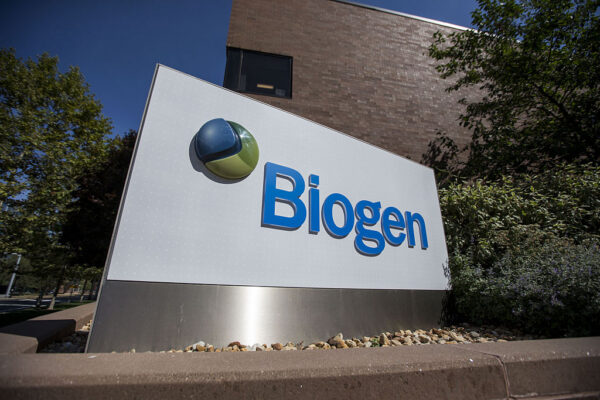
Biogen is acquiring Apellis Pharmaceuticals in a $5.6 billion deal that brings two FDA-approved products commercialized in four indications, all of which are expected to contribute to the revenue growth and pipeline diversification the company has been pursuing under CEO Chris Viehbacher. To understand how Apellis fits that strategy, look at a different Biogen M&A deal.
In 2024, the Cambridge, Massachusetts-based drugmaker paid $1 billion for Human Immunology Biosciences (HI-Bio), a startup whose lead program, felzartamab, was in mid-stage clinical development for multiple autoimmune indications — all related to the kidneys. At the time, Biogen said HI-Bio would help the company grow in immunology. Now with the Apellis acquisition, Biogen is continuing to hone its focus on nephrology.
Apellis already has an established commercial team with connections to the nephrology community, Viehbacher said during a Tuesday conference call. That presence will provide a foundation for the potential commercialization of felzartamab.

How Artera is Using Agentic AI to Humanize Patient Care
Artera President Tom McIntyre talks about the practical application of AI in healthcare.
“This is a new area for Biogen,” Viehbacher said of nephrology. “We believe with felzartamab we’ve got an extremely valuable program in our pipeline, but we’re busy trying to acquire capability in medical affairs, in commercial. And actually, the acquisition of Apellis really accelerates that.”
Multiple sclerosis (MS) drugs remain Biogen’s top source of revenue, but the company has been working to diversify its pipeline and portfolio beyond those older products. That strategy is taking Biogen beyond what had been a neuroscience focus. Besides MS, Biogen has also developed neuromuscular medications in partnership with Ionis Pharmaceuticals as well as drugs for Alzheimer’s disease under a collaboration with Eisai.
Apellis’s drugs address the complement system, a part of the immune system. The company’s main asset is pegcetacoplan, a peptide designed to block the complement protein C3. It was first approved in 2021 for treating the rare blood disorder paroxysmal nocturnal hemoglobinuria and is marketed in this indication as Empaveli. Last year, Empaveli’s label expanded to include the treatment of two rare kidney conditions, C3 glomerulopathy and primary immune complex membranoproliferative glomerulonephritis. For 2025, Apellis reported $102.4 million in Empaveli revenue, a 4.3% increase from the prior year.
A formulation of pegcetacoplan developed for injection into the eye won FDA approval in 2023 for treating the vision loss disorder geographic atrophy, where it is marketed as Syfovre. While this is a large indication affecting an estimated 1 million people in the U.S., the $586.9 million in Syfovre revenue in 2025 represents a 4% decline from the prior year. Syfovre’s main competition is Izervay, a C5 inhibitor marketed by Astellas Pharma.

The New Blueprint: How Clever Care Health Plan is Scaling Its Member Experience [Video]
MedCity News was at the Vive conference and spoke with executives who shared their insights for the healthcare industry.
Felzartamab is an antibody designed to target CD38, a protein expressed on the surface of plasma cells. Separate Phase 3 studies are evaluating the drug in antibody-mediated rejection (AMR) in kidney transplants, immunoglobulin A nephropathy, and primary membranous nephropathy. The nearest clinical trial readout will be in 2027, when the AMR study is expected to post data.
Leerink Partners has mixed feelings about the Apellis acquisition. Analyst Marc Goodman pointed to Biogen’s $7.3 billion acquisition of Reata Pharmaceuticals, a 2023 deal that brought an FDA-approved drug for the ultra-rare neuromuscular disease Friedreich’s ataxia. The investment community still questions the Reata price tag, so investors may have similar skepticism about the Apellis purchase price, Goodman said.
The financial terms of the deal call for Biogen to pay $41 in cash for each share of Apellis, valuing the biotech at about $5.6 billion. The per share price represents a 140% premium to the stock’s closing price before the deal was announced. Apellis shareholders will also receive a contingent value right that could pay out more: an additional $2 per share if the Syfovre reaches $1.5 billion in annual global sales in any calendar year between 2027 and 2030; $2 per share if the drug achieves $2 billion in sales in the same year. If those sales targets aren’t hit to trigger the payments, but Syfovre reaches $2 billion in global sales in 2031, the deal calls for a $4 per share payment. The companies expect to close the transaction in the current quarter.
Despite Biogen’s claim that Syfovre is better than Astellas’s geographic atrophy drug, Leerink is not excited about either product. Both drugs don’t work that well for treating geographic atrophy, contributing to slow adoption by physicians, Goodman said. Both are also administered as eye injections that patients don’t like — particularly if the benefit is uncertain. That said, Empaveli is a “nice strategic fit” with felzartamab, coming with a commercial team that could support the potential future launch of felzartamab, Goodman said.
Analysts at William Blair noted that Biogen stock traded down after the deal was announced, possibly due to investor questions about the purchase price. Even so, the bank noted that the Apellis products are expected to add more than $1.5 billion to Biogen’s total annual revenue by 2030. But William Blair does not believe Syfovre will achieve the revenue targets to trigger the additional payments.
“The Street reaction suggests that this is a show-me story as Empaveli could be the bigger growth driver per Biogen commentary despite being the smaller revenue contributor currently,” William Blair said in the research note. “However, we see the deal as helping offset the near-term top-line decline of the MS franchise and providing a source of longer-term growth.”
Photo: Scott Eisen/Bloomberg, via Getty Images