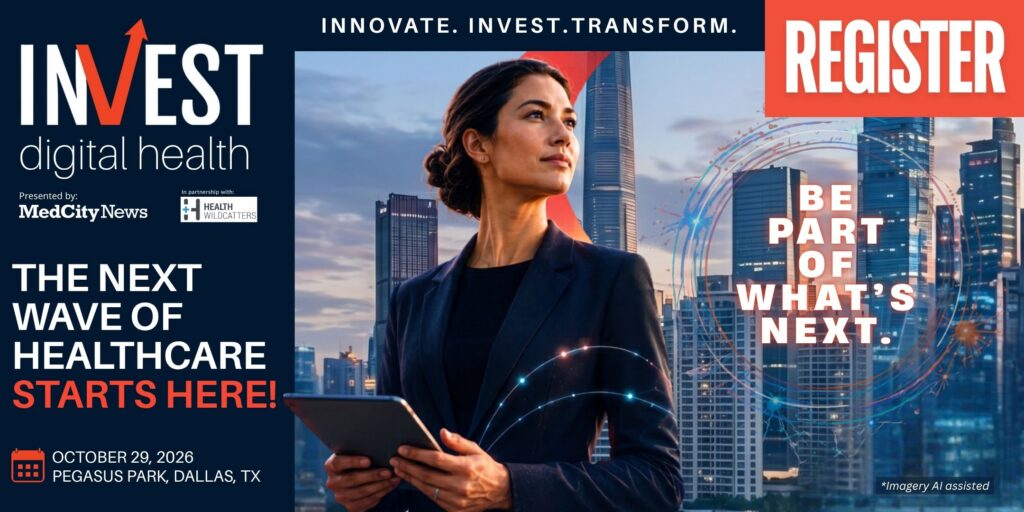
Although direct to consumer business models have had mixed success in healthcare historically, a report from Boston Consulting Group published earlier this year noted that some key guidelines have emerged in terms of how the healthcare industry now thinks about consumers. They include designing products and services that address friction for patients with empathy; improving trust with transparency and accountability; and adoption of a consumer-first mindset. Some of these concepts will be part of the conversation at the INVEST Digital Health Conference, scheduled for October 29 in Dallas at Pegasus Park and held in partnership with Health Wildcatters.
A preliminary agenda has been set, and some of the speakers have been confirmed. They include:
- Jack Stockert, Managing Director at Health2047
- Leo Grady, CEO, Jona
- Bethanie Baynes, Director of Corporate Business Development, Amazon
- Tanvi Jayaraman, Clinical Lead for Health AI, Oura
- Patrick Sheehan, Vice President of Value-Based Care, Withings
- Ali Diab, CEO, Collective Health
- Ken Nelson, Partner, Nelson Jennings Ventures
- Tom Samuelson, CFO, Twin Health
- Peter Micca, Managing Partner, Caduceus Capital Partners
- Shashi Shankar, CEO, Novellia
- Arpan Parikh, CEO, Kin Health
The preliminary agenda includes seven sessions:
From Lab to Living Room: The Rise of Consumer Diagnostics
From gut health analysis to STI check-ups to whole-body biomarker testing, patients are increasingly turning to direct-to-consumer diagnostics platforms for answers about their health. In this session, leaders from startups in this space will talk about the level of personalization, clinical rigor and consumer engagement needed in order for people to navigate this type of personal health data.
How Convenience Is Reshaping Clinical Strategy
Patients’ evolving preferences and expectations have forced health systems and digital health companies to rethink how care is delivered. This panel will dive into how providers are offering patients the level of consumer-centric convenience they’ve become accustomed to in other areas of their life — and how this shift can lead to improved loyalty, adherence and outcomes.
Cutting Out the Middlemen: The New Age of Consumer Drug Platforms
Consumers want healthcare to work like retail, with transparent pricing, home delivery, intuitive digital experiences and on-demand access. In response, drugmakers are reshaping how patients access and purchase medications by launching direct-to-consumer platforms that bypass middlemen, which could bring pharma closer to the patient than ever before. Hear pharma leaders explore how consumer-facing models are challenging traditional healthcare distribution channels, as well as discuss whether these new platforms can improve affordability and adherence.
The Payer’s Role in the Consumer Health Era
As healthcare becomes more and more consumer-driven, how are payers fitting into the equation? From covering direct-to-consumer digital health tools to integrating members’ wearable data to deploying voice AI for navigation and member support, payers are being pushed to go beyond traditional benefit design — and this discussion will shed light on how they are responding to rising consumer expectations.
Building the DTC Weight Loss Economy, One GLP-1 Script at a Time
GLP-1 drugs are still one of the fastest-growing segments in digital health. Consumers have a wide array of direct-to-consumer weight loss platforms to choose from, but questions remain about unit economics, patient retention, payer involvement and long-term outcomes. This panel will explore how weight loss startups are structuring their businesses and engaging their patients to achieve health goals, as well as how they’re managing drug supply constraints and evolving beyond prescriptions into complete metabolic health offerings.
When Consumer Brands Enter Employers’ Benefits Stack
The line between healthcare, consumer technology and employee benefits is blurring. More and more employers are partnering with consumer brands to deliver health services that feel more like retail experiences than traditional insurance offerings. Hear benefits leaders discuss how this trend is changing access and engagement.
How Are Wearables Changing Health Behavior?
Millions of people across the country don wearable devices like smartwatches and smart rings every day. These devices have moved beyond step counting into the continuous monitoring of sleep, heart health, stress and metabolic signals. Listen to industry leaders discuss how they’re working to validate wearable data and integrate it into care delivery, as well as what they see coming down the pipeline in terms of reimbursement and regulatory pathways for wearable-driven care.
Sponsors for the event include LH Capital, Health Wildcatters, and Pegasus Park. If you’re interested in becoming a sponsor for this conference, please contact [email protected] to discuss how we can create a tailored sponsorship package that meets your company’s strategic goals.