
In many hospitals, quality improvement still feels like an event, something that happens in bursts when new initiatives launch or in response to an event. But sustainable quality doesn’t live in binders or dashboards; it lives in the small, repeatable actions that happen every day.
When quality becomes a daily habit and a natural part of documentation, results stop depending on one project or one champion.
Step 1: Anchor every day in clear, shared purpose

The Power of One: Redefining Healthcare with an AI-Driven Unified Platform
In a landscape where complexity has long been the norm, the power of one lies not just in unification, but in intelligence and automation.
Quality improvement sticks when it’s connected to what teams already value, like excellent patient care.
Start each initiative by defining what “good” looks like in measurable, meaningful terms. Make those goals visible and tangible: discuss them in huddles, display them on unit boards, and celebrate progress weekly.
When teams understand the “why” and see how their daily work contributes to it, quality becomes part of their identity, not just another metric.
Step 2: Prioritize efforts based on impact

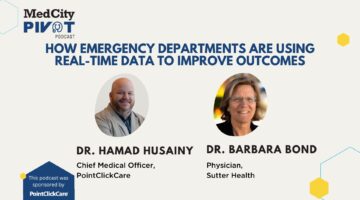
MedCity News Pivot Podcast: How Emergency Departments Are Using Real-Time Data to Improve Outcomes
How can AI benefit and improve patient outcome in the emergency department? Watch the latest episode to find out.
Trying to fix everything at once is a fast path to burnout. Focus matters.
Use data and benchmarks to identify where performance lags behind peers or where improvement could yield the greatest gains. Analyze patterns in outcomes, documentation, and revenue to uncover high-leverage opportunities. Lastly, select a few clear priorities and build improvement plans around them
Prioritization helps teams spend energy where it matters most and creates quick wins that build momentum.
Step 3: Build quality into the workflow, not around it
Habits thrive when they’re easy to accomplish. Quality shouldn’t require extra steps or separate meetings, it should live in the same workflow clinicians already use.
Work on establishing standardized processes and tools like dashboards, checklists, templates and think about building feedback loops so insights lead to action in real time.
Workflows like these turn abstract improvement ideas into concrete, daily behaviors.
Step 4: Use real-time data to drive action
Delayed data delays improvement. Teams need visibility into what’s happening now, not just what happened last quarter.
Focus on providing real-time performance data at the frontline, team, and organizational level, use case-level insights to identify gaps and address them quickly, and share progress metrics publicly to build trust and engagement.
Real-time feedback transforms data from a report card into a mirror that guides improvement in the moment.
Step: 5 Celebrate and spread everyday excellence
Lasting quality improvement is cultural as much as operational. Being able to recognize and reward contributions to quality goals and incorporate ongoing training, peer learning, and coaching is a crucial step in quality improvement. Once a process works, standardize and replicate it across teams or service lines.
This creates a reinforcing cycle: improvement drives success, and success strengthens the culture of improvement.
Making quality a daily habit
The future of healthcare quality isn’t another initiative, it’s integration. When clinicians and quality teams make improvement part of their daily rhythm, excellence becomes reflexive. That’s how organizations move from chasing quality to living it one deliberate habit at a time.
Photo: marchmeena29, Getty Images

At Tendo, Deb Jones' focus is on harnessing the power of innovative technology to enhance healthcare delivery and outcomes. Her role as Senior Director Insights Strategy enables her to influence quality outcomes and strategic growth. The team thrives under pressure, ensuring that Tendo remains at the forefront of healthcare innovation.
Previously, as Associate Principal at Chartis, she contributed to developing robust strategies that addressed complex challenges in healthcare. Now, with a commitment to fostering a culture of excellence at Tendo, her mission is to empower our talented team with the vision and tools necessary for transformative success.
This post appears through the MedCity Influencers program. Anyone can publish their perspective on business and innovation in healthcare on MedCity News through MedCity Influencers. Click here to find out how.