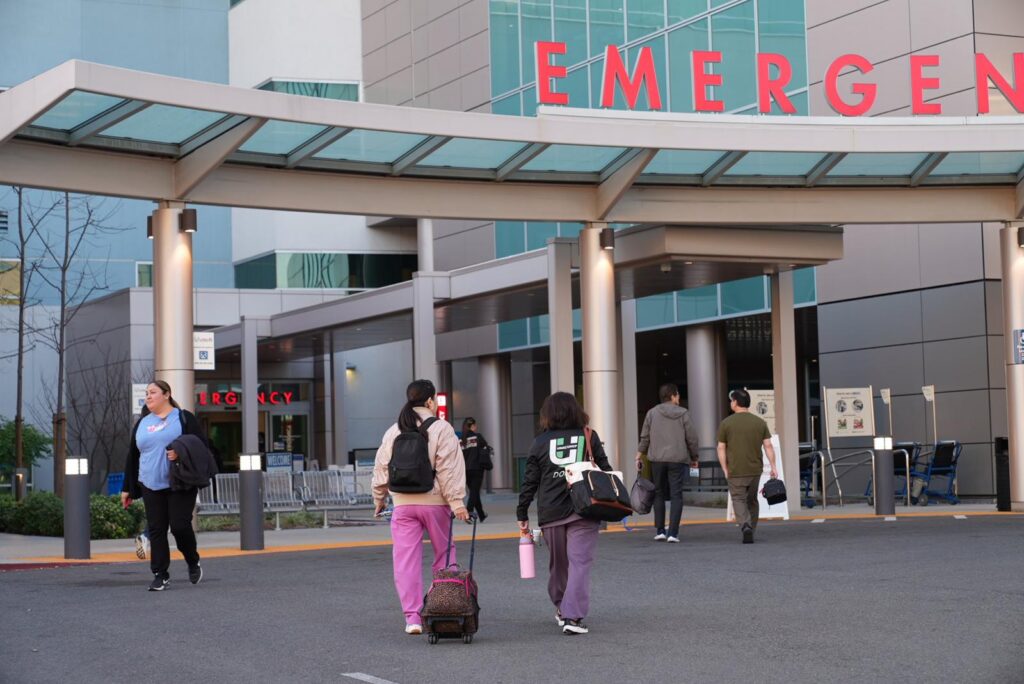
Roughly 31,000 Kaiser Permanente nurses and other healthcare workers returned to work on Tuesday following a four-week strike. The strike ended because there has been significant movement at the bargaining table — but a full, finalized contract has not been ratified yet.
Workers said chronic understaffing, mounting workloads and wage proposals that fail to reflect cost-of-living pressures fueled the walkout, which began on January 26. They frame the strike as a fight for patient safety, as they have seen up close how inadequate staffing can hurt care quality and patient outcomes.
The workers who went on strike are represented mainly by the United Nurses Associations of California/Union of Health Care Professionals (UNAC/UHCP). Their strike impacted 20 hospitals and 200 clinics across California and Hawaii.


Closing the Quality-Affordability Gap in Workplace Mental Health
In an interview, Kyan Health Co-Founder and Chief Commercial Officer Konstantin Struck discussed how Kyan gives mid-market and enterprise employers access to premium workforce mental healthcare, at a price point that is affordable.
This type of labor dispute is nothing new for Kaiser. This same group of 31,000 workers went on strike as recently as October, when they walked out for five days over concerns related to staffing, wages and patient care.
The draft deal that ended this most recent strike includes several key measures the union had been seeking. For instance, UNAC/UHCP fought to end “paper staffing.”
This is a practice in which charge nurses and break relief nurses are counted toward patient ratios even though they are not consistently available to deliver direct patient care. The union argued that this artificially inflates staffing levels on paper but leaves fewer bedside nurses available in practice, contributing to ongoing understaffing and heavier workloads.
To further address the understaffing problem, the tentative agreement includes a new internal registry to deploy nurses to cover short-staffed units. The registry creates a pool of Kaiser-employed nurses who can be temporarily reassigned to units that need more staffing, which could allow Kaiser to fill gaps faster without relying as heavily on outside agency staff or mandatory overtime.


Inside an Automated Healthcare Practice: Redesigning Care Around People, Not Paperwork
By reducing administrative burden and redesigning workflows around human needs, it creates space for what matters most: connection between clinicians and patients.
A significant wage increase is also part of Kaiser’s proposal.
UNAC/UHCP had initially been pushing for a 25% wage increase over the four-year life of the contract, arguing it was needed to catch up with inflation and past wage stagnation. Kaiser’s offer came in lower, at 21.5% — which the union said didn’t fully meet its members’ needs or match what other unions had won. Despite that, after negotiations, UNAC/UHCP decided to accept the 21.5% deal, saying that it’s part of a broader package that includes actual wins for safer staffing.
In a statement issued this week, UNAC/UHCP President Charmaine Morales said the union’s commitment to its patients has never been stronger.
“We went up against a $76 billion organization that tried to silence us with money while ignoring safety. We didn’t let that happen. We won real protections for our patients, and we will enforce every single one of them. Kaiser now knows that this union is not going away, and that the healthcare professionals who keep this system running will always put patients first,” Morales said.
Kaiser called the strike “entirely unnecessary” in a statement of its own. The health system went on to say that the union’s acceptance of the 21.5% wage increase is “good progress” that can move the two parties closer to a contract agreement.
“Our bargaining with UNAC/UHCP and each of the Alliance of Health Care Unions continues at local tables. We are continuing to make progress and remain optimistic about reaching contract agreements soon,” a Kaiser spokesperson said.
The strike’s end comes amid a wave of recent wins for nurses unions.
On Saturday, about 4,200 nurses represented by the New York State Nurses Association ended their 41-day strike at NewYork‑Presbyterian Hospital and voted to ratify a new contract with wage increases and improved staffing protections. And earlier this month, two other health systems in New York, Mount Sinai and Montefiore, put an end to the nurses’ strikes happening at their facilities by signing new contracts with the same union.
Photo: UNAC/UHCP, Getty Images