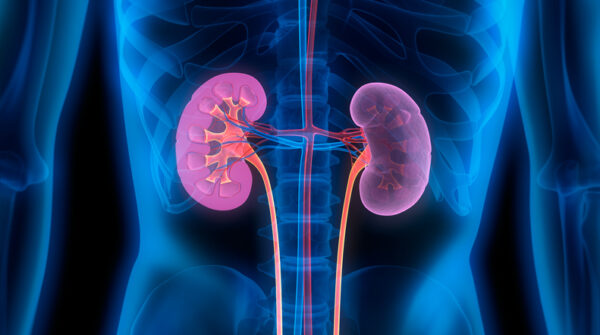
As hospitals look for ways to reduce preventable complications, researchers at New York’s Mount Sinai health system are harnessing AI in a bid to predict which patients are at highest risk for post-operative acute kidney injury (AKI), a common, expensive, and sometimes serious surgical complication.
That effort will be supported by a 5-year, $4 million grant that the Icahn School of Medicine at Mount Sinai received from the National Institutes of Health (NIH). Knowing which patients are at highest risk can help clinicians create prevention strategies tailored to each patient. The model will be based on data from more than 320,000 patients at 15 hospitals using a technique known as federated learning.


Closing the Quality-Affordability Gap in Workplace Mental Health
In an interview, Kyan Health Co-Founder and Chief Commercial Officer Konstantin Struck discussed how Kyan gives mid-market and enterprise employers access to premium workforce mental healthcare, at a price point that is affordable.
The need is clear, per the announcement. An estimated 50 million noncardiac surgeries are performed each year in the U.S., and past history suggests that approximately 12% of those patients will develop postoperative AKI.
AKI can happen when kidney function is temporarily impacted due to the intense fluctuations in blood pressure, heart rate, and breathing that sometimes occur during surgery. Blood loss and other psychological stressors contribute to a slow down of kidney function and a transient drop in the kidneys’ ability to filter waste products from the blood stream. Patients with pre-existing kidney or heart problems are most at risk, but AKI can happen to any patient. There is not a direct treatment for the condition – patients typically receive supportive care while the AKI resolves.
Postoperative AKI not only leads to longer inpatient stays – it can progress to more serious complications, said Dr. Ira Hofer in an email to MedCity News. Hofer is an anesthesiologist and clinical informaticist at Mount Sinai, and the principal investigator on the study.
“AKI causes patients to spend more time in the hospital and patients with AKI are also more likely to have other complications like heart attack, stroke, delirium, and even death,” Hofer said.

Why Pharma Companies Should Look To Social Media For Better Patient Insight
Healthcare decision-makers, especially at pharmaceutical companies, must prioritize patient input. Data collected from social media listening is a significant step in the right direction.
According to one study, the risk-adjusted average cost of care for patients undergoing surgery was nearly $16,000 more for surgical patients with any AKI compared to those without AKI. – per surg
“Our goal is to use the wealth of information available in electronic health records to identify patients at risk before surgery and move toward prevention strategies that are better matched to each patient,” Hofer added in a press release.
Through federated learning, Mount Sinai researchers can collaboratively train AI models without transferring individual patient information between health systems. Then change this sentence from the press release – Researchers from Mount Sinai, Vanderbilt University, and the University of California, Los Angeles, will contribute expertise in anesthesiology, nephrology, biomedical informatics, and health data science in order to develop and train the models.
Researchers plan to analyze whether the resulting models more accurately predict AKI. They also plan to examine which preventive interventions work best for different patient groups. For example, patients who are shown to be at higher risk of AKI might receive closer monitoring of kidney function and more careful management of blood pressure and fluid balance during and after surgery. For patients at lower risk, standard monitoring may be appropriate.
Hofer said the research team’s goal is to move beyond one-size-fits-all methods of preventing AKI and help clinicians spot the risk earlier so that personalized prevention strategies can be implemented.
“We already have robust access to the data we need to create the models, so once we have models that work we will start clinical trials to test them in practice,” Hofer said. “Better models to predict AKI will allow hospitals to be more proactive and save while making sure patients do better.”
Photo: peterschreiber.media, Getty Images