
Keeping Honest in Healthcare: Engineering Accountability into AI
When AI is honest and acts as a connector in healthcare workflows, clinician time is freed up, accuracy is ensured, and revenue is protected.
When AI is honest and acts as a connector in healthcare workflows, clinician time is freed up, accuracy is ensured, and revenue is protected.

Confirmed diversion cases do not equal true prevalence - they are directly dependent on investigative proficiency, tooling, and the bandwidth of the teams doing the work.


Greenway Health blends smart technology with human expertise to elevate revenue cycle.

I lived for nine years with ALS while navigating a healthcare system that routinely obscured my own medical reality. But I know that pain is only amplified for individuals without medical expertise like mine.

Relationships between health systems, non profits, universities and public agencies are not new. The difference here is a nuance, the structure of the relationships are what stands out in these collaborations.

True interoperability is a prerequisite for patient-centered, efficient and scalable digital health solutions. And among the different types of interoperability, semantic interoperability stands out as the goal many are striving toward.

Addressing the burnout demands integrated systems that lighten administrative burdens rather than compound them.


In a recent interview, Esperion president and CEO, Sheldon Koenig talks about the reality of statin intolerance and his company’s expansion into new diseases

Every year shaved off the diagnostic odyssey means fewer irreversible complications, fewer misdiagnoses, and fewer clinicians and families left wondering what they missed. A unified, longitudinal approach doesn’t just speed up diagnosis — it changes, and in some cases saves, lives.

Data is fueling the AI revolution, but it must be aligned with solving business challenges.

While data and cost are important elements in recognizing issues, the measure of success isn’t just about the data or the numbers; it’s about ensuring that older adults can manage and maintain their expectations about health and aging in place.

A universal medical coder, applied consistently across care settings, offers a practical solution to the enduring challenge of data integrity.

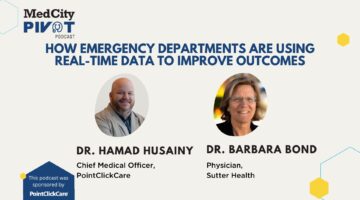
How can AI benefit and improve patient outcome in the emergency department? Watch the latest episode to find out.

Network inaccuracy isn’t an inconvenience – it’s a public health crisis.

Data only drives change when the right people see the right numbers at the right time and someone owns the follow-through.

Medical AI developers who prioritize data early will be the ones crossing the regulatory finish line faster and more reliably.

In the shift from isolated expertise to collective insights, shared data are revolutionizing patient care in EMS and hospitals.

Equity has to be built into the deployment strategy from day one, not treated as a future retrofit. That means prioritizing inclusion not only in the data but in the delivery, and recognizing that inclusive deployment is the foundation for inclusive datasets.