
Data is often called the new gold in healthcare. However, like gold, dirty data in healthcare remains a critical challenge that costs organizations both efficiency and opportunities. As I’ve seen countless times in healthcare organizations, it’s not fancy technology that makes or breaks success — it’s whether your data is clean and usable.
Over the past several years, healthcare organizations have collected more data than ever, yet many struggle with its effective utilization. According to IBM, the American economy loses at least $3 trillion annually due to data quality issues. In healthcare alone, this translates to approximately $300 billion yearly — 14 cents of every dollar vanishing due to poor data management.
When we talk about data quality in healthcare, we encounter three fundamental challenges:


Automation Didn’t Dehumanize Care. Bad Systems Did.
We have the opportunity to design systems that give people greater capacity for the work where human presence matters most: listening, understanding, reassuring, deciding, and caring.
- The quality of data collection and entry
- The integration and standardization of data across systems
- The maintenance and governance of data over time
The three pillars of healthcare data quality
Let me share what I’ve learned after years of experience in the healthcare industry helping organizations transform their data strategies. It all comes down to what I call the three P’s: People, process, and platform. But let me break this down in a way that matters to the bottom line and, more importantly, to patient care.
First, let’s talk about people — the backbone of any successful data strategy. Healthcare teams need to understand more than just how to handle data; they need to comprehend what the data represents — patient lives, healthcare journeys, and clinical decisions. I’ve seen organizations invest millions in cutting-edge platforms only to fall short because they didn’t invest in their teams. Healthcare staff needs more than just technical training — they need to understand the story behind every data point. When care managers look at dashboards, they should see beyond numbers to opportunities for improving patient outcomes. Research consistently shows that organizations with data-literate teams achieve 30% better outcomes in their digital transformation initiatives. It’s about building teams that can translate data into actionable insights for better patient care.
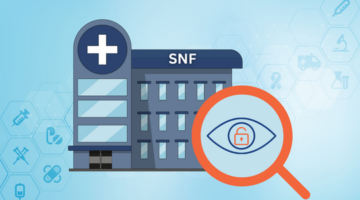
From Blind Spots to Better Outcomes: How SNF Data Transparency Strengthens LTSS
What if health plans could identify member decline before an avoidable hospitalization occurs? Real-time clinical visibility into long-stay SNF members uncovers risk earlier and drives better outcomes.
Next comes process — the engine that drives data transformation. In healthcare, organizations deal with a complex web of information — from clinical notes to claims data, pharmacy records, and social determinants of health. The scale of this challenge is massive, with our healthcare system managing over 1,300 different medical databases, not including the additional 85,000 medical repositories on data.gov. With approximately 80% of medical data remaining unstructured or unused after creation, organizations typically utilize only about 20% of their available data meaningfully. The key is having robust processes for both understanding and extracting value from this data.
Finally, the software platform — the foundation that brings it all together. Think of it as the central nervous system of an organization’s data infrastructure. When dealing with over 1,300 different medical databases across the healthcare ecosystem, effective healthcare data aggregation becomes essential to success. Poor data quality isn’t just an inconvenience; it’s a $300 billion annual problem that directly impacts patient care. Healthcare organizations need platforms that can handle multiple data sources, standardize information, and make it accessible to the right people at the right time. But here’s the key that many miss: the platform must be flexible enough to evolve with organizational needs and sophisticated enough to maintain data integrity throughout its lifecycle.
The importance of longitudinal patient record
After 20 years of architecting healthcare solutions, I’ve learned one fundamental truth: healthcare data needs a single source of truth. Fragmented data isn’t just an IT problem — it’s a patient care problem. Data control and transparency aren’t just buzzwords — they’re the foundation of healthcare delivery. Healthcare organizations aren’t just struggling with dirty data; they are missing the complete story of their patients’ journeys.
Think about this — every day, clinicians make decisions based on fragments of patient information. It’s like trying to solve a puzzle with half the pieces missing. The vision for healthcare should be centered around creating a truly longitudinal patient record that depicts each stage of a patient’s healthcare journey. From their first primary care visit to their latest specialist consultation, from medication histories to social determinants of health — everything should be in one place, flowing freely yet securely through the system.
The longitudinal patient record is healthcare’s true north. It’s where organizations find their single source of truth, enabling them to make informed decisions, reduce redundancies, and ultimately deliver better patient care. When you combine clean data with longitudinal patient records and transparent access — that’s when you start seeing real transformation in care delivery.
This is what true interoperability looks like — not just systems talking to each other, but information flowing seamlessly to the right people at the right time. It’s about giving healthcare providers the complete picture while maintaining strict control over who sees what and when.
Remember, in healthcare, we’re not just managing data — we’re managing lives. Every data point represents a patient’s journey, a clinical decision, or a care outcome. The cost of poor data quality isn’t just measured in dollars lost but in opportunities missed to provide better care. The time to act is now — patient outcomes, healthcare teams, and organizational success depend on it.
Photo: eichinger julien, Getty Images

GiriRaj Chandran is the Vice President at Persivia Inc., bringing over 20 years of experience across Electronic Medical Records (EMR) and Practice Management (PM), Revenue Cycle, Patient Engagement, Population Health Management, Clinical Trials, Outcomes Research, and Data Integration — including EMR, clinical, and claims data (medical, vision, dental, pharmacy). With a focus on Value-Based Care, GiriRaj is an innovative and entrepreneurial software engineering leader, recognized for driving product development from initial concept to successful commercialization. He leads highly skilled, creative teams to deliver cutting-edge software and platforms that simplify end-user experience while addressing complex industry challenges. Known for his collaborative approach, GiriRaj inspires teams to achieve high-quality solutions in competitive, fast-paced environments by envisioning outcomes and working collectively toward exceptional results.
This post appears through the MedCity Influencers program. Anyone can publish their perspective on business and innovation in healthcare on MedCity News through MedCity Influencers. Click here to find out how.