On Monday, AI powerhouse Nvidia kicked off this year’s J.P. Morgan Healthcare Conference by announcing new and expanded partnerships aimed at embedding AI even deeper into drug discovery and pharmaceutical research.
Most notably, Nvidia is teaming up with Eli Lilly to launch a joint innovation lab in South San Francisco. The partners said the lab’s overarching goal is to accelerate drug discovery by applying advanced AI models to longstanding biotech challenges.
The lab will bring together Lilly’s biology, chemistry and medical experts with Nvidia’s AI engineers to create more powerful AI models that can speed up the identification and validation of new drug molecules. A key focus will be building a “continuous learning system” that connects Lilly’s wet labs with computational dry labs so AI can assist and iteratively improve experiments and model development around the clock.
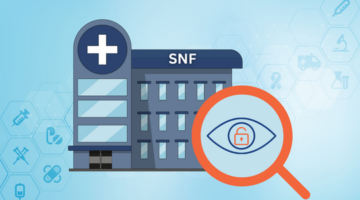
From Blind Spots to Better Outcomes: How SNF Data Transparency Strengthens LTSS
What if health plans could identify member decline before an avoidable hospitalization occurs? Real-time clinical visibility into long-stay SNF members uncovers risk earlier and drives better outcomes.
“Combining our volumes of data and scientific knowledge with Nvidia’s computational power and model-building expertise could reinvent drug discovery as we know it. By bringing together world-class talent in a startup environment, we’re creating the conditions for breakthroughs that neither company could achieve alone,” Lilly CEO David Ricks said in a statement.
Beyond drug discovery, the collaboration also seeks to explore the application of AI, robotics, digital twins and advanced computing across Lilly’s clinical development, manufacturing and commercial operations.
The lab is expected to be functional early this year. Nvidia and Lilly plan to spend up to $1 billion on the lab’s talent, infrastructure and computing over the next five years, according to the news release.
BioNeMo — Nvidia’s generative AI platform built for drug discovery — will serve as the lab’s primary software infrastructure. In addition to its biotech collaboration with Lilly, Nvidia said it is partnering with more and more drugmakers to integrate BioNeMo into their lab infrastructures and close the loop between computational AI workflows and real-world experiments.

Where Will AI Deployment Benefit Payers the Most?
We are taking a look at how health insurers are using AI, defining success, and managing cybersecurity risks. Give us your opinions by completing our brief, anonymous survey.
The open development platform is designed to turn vast scientific data into actionable insights by helping researchers more quickly identify promising drug candidates and understand how they are likely to behave, cutting down on trial-and-error in the lab.
Nvidia announced that it has improved the platform with new capabilities, including updated models for RNA structure and drug synthesis practicality and new data processing tools.
The company also said it has begun working with Thermo Fisher Scientific to make biotech research labs far more automated, so scientists don’t have to manually run, monitor and analyze every experiment.
By connecting Thermo Fisher’s lab instruments with Nvidia’s AI computing, the partners are setting out to create labs that can plan experiments, run them, check for errors and then analyze results with minimal human oversight. Instead of data sitting in silos or waiting for researchers to review it, the system will be designed to process results as experiments happen and decide what to do next.
Nvidia’s efforts in the life sciences field aren’t limited to software and analytics, though — the company is also pushing AI deeper into the physical lab through automation and robotics.
The firm shared details about how robotics startup Multiply Labs is using its Omniverse and Isaac simulation tools to build robot systems that help produce complex cell therapies faster and cheaper by automating work people currently do by hand. Nvidia said its tools allowed Multiply to create digital replicas of lab environments and train robots virtually to perform delicate tasks with high precision before they ever touch real materials.
More partnerships like this could scale up manufacturing of advanced treatments and make them more accessible, the partners said.
Overall, Nvidia’s Monday announcements highlight how the company is positioning itself as a core technology provider across the pharmaceutical R&D pipeline.
Photo: Bing-Jhen Hong, Getty Images