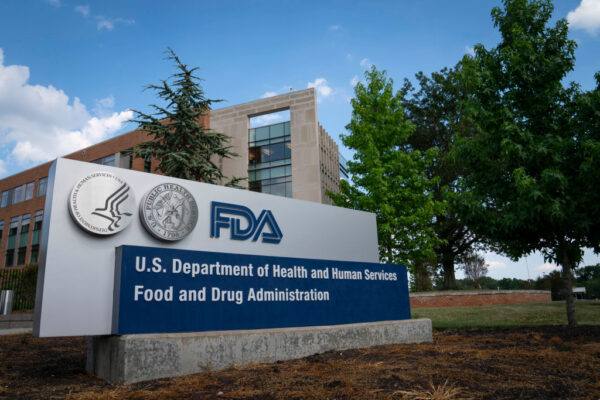
A patient in a clinical trial for a Regenxbio gene therapy developed a brain tumor, leading the FDA to place the study under a clinical hold. This pause has implications for another Regenxbio gene therapy expected to receive a regulatory decision in the coming week.
The cancer case was reported in a Phase 1/2 test of RGX-111, a potential treatment for the rare enzyme deficiency Hurler syndrome, Regenxbio announced on Jan. 28. The inherited disease results in the buildup of compounds in tissue, leading to organ dysfunction and central nervous system problems. Enzyme replacement therapy is a standard treatment, but engineered enzymes do not cross the blood brain barrier. RGX-111 delivers a gene to central nervous system cells to bring production of the deficient enzyme to the CNS.
Regenxbio uses adeno-associated viruses (AAV) to deliver its gene therapies. One known risk of AAV-based gene therapy is that the viral vector can insert material in or near a gene that causes cancer. According to Regenxbio, the cancer case was identified during a routine brain scan of an asymptomatic five-year-old trial participant who received the gene therapy four years ago. The company said preliminary genetic analysis of the resected tumor detected an AAV gene insertion integration associated with overexpression of a gene that regulates cell growth.


MedCity News Pivot Podcast: How Emergency Departments Are Using Real-Time Data to Improve Outcomes
How can AI benefit and improve patient outcome in the emergency department? Watch the latest episode to find out.
Regenxbio said the patient continues to be asymptomatic. An investigation is underway to determine if the cancer is related to the gene therapy. No evidence of cancer has been reported in the nine other study participants who received RGX-111, the company said. Even so, the FDA also placed a clinical hold on RGX-121, Regenexbio’s experimental gene therapy for Hunter syndrome, another rare enzyme deficiency. That’s important because this gene therapy is currently under FDA review with a Feb. 8 target date for a regulatory decision.
RGX-121 was initially expected to receive a regulatory decision last November, but the agency’s request for longer-term data from all 13 patients in the pivotal study extended the target date to February. According to Regenxbio, the FDA’s explanation for pausing both the Hurler and Hunter syndrome trials is the similarities in the products, study populations, and shared risk between the clinical studies.
Regenxbio still awaits the formal FDA letter for more details. The company noted that no cancers have been reported in the 32 patients who received RGX-121 for Hunter syndrome. But it’s unlikely the FDA’s questions and concerns can be addressed before the Feb. 8 deadline. Under the Prescription Drug User Fee Act, an extension may be granted only once per review cycle. So if the FDA does not approve RGX-121, that could mean the therapy will get a complete response letter.
“We are surprised by FDA’s decision to place our RGX-121 program on hold while the investigation of this single, inconclusive incident in RGX-111 continues,” Regenxbio President and CEO Curran Simpson said in a prepared statement. “These are separate therapies, and the positive safety profile of RGX-121 in more than 30 patients treated, including those dosed nearly seven years ago, remains unchanged.”


RCM Outsourcing: Balancing Human Expertise & Smart Technology
Greenway Health blends smart technology with human expertise to elevate revenue cycle.
Here’s a recap of other recent regulatory developments:
More Regulatory Setbacks
—Valneva is voluntarily withdrawing chikungunya vaccine Ixchiq from the U.S. market. Last August, the FDA suspended the license for Ixchiq following reports that some who received this vaccine developed chikungya-like illness. Valneva said the FDA recently told the company it would place additional tests of the vaccine under a clinical hold following a newly reported serious adverse event. No studies are currently vaccinating patients with Ixchiq but Valneva said it will proceed with planned post-marketing clinical activities, subject to discussion with relevant regulatory authorities.
—The FDA rejected Pierre Fabre Pharmaceuticals’ submission for tabelecleucel, a cell therapy developed for treating Epstein-Barr virus–positive post-transplant lymphoproliferative disease (EBV+ PTLD) after failure of standard-of-care therapy. The rejection came nearly a year after the agency issued a complete response letter identifying a single GMP-related deficiency. The company said there were no concerns about safety, efficacy, or clinical trial design. According to Pierre Fabre, the new FDA letter said the agency no longer considers the single-arm study to be adequate to support accelerated approval and the agency now wants a new clinical trials.
Tabelecleucel was initially developed by Atara Biotherapeutics, which received European Commission approval for the therapy in 2022. Pierre Fabre previously struck a deal to commercialize this therapy in Europe, the Middle East, Africa, and emerging markets. Last year, Atrara transferred the therapy’s FDA biologics license application to Pierre Fabre.
—Outlook Therapeutics is another company that might need to run another clinical trial. The FDA turned down the biologics license application for ONS-5010/Lytenava, developed to treat the “wet” form of age-related macular degeneration. According to Outlook, the FDA’s letter said additional mechanistic and natural history data provided in the resubmission demonstrated efficacy, but the agency continues to recommend more confirmatory evidence of efficacy. The company said the FDA has not indicated what type of evidence would be acceptable.
—Corcept Therapeutics received a complete response letter for relacorilant, a therapy developed to treat patients with hypertension secondary to hypercortisolism. According to the company, the agency acknowledged that drug’s pivotal study met its primary endpoint. However, Corcept said the agency could not arrive at a favorable risk-benefit assessment for the therapy without the company providing additional evidence of efficacy.
—The FDA turned down Vanda Pharmaceuticals’ application for tasimelteon, brand name Hetlioz, as a treatment for jet lag disorder. According to Vanda, the FDA concluded the clinical trial data for the drug do not provide substantial evidence of efficacy for jet lag disorder, primarily because the clinical trial’s design of shifting bedtimes by five and eight hours is not analogous to actual jet travel, which the agency said includes reduced oxygen pressure, physical constraints, noise, and lighting changes. Vanda disagrees with the FDA’s conclusions.
A Clinical Hold Lifted
—Intellia Therapeutics has FDA permission to resume Phase 3 testing of the gene therapy nexiguran ziclumeran (nex-z) as a potential treatment for polyneuropathy associated with the rare disease hereditary transthyretin amyloidosis (ATTR). Last October, the agency placed a clinical hold on this study and a separate Phase 3 test in ATTR cardiomyopathy after a patient in the cardiomyopathy study developed liver complications. That patient later died. Intellia said the polyneuropathy study will proceed with enhanced liver monitoring. The company has also increased enrollment from 50 to 60. Intellia company is still working with the FDA on the clinical hold for the cardiomyopathy study.
Drug Approvals
—Vision disorders startup Tenpoint Therapeutics received FDA approval for Yuvezzi, a once-daily eye drop for presbyopia. It’s the first approved product for Tenpoint, which added the eye drop to its pipeline through a 2024 merger with Visus Therapeutics. Tenpoint has secured $235 million in financing to support Yuvezzi’s commercial launch, expected in the second quarter of 2026.
—Blockbuster Johnson & Johnson drug Darzalex Faspro expanded its approval to newly diagnosed multiple myeloma patients who are ineligible for an autologous stem cell transplant. The regulatory decision covers use of the injectable drug in combination with the standard multiple myeloma regimen of bortezomib, lenalidomide and dexamethasone. The latest approval is the twelfth indication for Darzalex Faspro and fifth in newly diagnosed multiple myeloma.
—Nexplanon, an implantable contraceptive marketed by Organon, expanded its FDA approval to permit its use for up to five years, up from three years. In the clinical trial supporting this expansion, no pregnancies were reported and there were no new safety findings. But the update to the product’s label comes with a new Risk Evaluation and Mitigation Strategy (REMS), a program to monitor and manage safety risks. Organon said the REMS is intended to mitigate complications that can arise due to improper insertion or removal of the implant. Organon said this new safety plan will be available starting Feb. 23.
—The European Commission approved antisense oligonucleotide drug Dawnzera for routine prevention of the recurrent swelling attacks in patients age 12 and older who have the rare disease hereditary angioedema. Ionis Pharmaceuticals designed the therapy to hit a protein called prekallikrein. The FDA approved Dawnzera last August; Otsuka Pharmaceutical holds rights to the drug in Europe.
—The ultra-rare inherited neurodegenerative disorder Menkes disease has its first FDA-approved therapy, a drug developed by Sentynl Therapeutics. In Menkes, a genetic defect impairs the ability to absorb and transport copper, which is essential for certain bodily processes. Patients develop seizures and developmental delays among other problems; most children with Menkes do not live past age 3. Zycubo is a copper-replacement therapy administered by injection twice-daily.
—Vanda Pharmaceuticals’ neurokinin-1 receptor-blocking pill tradipitant, brand name Nereus, received FDA approval for preventing vomiting induced by motion. Vanda said its drug represents the first new pharmacologic treatment for motion sickness in more than 40 years. Nereus was developed to be taken as a single dose about 60 minutes before an event expected to cause vomiting due to motion.
Other FDA Actions
—The FDA is asking makers of GLP-1 drugs to remove information about suicide from their labels. The affected products are Saxenda and Wegovy from Novo Nordisk, and Zepbound from Eli Lilly. At the time of the approvals of these products, this risk was listed in the “Warnings and Precautions” section of each label. The FDA said a comprehensive review found no increased risk of suicidal ideation or behavior associated with GLP-1 medications.
Photo: Sarah Silbiger, Getty Images