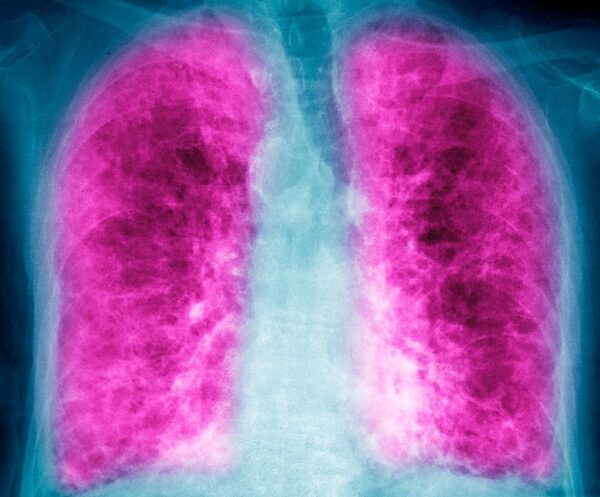
The few drugs available for lung disorders that cause scarring of the organ are pills that circulate throughout the body. Avalyn Pharma is aiming for a better effect with inhalable medicines, and the company now has $300 million to show that benefit through ongoing clinical trials.
Investors are buying into Avalyn’s strategy. Late Wednesday, the company offered 16.6 million shares— about 4.8 million more than it planned in preliminary IPO terms. Avalyn priced those shares at $18 each, which was the top of the targeted price range. Avalyn’s shares will trade on the Nasdaq under the stock symbol “AVLN.”
Boston-based Avalyn is developing drugs for two types of pulmonary fibrosis, a disorder that leads to lung inflammation and the development of scar tissue, a pathological process called fibrosis. In idiopathic pulmonary fibrosis (IPF), the cause of fibrosis is unknown. In progressive pulmonary fibrosis (PPF), the cause can be attributed to something such as an autoimmune disease or exposure to allergens.

From Blind Spots to Better Outcomes: How SNF Data Transparency Strengthens LTSS
What if health plans could identify member decline before an avoidable hospitalization occurs? Real-time clinical visibility into long-stay SNF members uncovers risk earlier and drives better outcomes.
The standard of care for IPF includes two older products: pirfenidone, a former Roche drug marketed as Esbriet, and nintedanib, which Boehringer Ingelheim markets as Ofev. Each oral small molecule blocks a different protein associated with lung disorders. Both achieved blockbuster status, but generic versions are now eroding revenue and market share. Last fall, Boehringer received FDA approval for new IPF drug nerandomilast, brand name Jascayd, introducing yet another approach to the disease.
While the oral drugs aren’t cures for pulmonary fibrosis, they can slow its progression. But one problem with these pills is the wide range of side effects they cause as these small molecules circulate throughout the body. Nausea and diarrhea are common. In the Ofev studies, cardiovascular problems were reported. Side effect and tolerability issues lead many patients to reduce or interrupt dosing. In the IPO filing, Avalyn said just 30% of IPF patients are actively treated with antifibrotic medications and 50% of patients discontinue them within a year of starting treatment.
Avalyn drug AP01 is an inhalable version of pirfenidone; AP02 is an inhalable formulation of nintedanib. A third Avalyn drug, AP03, is an inhalable fixed-dose combination of pirfenidone and nintedanib. These drugs are administered via a proprietary nebulizer device. Inhalable formulations enable lower dosing than what’s required for oral administration, which should further reduce side effect and tolerability problems.
“By delivering drugs directly to the lungs, our approach is designed to fundamentally improve the benefit-risk profile of antifibrotic therapy by achieving higher drug concentration at the site of disease while substantially reducing systemic exposure,” Avalyn said in the filing. “We believe this lung-targeted delivery strategy enables sustained long-term treatment, addressing key limitations of existing systemic therapies and supporting better treatment adherence and long-term disease management for patients with pulmonary fibrosis.”


Closing the Quality-Affordability Gap in Workplace Mental Health
In an interview, Kyan Health Co-Founder and Chief Commercial Officer Konstantin Struck discussed how Kyan gives mid-market and enterprise employers access to premium workforce mental healthcare, at a price point that is affordable.
In Phase 1 testing, both AP01 and AP02 showed low systemic exposure and a favorable side effect profile. Both drugs are currently in mid-stage clinical development. Enrollment in a Phase 2b test of AP01 is expected to be complete by the middle of this year; preliminary data are expected in the second half of next year. Enrollment of the Phase 2 test of AP02 is expected to finish in the second half of 2027 followed by preliminary data late that year.
Companies with novel IPF drugs in the clinic include Bristol Myers Squibb, Contineum Therapeutics, Endeavor Biomedicines, Insilico Medicine, and Insmed. Avalyn does not view them as direct competitors. In its IPO filing, the company noted that clinical tests of these drugs are allowing patients to continue taking background oral antifibrotic drugs. Avalyn believes its drugs, new formulations of those older background medications, would become new background therapies that could be used alongside those novel ones.
“In the future, we envision any approved novel mechanism of action to be used in combination with our inhaled background standard of care,” the company said in the filing. “Given these factors, we believe that our portfolio is advantageously positioned relative to competitive agents on the market or in clinical development.”
In its history prior to the IPO, Avalyn had raised $389 million from life science investors, the company said in the filing. The most recent financing was a $100 million Series D round last July led by Survetta Capital Management and SR One. Following the IPO, the largest stockholder is Novo Holdings with a 7.96% post-IPO stake, followed by SR One’s 6.58% stake, the filing shows.
As of the end of 2025, Avalyn reported its cash position was $138.3 million. Now that the company has infused its coffers with IPO money, it plans to spend $150 million on AP01 and $90 million on AP02, continuing their mid-stage studies and advancing both drugs to Phase 3 development. Another $10 million is budgeted for starting Phase 1 testing of AP03. Avalyn said it expects its capital will be enough to support the company into 2029.
Photo: Cavallini James/BSIP/Education Images/Universal Images Group, via Getty Images