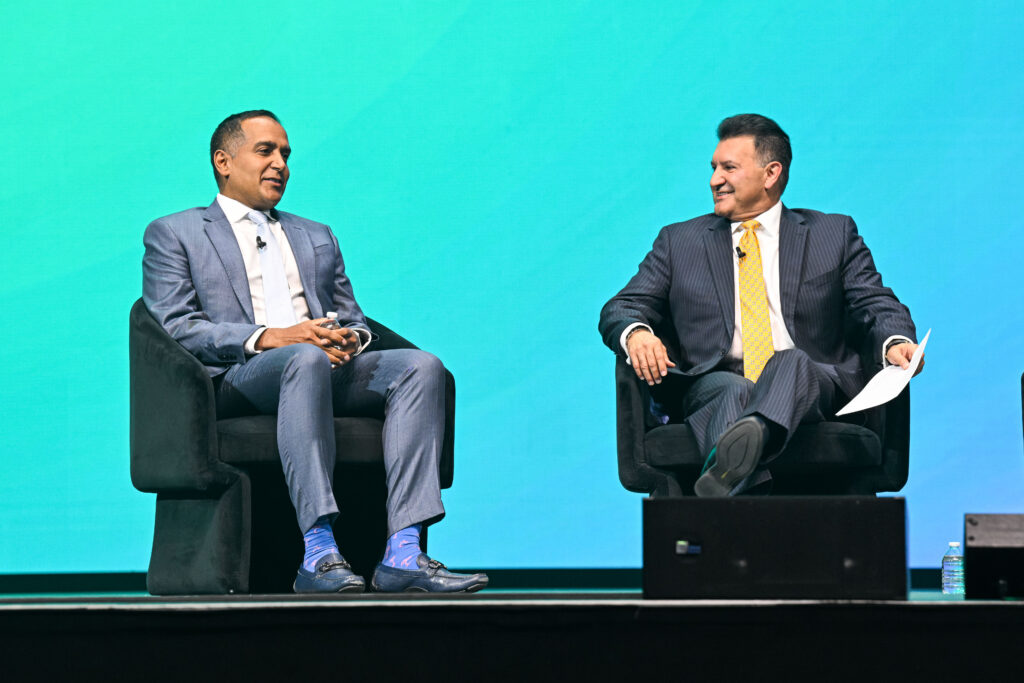
During a fireside chat at the Medicarians Conference in Las Vegas on Tuesday, SCAN Health Plan CEO Sachin Jain made a plea to brokers: Drop the for-profit plans that treat you poorly and seek not-for-profit partners.
It was a “self-interested” message as SCAN is a not-for-profit health plan. The comments came after the Centers for Medicare and Medicaid Services announced this month a final Medicare Advantage rate increase of 2.48%, which is really more of a “rate cut” when inflation is higher than 2.48%, according to Jain.
This will lead to plans exiting markets and suspending broker commissions, while not-for-profit plans like SCAN haven’t “monkeyed around with people’s commissions,” he added. For-profit plans will do what they need to do to hit their margin targets, whereas not-for-profit plans can afford to not make a profit for a couple of years to maintain benefit stability.


Top 7 Modern AI-Powered EAP Providers for Global Workforces in 2026
Discover the top AI-powered EAP providers for 2026. Compare platforms like Kyan Health and Spring Health on triage speed, global reach, and clinical quality to transform workforce wellbeing.
Oftentimes, even when a for-profit plan exits a market and cuts broker commissions, brokers still keep going back to that same plan, Jain declared.
“The number of folks who are like, ‘So and so is my friend at such and such plan, so I’m going to keep working with them even though they’re messing with me.’ Forget it, really pay attention to who they are and how they treat you and don’t go back. What would you tell a friend who’s like, ‘I borrowed this money from you … and I’m not going to pay you for it?’ You would say ‘F off.’ You should be thinking about why it is that you want to keep doing business with people who show you exactly who they are and it’s not pretty,” he said.
An independent broker in the crowd, Julia Cooke, had a visceral reaction to this comment, stating that the reason they keep going back to these plans is because they also “own the doctors.”
Jain later went on to say that he doesn’t think brokers will take his advice to steer away from for-profit plans because they’re going to “invite you to a Celtics game or they’re going to invite you to a SoFi game.” This prompted Cooke to exclaim, “No, that’s not why.”


The Healthcare Payments Industry Faces a Perception Challenge
Healthcare payments are no longer about transactions. It’s about controlling the revenue cycle. And increasingly, that control is not sitting with ISOs.
In an interview after the session, Cooke explained that when a company — like UnitedHealth Group — owns an insurance plan, a pharmacy benefit manager and the healthcare providers, they’re too dominant not to work with. She noted that where she lives in Snohomish County, Washington, UnitedHealth Group owns 40% of primary care.
“If I have clients who say, ‘My doctor that I’ve been with for 30 years has been bought out three times and is now Optum,’ [then] their only option is United,” she said.
In other words, sometimes brokers have to work with plans that treat them poorly because the client’s choice in provider overrules everything else.
Ultimately, Jain argued that healthcare needs to transition from being a “polyamorous industry to being a monogamous industry.”
“This is a promiscuous industry. … I’m talking about the fact that every plan partners with every broker, and every broker partners with every plan,” he said on stage. “And those people who stand for everyone stand for no one. … Pick a plan. Pick one plan, just one plan that you actually think is the right plan. Don’t get lost in, ‘Oh, it doesn’t have this benefit or that benefit,’ and ‘I will lose this sale or that sale.’ Actually, pick your partners and go deep with your partners.”
Editor’s note: Arundhati Parmar contributed to this story.
Photo: Medicarians