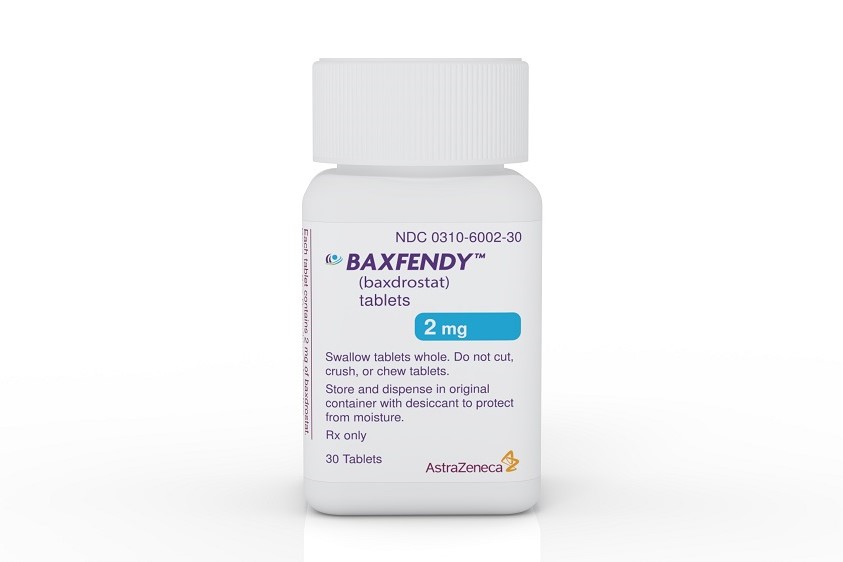
Despite the availability of many hypertension drugs, many people find these medicines don’t work well enough. A first-in-class AstraZeneca medication now has FDA approval, giving patients a new way to lower their blood pressure.
The Monday approval of the drug, baxdrostat, covers its use alongside other antihypertensive medications for adults whose blood pressure is not adequately controlled by currently available therapies. AstraZeneca will market its new once-daily pill under the brand name Baxfendy.
There’s no single cause for hypertension, which can be driven by factors such as diet, genetics, and age. One biological contributor to hypertension is aldosterone, a blood pressure-regulating hormone that promotes retention of sodium and water by the kidneys, which in turn raises blood pressure. Baxfendy is an oral small molecule designed to inhibit aldosterone synthase, an enzyme that’s key to production of aldosterone by the adrenal gland.

Why Pharma Companies Should Look To Social Media For Better Patient Insight
Healthcare decision-makers, especially at pharmaceutical companies, must prioritize patient input. Data collected from social media listening is a significant step in the right direction.
In the Phase 3 clinical trial that supported Baxfendy’s FDA submission, results showed that the 1 mg and 2 mg doses of the drug both led to statistically significant reductions in blood pressure compared to placebo measured at 12 weeks. The study drug was well tolerated by patients. The most common adverse reaction reported in clinical testing was hyperkalemia, which is abnormally high levels of potassium in the blood. The drug’s label instructs clinicians to assess a patient’s potassium levels before starting treatment and periodically while on treatment. The label also recommends that patients at high risk of hyperkalemia take the lower dose of the drug. Detailed Phase 3 data were published last August in the New England Journal of Medicine.
In AstraZeneca’s announcement of Baxfendy’s approval, Dr. Bryan Williams, primary investigator in the drug’s clinical trial and chair of medicine at University College London, said clinicians have been waiting for a new hypertension medicine for many years.
“Its novel way of lowering blood pressure has the potential to transform clinical practice by targeting a root cause of persistently uncontrolled hypertension,” Williams said of the AstraZeneca drug. “In addition, the nearly double-digit placebo-adjusted systolic blood pressure reduction achieved with Baxfendy is exciting and clinically meaningful for clinicians and patients.”
Cardiovascular, renal, and metabolism (CVRM) is one of the core therapeutic areas for AstraZeneca, second only to oncology in terms of annual revenue. The company’s top product in this area is Farxiga, an SGLT2 inhibitor whose approvals include the treatment of type 2 diabetes, heart failure, and chronic kidney disease. Farxiga accounted for $8.4 billion of AstraZeneca’s $12.7 billion in CVRM revenue in 2025. But Farxiga patents started expiring this year. In anticipation of the drug’s fall off the patent cliff, AstraZeneca has been on the hunt for new CVRM growth drivers.


The Power of Real World Data to Study Women’s Health at Scale
Veradigm examines key clinical trends, comorbidity profiles, and treatment trends across adolescence, reproductive years, and peri-/post-menopause. Download it today!
AstraZeneca added Baxfendy to its pipeline in 2023 with the $1.3 billion acquisition of CinCor Pharma. That biotech had licensed the molecule from Roche. AstraZeneca’s plans for Baxfendy extend beyond hypertension. Ongoing clinical trials are evaluating the drug as a monotherapy for primary aldosteronism, in combination with Farxiga for chronic kidney disease and hypertension, and for the prevention of heart failure in patients with hypertension. AstraZeneca has previously projected that Baxfendy could achieve $5 billion in peak sales in hypertension and up to $10 billion if the drug reaches the market in other indications.
Potential competition looms for AstraZeneca’s new drug. Mineralys Therapeutics’ aldosterone synthase inhibitor, lorundrostat, is currently under FDA review for hypertension with a Dec. 22 target date for a regulatory decision. This drug is also in mid-stage clinical development for treating hypertension with chronic kidney disease and hypertension with obstructive sleep apnea.
Photo by AstraZeneca