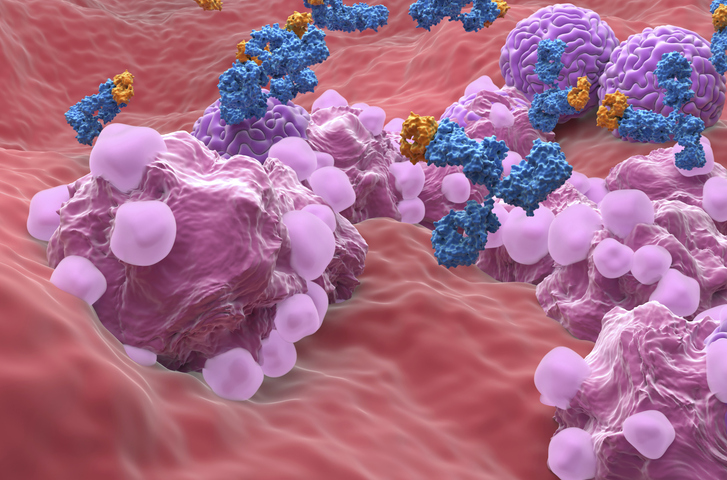
Biopharmaceutical companies aim to make taking a biologic drug as simple as possible for patients, marketing many of these chronically administered medicines in self-injection pens for quick and easy dosing. It’s convenience with a cost. Injection pens add to the overall expense of these already pricey products. For patients, some still find it difficult to continue the regular dosing regimen while others find that efficacy wanes over time.
Biotechnology company Duracyte aims to overcome those hurdles by bypassing many of the complexities associated with manufacturing, distributing, and administering biologic drugs. The startup’s technology brings drug production inside patients via an implantable device that houses cells genetically engineered to make therapeutic proteins.
“They get nutrients from the body, and there’s the oxygen source that’s generated within the device,” co-founder Omid Veiseh said of the implants’ cells. “The body’s not going to run out of water, and the body’s not going to run out of nutrients. So everything that the cells need to survive comes from the body.”


The Power of Real World Data to Study Women’s Health at Scale
Veradigm examines key clinical trends, comorbidity profiles, and treatment trends across adolescence, reproductive years, and peri-/post-menopause. Download it today!
Duracyte has been incubating within RBL LLC, a biotech venture creation studio formed by Rice University in 2024. With clinical testing on track to begin by early next year, Duracyte formally launched from RBL recently as its scientists start to share more about how the young company aims to transform the way drugs are manufactured and dosed.
Implants that offer extended delivery of a therapy are already available. Paul Wotton, CEO of RBL and co-founder of Duracyte, pointed to hormone-delivering implants used for contraception and testosterone replacement. In the realm of cell therapy, Wotton noted that Neurotech Pharmaceuticals last year won FDA approval for an implantable system that treats a rare eye disease. Encapsulated by a semi-permeable membrane, Neurotech’s cells draw water and nutrients they need from the eye while the membrane shields them from the immune system. But Neurotech’s implant does not need a power source.
The more densely packed cells of Duracyte’s system require supplemental oxygen, Veiseh said. To solve this problem, Duracyte’s scientists looked to submarines, which generate oxygen through electrolysis — applying an electric field to water to split it into hydrogen and oxygen. In Duracyte’s device, a small on-board battery supplies the power for electrolysis. It also powers on-board sensors that monitor when and how much drug is produced as well as the patient’s response to the therapy.
Wireless recharging of the battery means the implant can produce the drug indefinitely as long as it’s recharged, Veiseh said. Clinicians manage drug production through a mobile app that’s in constant communication with the implant. While all of these electronic components are off-the-shelf technologies, Veiseh said this implant would have been impractical even five years ago. Electronics miniaturization had yet to come far enough for this device, which is about the size of a capsule of an orally administered drug.

The Hidden Administrative Tasks Draining Small Practices
Small practices play a critical role in healthcare delivery, but they cannot continue to absorb ever-increasing administrative demands without consequences.
Duracyte has already met with the FDA, which considers the technology a combination product — a device plus drug substance. For Duracyte’s implant, the FDA considers the cell the drug substance, Wotton said. These cells are not a cell therapy, rather, they are human cells engineered to produce therapeutic protein.
“They’re actually a cell factory that’s producing these human proteins,” Wotton said. “The pharmacy on a cell [is the] sort of approach that we’re actually working on here.”
The startup’s lead indication is ovarian cancer. Implanted close to the site of the tumor, the device will produce two therapeutic proteins, the signaling protein IL-12 and ipilimumab, a monoclonal antibody in the class of cancer immunotherapies called checkpoint inhibitors. Ipilimumab was commercialized by Bristol Myers Squibb under the brand name Yervoy, but its patents have expired.
Immunotherapies are difficult to dose because they circulate throughout the body and cause toxicities, Veiseh said. With Duracyte’s technology, dosing can be controlled to match a patient’s physiology, which should mean lower doses that in turn reduces the risk of side effects. Beyond cancer, Veiseh sees the technology finding applications in enzyme replacement. A bigger opportunity could be immunology where chronic disease means patients may require frequent injections or infusions of biologic medicines. The dose levels and dose frequency of many currently available biologic drugs can spark an immune response that causes these drugs to eventually stop working.
Duracyte has also explored metabolic disease, demonstrating that its technology can produce the GLP-1 peptide. Veiseh said that weekly injections of a GLP-1 drug mean a patient is overdosed at first, appropriately dosed by mid-week, then underdosed by the end of the week. Duracyte could avoid the peaks and valleys of drug levels in the body, producing GLP-1 during meal times when patients need it but not at night when they’re sleeping, he said.
The technology that would become Duracyte’s system began a decade ago when Veiseh was a postdoctoral researcher working with MIT scientists Bob Langer and Dan Anderson. Both have long track records of developing innovative ways to deliver medicines. Veiseh said the research focused on bringing biomanufacturing into patients so biologic drugs could be produced inside the body. He continued that research when he joined Rice in 2016 as a professor of bioengineering.
The federal government was an early supporter of Rice’s work applying the implant to ovarian cancer. In 2023, this targeted hybrid oncotherapeutic regulation (THOR) research was awarded up to $45 million in federal research funding from the Advanced Research Projects Agency for Health. Since then, Duracyte has been awarded additional funding commitments from the Defense Advanced Research Projects Agency, Breakthrough T1D, and the Gates Foundation. Veiseh said that in total, the company has more than $100 million backing its work to bring biologics production into patients’ bodies.
“If you can solve this problem, biologics become a lot more cost-effective, scalable, and with the dosing on an as-needed basis, they become a lot more effective too, which I think is where medicine’s headed — combination biologics, precise dosing,” Veiseh said.
Illustration: Nemes Laszlo/Science Photo Library, via Getty Images