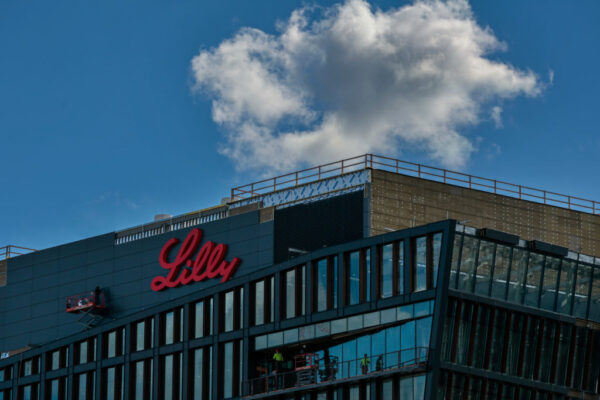
Many of Eli Lilly’s acquisitions this year double down in areas where the company is already a player, such as cancer and inflammatory disorders. Lilly is now broadening its scope to a new area, infectious disease, by buying three companies with vaccine programs for pathogens that currently have limited vaccination options, if any at all.
The privately held vaccine developers are Curevo, LimmaTech Biologics, and Vaccine Company. For all three, the total deal value could reach up to $3.83 billion, Lilly said Tuesday. Together, these three deals bring to 10 the total acquisitions Lilly has announced so far this year.
Alex Torgerson, partner in M&A at consultancy West Monroe, said he expected Lilly to be acquisitive in 2026, given the company’s strong cash position from the blockbuster revenues from metabolic medicines Zepbound and Mounjaro, far and away the company’s top-selling products. But Lilly has been more active than he anticipated. The prior deals brought assets that complement drugs in the Lilly portfolio and pipeline, fitting into the company’s existing infrastructure in established therapeutic areas such as immunology and oncology.

Why Pharma Companies Should Look To Social Media For Better Patient Insight
Healthcare decision-makers, especially at pharmaceutical companies, must prioritize patient input. Data collected from social media listening is a significant step in the right direction.
Had Lilly announced one or two vaccine deals separately, investors might have viewed it as exploration of a new therapeutic area, Torgerson said. The fact that Lilly announced the three deals together, and that they each bring platform technologies, shows Lilly is intent on making a mark in infectious disease.
“They’re building a new business here,” Torgerson said. “You can kind of see how the assets stack up a little bit. Very different areas, but you’re starting to go after similar capabilities. You’ll be going after similar customers at a certain point in time if these progress the way they think they will.”
Lilly indicated interest in infectious disease last October when it hired Peter Marks, former director of the FDA’s Center for Biologics Evaluation and Research, to become the company’s senior vice president for molecule discovery and head of infectious diseases. At the time, the Lilly pipeline listed no infectious disease programs.
The new acquisitions bring vaccines in preclinical to mid-stage clinical development as well as platform technologies that could be used to develop more vaccines. Lilly also noted that the pathogens addressed by these programs are associated with a range of downstream health issues. In a prepared statement, Daniel Skovronsky, Lilly’s chief scientific and product officer and president, Lilly Research Laboratories, said the new acquisitions reflect a deliberate strategy to prevent disease at its source rather than treat its consequences, which include neurological disease, cancer, and infertility. He added that combining the vaccine companies’ platforms with Lilly’s global scale positions the pharma giant to change the trajectory of the downstream effects of infectious disease.


The Power of Real World Data to Study Women’s Health at Scale
Veradigm examines key clinical trends, comorbidity profiles, and treatment trends across adolescence, reproductive years, and peri-/post-menopause. Download it today!
The most advanced program joining Lilly is amezosvatein, a shingles vaccine from Bothell, Washington-based Curevo. This vaccine could compete with Shingrix, a two-dose GSK product whose status as the only FDA-approved shingles vaccine makes it the current standard of care. But Shingrix has tolerability issues that lead to patient hesitancy about receiving the second dose. While amezosvatein is also administered as two doses, this Curevo vaccine is engineered with a next-generation synthetic adjuvant, an ingredient that boosts the immune response. According to Lilly, this adjuvant also improves tolerability.
Curevo has not publicly disclosed results from a Phase 2 test comparing amezosvatein to Shingrix, but Lilly said data show amezosvatein matched Shingrix’s immune response while also reducing by more than half side effects such as fatigue, chills, and injection site pain. Lilly added that shingles vaccination is associated with reduced dementia risk, so a better-tolerated vaccine that improves vaccination rates could lead to a reduction in dementia risk. Amezosvatein could compete against a next-generation shingles vaccine candidate from Sanofi $2.2 billion Dynavax acquisition.
The lead program of Switzerland-based LimmaTech is LTB-SA7, developed to address Staphylococcus areus (S. aureus), a bacterium that leads to surgical-site infections, also called staph infections. There are currently no vaccines for S. aureus, and the limited treatment options for staph infections can lead to development of multi-drug resistant strains. LBTSA7, currently in Phase 1 testing, contains weakened forms of the pathogen’s toxins, which are intended to target the toxins and superantigens that drive disease. LimmaTech’s preclinical pipeline includes programs for gonorrhea and chlamydia. The biotech’s partnered programs include a candida vaccine in mid-stage development with GSK and a shigella vaccine in early-stage development with Valneva.
Bethesda, Maryland-based Vaccine Company aims to offer advantages over vaccines based on virus-like particles (VLPs), proteins that resemble a virus but cannot cause infection because they contain none of a virus’s genetic material. Such vaccines are made in a multi-step process conducted in a manufacturing facility. Vaccine Company aims to overcome the hurdles of VLP manufacturing with its in vivo nanoparticle technologies, which are intended to enable the display of antigens that elicit immune responses associated with VLP vaccines, but without the hassle of traditional VLP production.
Vaccine Company’s lead candidate displays five antigens to elicit protection against Epstein-Barr virus (EBV), which causes mononucleosis. Lilly said this program is ready for Phase 1 testing. There are currently no vaccines available for EBV. Lilly said growing evidence linking this virus to multiple sclerosis and cancers give an EBV vaccine the potential to not only prevent infectious mononucleosis, but also avoid the long-term consequences that may follow such an infection.
Lilly is paying up to $1.5 billion in cash for Curevo, up to $780 million for LimmaTech, and up to $1.55 billion for Vaccine Company. The pharma giant did not provide a financial breakdown of the deals, other than to say the terms span upfront payments as well as potential milestone payments. West Monroe’s Torgerson said the milestones-based deal structures enable Lilly to see what the companies’ assets can do without taking on the risk — and higher upfront price — that comes with buying a commercial-stage drug.
Industrywide, many pharmaceutical acquisitions come from the need to find new drivers of revenue growth as top sellers fall from the patent cliff. This urgency pushes many buyers toward later-stage or commercial-stage assets. Torgerson sees Lilly’s dealmaking as less patent cliff-driven and more about a diversification strategy springing from its strong cash position and the desire to show that it’s more than a metabolic medicines company.
“They’re going to want to tell a little bit more differentiated, sort of diversified story, I think, than just focusing on single assets and patent cliff, because that’s going to start scaring investors at a certain point,” Torgerson said.
Photo: Craig F. Walker/The Boston Globe, via Getty Images