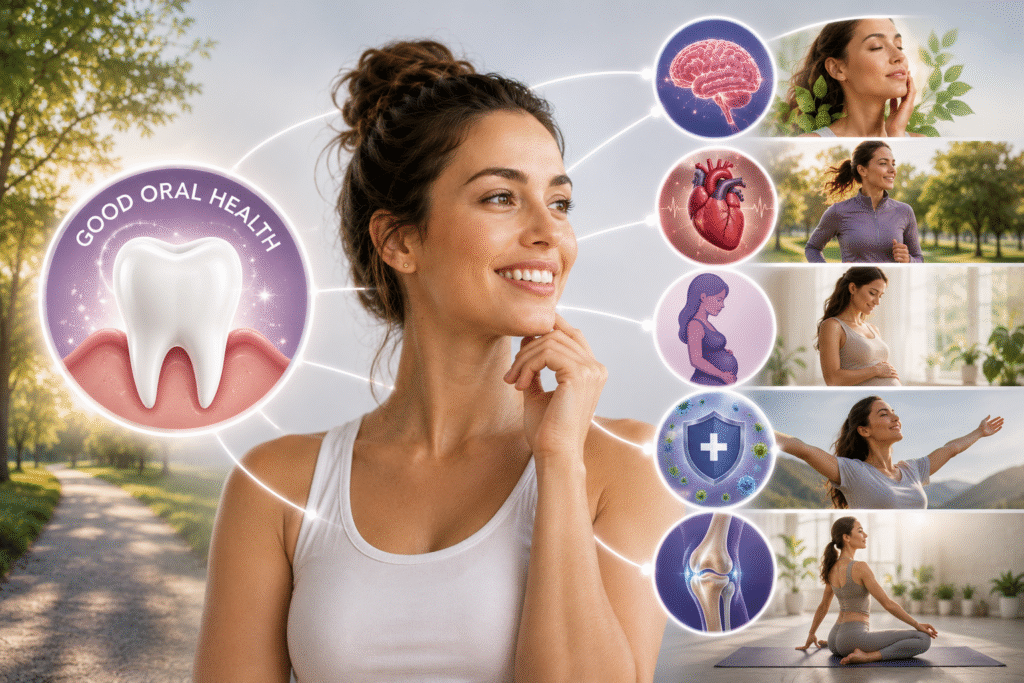
Even though teeth are very much part of the human body, dental care has long stood apart from healthcare. That’s presumably because taking care of teeth may have more of a cosmetic, feel-good aspect, compared with taking care of your blood pressure or blood sugar levels, which seem more integral to a healthy, long life.
The reality is that dental emergencies can land you in the ER. While there are growing efforts to link dental health with overall health, the urgency should be felt strongly not only by pregnant women but, more importantly, by their care providers and health insurance companies. Consider that pregnant women with gum disease are 3-4 times more likely to develop pre-eclampsia, a dangerous condition involving a sudden spike in blood pressure and signs of damage to other organs such as the kidneys, according to the National Center for Biotech Information. That fact was shared by Jourdan Miller, director of sales, mySwaddle, who was speaking at the annual Transform Summit in Scottsdale, Arizona, recently. MySwaddle is a care coordination and support solution for pregnant women, many of whom are on Medicaid.
The Transform Summit is hosted annually by Skygen, a large dental and vision benefits administration company based in Menomonee Falls, Wisconsin, that serves 60 million members. (Editorial Note: The company paid for some of my travel expenses but had no input in editorial coverage.)
“We talk a lot about maternal health in our country — prenatal visits, mental health screening, postpartum depression. Oral health almost never makes that list,” declared Miller. “So that’s a big problem, and it’s a significant and measurable driver of maternal and infant health outcomes that most plans are not actively managing.”
She added a statistic about Medicaid women, some of whom MySwaddle hopes to serve in the future — while 86% of pregnant women on Medicaid report dental problems, only 35% seek treatment, representing a covered benefit that is vastly underutilized.

Automation Didn’t Dehumanize Care. Bad Systems Did.
We have the opportunity to design systems that give people greater capacity for the work where human presence matters most: listening, understanding, reassuring, deciding, and caring.
“They’re carrying a measurable pregnancy risk and the research is clear that periodontal disease during pregnancy is linked to preterm and low birth weight,” she explained. “So the coverage exists. This isn’t a benefit design problem. It’s an engagement and access problem.”
And why is it important to solve that problem? Miller connected it to the high costs of ignoring it.
“So emergency dental visits average about $1,500 per visit,” she said. “That’s a significant spend for something that is really entirely preventable through routine care. So when a member skips a dentist [visit] and the condition deteriorates and [the member] ends up in the ER, that’s the most expensive, least appropriate setting for dental care.”
And it’s not just a financial hit tied to oral health of the mother. This can affect newborns through to the their developmental years. She explained that NICU stays for infants born prematurely can average more than 10 times the cost of a full-term delivery and periodontal disease is a “documented contributor to preterm birth.” And it’s not as if the problems melt away when the infant is discharged. That’s because low birth weight could lead to developmental complications, costs of which could reverberate through higher social services, early intervention and educational support for many years down the road, according to Miller.

Inside an Automated Healthcare Practice: Redesigning Care Around People, Not Paperwork
By reducing administrative burden and redesigning workflows around human needs, it creates space for what matters most: connection between clinicians and patients.
The problem is that no one is telling pregnant women to take care of oral health.
“OBs are not screening for oral health. They’re not making referrals to dentists when they see a woman that has poor oral health and so there’s no safety net here catching members before this problem becomes a serious health risk,” Miller said.
Which means state-contracted health plans need to solve this engagement problem, given that the state is paying for the benefit, but it remains significantly underused. This is where health plans can leverage MySwaddle, they implied. It’s important to note here mySwaddle is not simply a maternal oral health tool. Rather, it’s intended to support a pregnant mom’s journey from early stages through to one year postpartum.
In fact, the app’s webpage that provides information for families and members does not mention oral health prominently. Rather it is clubbed together with another overlooked part of a pregnant mom’s journey: nutrition. That page lists other needs much higher — personalized education and guidance, which includes resources on a week-by-week pregnancy journey, trimester-specific information and to-do lists as well as finding a doctor and connecting with the care team either in-person or through virtual visits.
Still, for the audience at Transform, both Miller and another MySwaddle executive described oral health as a focus though stressed that’s not all the app does.
“While we start with oral health, that’s just really the entry point,” said Kia Hussain, vice president of business development for mySwaddle during a presentation at the Summit. “Once you engage with members, you can support the full maternity journal journey, care coordination, behavioral, health, nutrition, postpartum, and that’s where the bigger picture and that’s where the most impact comes in.”
She added that plans that select MySwaddle for their Medicaid populations will see immediate benefits — by avoiding 120 emergency dental visits, “which essentially pays for the pilot program with MySwaddle and that’s before you factor in any NICU avoidance or quality incentives.”
Those are exactly the kind of cost efficiencies through improved health that CMS is looking for as it relates to maternal health. In 2023, CMS announced the Transforming Maternal Health Model (TMaH) to reduce expenditures while adopting a “whole-person approach to pregnancy, childbirth, and postpartum care.” The model would support participating Medicaid state agencies that address physical, mental health, and social needs experienced during pregnancy over a period of 10 years, targeting not just Medicaid moms but also those enrolled in the CHIP program. Then, in early January 2025, CMS announced the 15 states that will implement the TMaH model and receive $17 million in funding.
While mySwaddle was built to adhere to the contours of this federal initiative for Medicaid mothers, it can be a digital tool that commercial health plans and managed care organizations can also deploy for their members.
The app, which is backed by Holista Health, will find no dearth of competition in terms of digital tools aimed at pregnant mothers if it chooses to try and gain a foothold in the non-Medicaid maternal health marketplace. That marketplace has everything from Maven Clinic, a VC-backed women’s health company that is expected to go public, to Ovia Health by LabCorp and then much smaller companies like Trellis Health, Lōvu Health and more.
Photo: ChatGPT