If you want to know where healthcare finance is headed, ask the people who lend hospitals money.
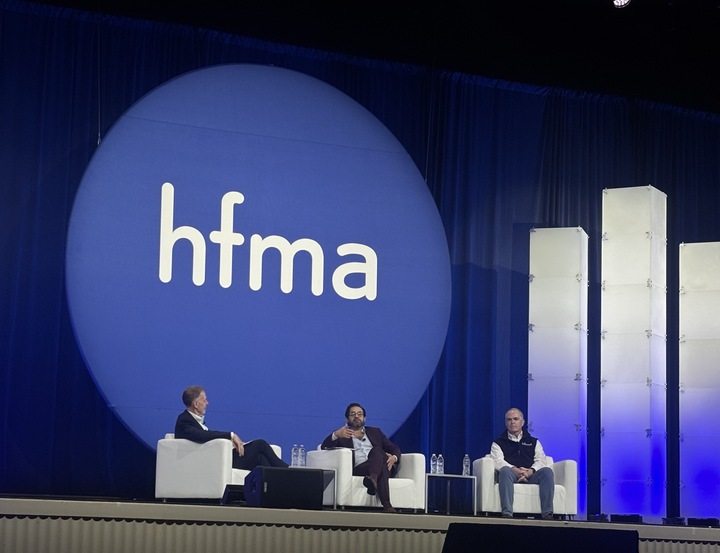
During a Tuesday panel at the HFMA Annual Conference in National Harbor, Maryland, two veteran healthcare credit analysts said they think the window for deliberate strategic action is closing faster than most health system leaders realize.
“We love incremental change in healthcare — it’s not going to work anymore,” said Kevin Holloran, senior director of nonprofit healthcare group at Fitch Ratings. “We’ve got to have some really bold thoughts and really bold moves if we’re going to be ready for 2030 and then beyond.”


From Blind Spots to Better Outcomes: How SNF Data Transparency Strengthens LTSS
What if health plans could identify member decline before an avoidable hospitalization occurs? Real-time clinical visibility into long-stay SNF members uncovers risk earlier and drives better outcomes.
His urgency stems from a stark demographic reality. In 2030, the last of the Baby Boomer generation will officially reach age 65 and become Medicare-eligible. This is the same year that the most significant cuts from the federal budget reconciliation legislation will begin to bite.
There is more than $1 trillion in Medicaid and Medicare cuts embedded in the One Big Beautiful Bill Act — so hospitals’ reimbursement is going to get squeezed even further at precisely the moment they will be caring for their largest and most expensive patient population in history.
“2030 scares me to death,” Holloran declared. “Right when you get fewer people in the workforce, you’re going to see your payer mix decline. You’re going to go from commercial to Medicare — and you’re not going to have enough people, as they’ve left the workforce.”
He said this pressure is already showing up in credit quality — and not evenly.

Where Will AI Deployment Benefit Payers the Most?
We are taking a look at how health insurers are using AI, defining success, and managing cybersecurity risks. Give us your opinions by completing our brief, anonymous survey.
Holloran calls it trifurcation. He described the industry as splitting into three distinct tiers: a small group of health systems that are thriving, a small group that are seriously struggling, and a large middle majority that are simply treading water.
“They’re working incredibly hard, doing everything they can, but there’s not much movement. Quite frankly, [they] can’t get ahead, but [they’re] not falling off,” Holloran explained.
With AI emerging as the next major differentiator, he thinks it will become a lot harder to stay in that middle.
This is a view shared by Dan Steingart, associate managing director at Moody’s Ratings. He said AI is advancing so quickly that health systems relying on their traditional pace of change to catch up are already falling behind.
Steingart pointed specifically to revenue cycle coding and supply chain as areas ripe for disruption, with new models constantly emerging to make these processes more efficient.
“It seems like every couple of months, you look at a new model and the capabilities, and it really does advance so quickly,” he remarked. “To sit here and say that there’s not going to be a major breakthrough in six months, a year, a year and a half, seems shortsighted.”
Beyond AI, Steingart added that the health systems best positioned for the future will be those that master digital patient engagement.
As younger, app-native generations enter their peak healthcare consuming years, he said the bar for a seamless patient experience is rising — and the gap between the hospitals that can deliver this and those that can’t is stark.
In Steingart’s eyes, the technology risk is only half the picture — the other half is people. He worries the industry hasn’t done enough to make a compelling long-term case to mid-level technical and support staff, such as X-ray technicians, phlebotomists, medical assistants and sterile processing technicians.
The pandemic was a rough, somewhat traumatic experience for many of them, and the temporary pay bumps that came with pandemic-era labor shortages were short-lived, Steingart pointed out.
He thinks the healthcare industry needs to rebuild its value proposition for these workers from the ground up — because the pandemic burned through a lot of goodwill that hasn’t come back.
The way both he and Holloran see it, how health systems answer that challenge — along with every other bold decision between now and 2030 — will determine which tier they end up in.