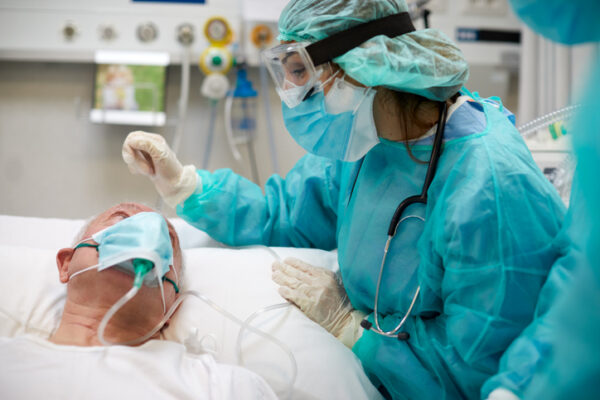
When it comes to testing and diagnostics for upper respiratory infections (URIs) like flu, Covid-19 and RSV, sensitivity — or the ability to detect the specific pathogen causing an illness — must be a major consideration in the type of sample collected for testing.
This metric plays a highly decisive role in overall clinical accuracy, and it begins at the point of collection. The amount of pathogen-containing material captured in that first step can be the difference between a confirmed infection and a missed case.
Even high-sensitivity PCR assays can’t compensate for a poor-quality specimen, so when our collection methods fail to reach the areas pathogens concentrate most, downstream consequences can immediately follow.

From Blind Spots to Better Outcomes: How SNF Data Transparency Strengthens LTSS
What if health plans could identify member decline before an avoidable hospitalization occurs? Real-time clinical visibility into long-stay SNF members uncovers risk earlier and drives better outcomes.
From early intervention and timely treatment to system-wide bottom lines, most outcomes across the broader care continuum trace back to initial sample sensitivity. With that in mind, healthcare leaders should start placing greater emphasis on this frequently overlooked metric.
The anatomy behind sensitivity: Detection depends on reach
To better understand the concept of sensitivity, it’s important to first examine the anatomy that drives it. The pathogens responsible for URIs do not distribute themselves evenly throughout the nasopharynx; their concentration varies significantly depending on location due to the temperature and humidity of the microclimates within this space.
Therefore, the performance of a specimen collection method hinges on how much of the nasopharynx it actually reaches:


Automation Didn’t Dehumanize Care. Bad Systems Did.
We have the opportunity to design systems that give people greater capacity for the work where human presence matters most: listening, understanding, reassuring, deciding, and caring.
- The upper nasal cavity and connected sinuses carry the highest concentrations of respiratory pathogens, including the olfactory epithelium and frontal, maxillary and ethmoid sinuses. Pathogens present here sooner in the course of illness than lower regions, and at higher concentrations, enabling earlier URI diagnoses and treatment.
- The mid and lower nasal passages contain comparatively smaller amounts of pathogen material, increasing the risk of capturing an incomplete sample that may then yield a false negative PCR test result.
Each nasal region uniquely contributes to specimen adequacy as a whole, which is why covering more surface area is essential for not only improving sensitivity, but preventing the cascade of missed diagnoses, delayed treatment and extra burden on healthcare systems.
To swab or not to swab? How collection method influences specimen sensitivity
Swab-based collection approaches, like the default nasopharyngeal swab, generally fall short in terms of anatomical reach. Even when performed correctly, these methods are limited to a fixed point in the nasal passage where pathogen concentration is lower. Sure, test administrators could try to insert the swab further up the nose — but at what cost to patient experience?
These scientific, operational and bedside drawbacks directly impact sample sensitivity:
- Shallow sampling area: Swabs are unable to capture particles from the deeper nasal cavity and sinuses carrying the highest amount of pathogen-containing material.
- Technique variability: Depth, angle and duration differ among administrators and settings, leading to inconsistent specimen quality.
- Poor patient response: Discomfort can trigger involuntary reactions like flinching or sneezing, reducing the amount of material collected along with willingness to test and also increasing the risk of patient injury from the swab, with some potential for significant associated morbidity.
By contrast, liquid-based approaches, such as nasal wash or lavage, use sterile saline to move throughout nearly the entire nasal cavity. They reach the places swabs miss to collect a higher-concentrated specimen with a fraction of the discomfort, hesitation and injury risk.
Greater sensitivity increases diagnostic accuracy and treatment effectiveness due to:
- More surface area covered: Flow dynamics span the upper nasal cavity and sinuses.
- Specific pathogen identification: Nasal lavage almost always yields a higher sample volume than swabs. And since PCR tests amplify pathogen particles, more particles captured means a higher likelihood of identifying the virus’ root cause — since URI signs and symptoms are not specific to a particular pathogen.
- Fewer false negatives: The method enables clear diagnoses in much earlier stages of infection, when pathogen particles are sparser and located in harder-to-reach areas. An earlier diagnosis equates to earlier treatment, which equates to better clinical outcome.
That mechanical difference helps explain why decades of independent comparative studies have repeatedly found higher pathogen detection with wash- or aspirate-based collection than with nasal swab sampling in wide-ranging respiratory care settings. The common takeaway?
Nasal lavage can deliver up to 49% greater sensitivity compared to swab-based techniques.
During the pandemic, this decreased PCR sensitivity was accepted since the nasal swab was the only widely available nasal collection system.
Another limitation for traditional nasal lavage is that it can be messy and inconsistent to administer. As a modernized solution, newly evolved approaches offer practical balance among ease-of-use, standardization and accuracy.
The downstream impact of sensitivity, both in the lab and in practice
Diagnostic clarity matters most in the first 72 to 96 hours of a respiratory infection when specific therapeutic intervention can positively alter clinical course. However, this early time period is when pathogen levels are still building and difficult to detect, and it’s also when lower-sensitivity sampling approaches are most likely to miss infections — especially if the initial specimen is limited.
When lower sensitivity testing is negative, especially rapid antigen tests which have a high false negative rate in the first six days after URI symptom onset, clinicians and laboratories must then race the clock to re-diagnose within that ideal 96-hour window for targeted treatment. After it passes, care shifts toward symptom management rather than intervention.
This timing gap is especially detrimental for high-risk patients (i.e., people 65 and older, 5 and under or with a chronic disease) who are more susceptible to preventable compilations, such as hospitalization, need for ICU care and/or death.
From there, the strain on clinical capacity, provider workload and resource utilization compounds.
This is why specimen sensitivity ultimately determines whether a healthcare system smoothly advances or falls into a cycle of delay and rework. The usual response is to focus on the test platform, but the better solution is to examine the full testing chain, beginning with collection.
When healthcare leaders make sensitivity a top-of-mind diagnostic metric, all parties in the diagnostic pathway see benefits:
- For providers: Reduces ambiguity for earlier, more confident diagnoses and treatment decisions, ultimately decreasing follow-up visits and avoidable hospitalizations placing unnecessary pressure on care delivery and workflows.
- For laboratories: Improves consistency at point of intake, minimizing repeat testing and simplifying PCR test interpretation.
- For patients: Shortens the path to recovery, eliminating delays in treatment alongside uncertainty around illness and exposure risk.
- For public health: Slows viral spread for more effective disease containment. Fewer false negatives due to low sensitivity means more people who truly need to isolate, will isolate.
The positive ripple effect of high specimen sensitivity influences the clarity of diagnoses, the timing of treatment and the efficiency of care delivery across systems, while also protecting communities from further disease spread for stronger outbreak control.
Prioritizing quality at collection through highly sensitive sampling approaches like evolved nasal lavage creates a more reliable starting point for everything that follows — because in respiratory diagnostics, improved outcomes stem from the very first step.
Photo: Tempura, Getty Images

Michael C. Wadman, MD, FACEP, is Chief Medical Officer of University Medical Devices, developer of the MicroWash nasal lavage system. A board-certified emergency physician with more than 30 years of clinical experience in a high-volume academic health center emergency department, Dr. Wadman also holds tenured professor and endowed chair positions at University of Nebraska Medical Center (UNMC). Most notably, he also serves as the Medical Director of the National Quarantine Unit at UNMC, the only federally supported quarantine facility in the U.S.
This post appears through the MedCity Influencers program. Anyone can publish their perspective on business and innovation in healthcare on MedCity News through MedCity Influencers. Click here to find out how.