Targeted therapies are bringing new treatment options for a wide range of cancers, but drug resistance still looms for these medicines, including antibody drug conjugates (ADCs), one of the most active areas of cancer drug R&D. Ona Therapeutics is developing ADCs specifically for treatment-resistant tumors and the startup now has $86.6 million to support a pipeline led by a breast cancer program on track to begin its first test in humans.
An ADC is modular, comprised of a targeting antibody, a toxic drug payload, and a chemical linker that connects the two. Cancer can develop resistance to any one of these components. Barcelona-based Ona is focused on overcoming resistance by developing ADCs with targeting antibodies that go after novel antigens.
Ona’s work starts by analyzing tumor samples from patients whose disease developed drug resistance. The company says its platform technology’s analysis of these samples reveals how standard of care drugs change cancer at the molecular level, which in turn enables the discovery of novel targets that are specific to tumors. Ona said its technology also identifies novel epitopes, specific parts of an antigen that enable efficient internalization of an ADC’s drug payload by the cancer cell. According to Ona, this approach maximizes therapeutic activity while minimizing on-target toxicities.

The Power Behind Enterprise EHR Software for Large Healthcare Systems
Enterprise EHR boosts scalability, interoperability, and governance for large healthcare systems.
The most advanced Ona ADC is ONA-255, which has reached late preclinical development for breast cancer and other solid tumors. The specific target for this ADC remains confidential. Late last year, Ona co-founder and CEO Valerie Vanhooren told Drug Target Review that ONA-255 is in development for HR-positive, HER2-negative breast cancer, which is the most common type of breast cancer. She did not specify the antigen targeted by this ADC, but said it is highly expressed in this type of cancer and is upregulated in tumors that have become resistant to currently available therapies, including the AstraZeneca and Daiichi Sankyo ADC Enhertu. Furthermore, Vanhooren said ONA-255 carries a microtubule inhibitor drug payload, which is different than many of the currently available ADCs.
Ona said it will use its new capital to advance ONA-255 into clinical development in breast cancer. The pipeline also includes two other preclinical ADCs for undisclosed targets: ONA-389 is in development for colorectal cancer and ONA-418 is a dual-payload ADC in development for prevalent solid tumors.
Ona spun out from the Institute for Research in Biomedicine (IRB Barcelona) and the Catalan Institution for Research and Advanced Studies (ICREA) in 2019. The following year, the startup raised €30 million (about $34.8 million) in Series A financing.
Ona’s Series B round announced Thursday was co-led by Columbus Venture Partners and Mérieux Equity Partners, both new investors in the startup. Other participants in were COFIDES and Korys. Ona said all earlier investors in the company participated in the new financing: Alta Life Sciences, Asabys Partners, Bpifrance, CDTI, FundPlus NV, and Ysios Capital.


The Power of Real World Data to Study Women’s Health at Scale
Veradigm examines key clinical trends, comorbidity profiles, and treatment trends across adolescence, reproductive years, and peri-/post-menopause. Download it today!
In a prepared statement, Vanhooren said the new financing “strengthens our commitment to tackling hard-to-treat cancers through meaningful innovation and addressing the significant unmet need faced by patients with limited treatment options.”
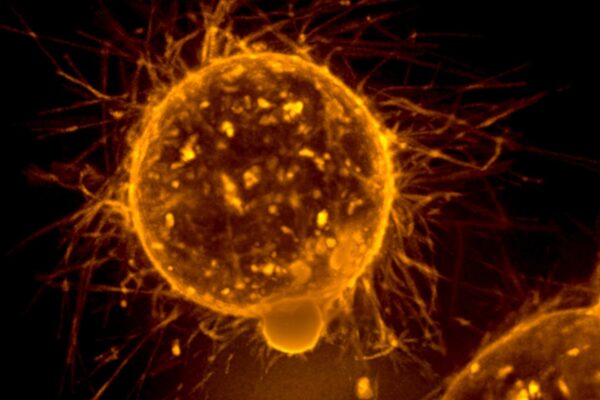
Public domain image by Stuart S. Martin via the National Cancer Institute