Digital health investors have heard nearly every founder pitch imaginable, including many that start along the lines of “healthcare is broken, and I’m the one who’s going to fix it.”
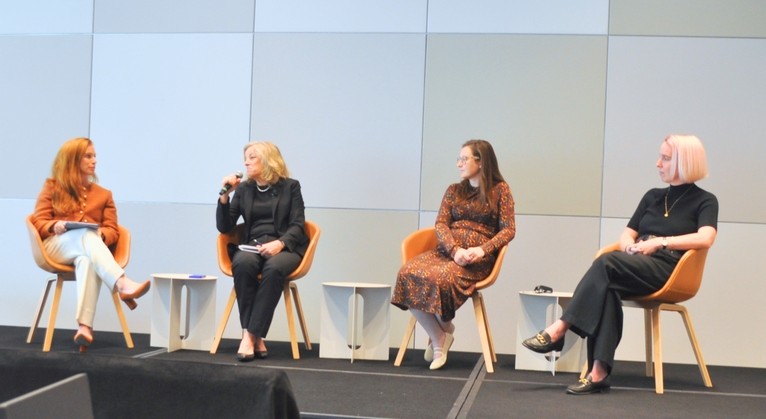
During a panel this week at MedCity News’ Bullseye event in Chicago three healthcare investors made it clear that this kind of certainty is often a warning sign, not a selling point. What they’re actually looking for is closer to its opposite — founders who are confident enough to have conviction, but self-aware enough to know what they don’t know.
Anna Fagin, a partner at Town Hall Ventures, said her firm has come to actively favor entrepreneurs who’ve pivoted before, or even failed outright. In a sector where both regulation and technology are moving faster than they used to, she said that kind of adaptability represents something more valuable than a founder who has never had to change course.


Automation Didn’t Dehumanize Care. Bad Systems Did.
We have the opportunity to design systems that give people greater capacity for the work where human presence matters most: listening, understanding, reassuring, deciding, and caring.
“It’s very brave to be an entrepreneur but be open-minded simultaneously — sort of recognizing that every decision they make isn’t going to be the right one. So we love a pivot these days,” Fagin declared.
Another panelist — Dana Watt, a partner at Breakout Ventures — noted that in the current startup environment, adaptability must also be balanced against discipline.
With AI tools lowering the barrier to trying a little bit of everything, Watt said too many founders end up spreading themselves thin instead of building true advantage. What she looks for instead is a founder with a “crystal clear understanding” of where their strengths lie, along with the resolve to treat that strength as a moat worth defending.
“Focus comes at a premium nowadays,” Watt remarked.

The Power Behind Enterprise EHR Software for Large Healthcare Systems
Enterprise EHR boosts scalability, interoperability, and governance for large healthcare systems.
That self-awareness, both investors said, can also show up in who a founder chooses to bring into the fold. Watt said one of the biggest green flags she looks for in first-time founders — who make up roughly half of Breakout’s portfolio — is whether they’re surrounding themselves with the right co-founders, employees and advisors.
In her eyes, it’s not enough to have a good idea. A founder also has to be able to convince skilled people to bet their careers on it, particularly now that many of these people have standing offers from major AI labs.
“When your competition for talent is OpenAI, you have to be an incredible, charismatic person that people want to help,” Watt stated.
Lisa Carmel, chair of business development at Mayo Clinic, agreed that self-awareness is often the deciding factor, especially for founders who haven’t built a company before.
“That incredibly valuable skill of being self-aware and recognizing their blind spots,” Carmel said, is what separates founders worth backing from those who aren’t.
She pointed to Vitestro, a robotic phlebotomy startup in Mayo’s portfolio, as an example. Its first-time CEO recognized early on that the company lacked a U.S. presence, and brought on a former Solstice Capital partner specifically to fill that gap. That proactive gap-filling gave Mayo confidence in a founder tackling an especially difficult technical and regulatory challenge, Carmel explained.
In other words, the founders who raise a lot of money aren’t necessarily the smartest people in the room — often, they’re the ones who are smart enough to know they’re not.
Photo: Walter Lim, Breaking Media