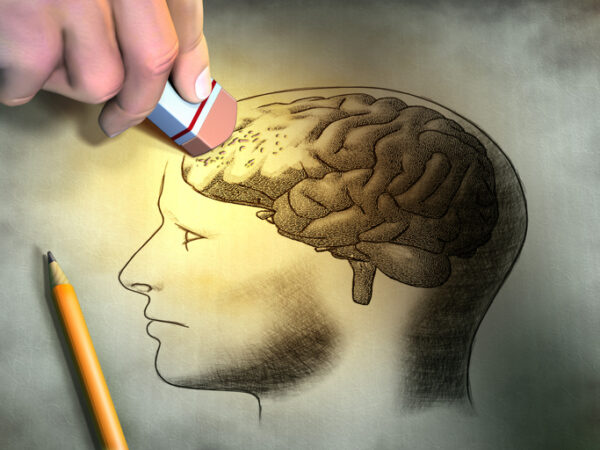
For decades, Alzheimer’s disease has been detected far too late. By the time memory and thinking problems disrupt daily life, underlying biological changes have often been progressing quietly for years. Amyloid plaques and tau tangles accumulate long before symptoms emerge, limiting the impact of interventions introduced after patients or families grow concerned about decline.
However, recent advances in AI suggest that brief tests using ordinary digital interactions could surface clinically meaningful insights, likely years before cognitive decline symptoms appear. Simple tasks analyzed by machine-learning algorithms can generate multiple signals related to cognitive impairment risk and Alzheimer’s biology, pointing toward a more scalable and proactive approach to brain health.
A multi-year head start

Why Pharma Companies Should Look To Social Media For Better Patient Insight
Healthcare decision-makers, especially at pharmaceutical companies, must prioritize patient input. Data collected from social media listening is a significant step in the right direction.
AI tools have shown they can extract multiple layers of insight from an assessment lasting only a few minutes using multiple machine-learning models. This rich behavioral data captured during a digital assessment, for example, can simultaneously generate estimates of cognitive impairment, predict the probability of amyloid positivity, and improve the performance of blood-based biomarkers by informing who may benefit most from further testing.
A brief digital assessment delivered during a routine office visit may help clinicians determine who needs additional testing, specialty referral, or closer follow-up. Given that the shortage of neurologists and neuropsychologists shows no sign of waning and wait times for cognitive evaluations often extend for many months, the ability to derive multiple actionable insights from a single assessment carries significant practical value for primary care clinicians and health systems alike.
Revealing hidden disease
Conventional cognitive screening tools were designed to detect established impairment, not the earliest behavioral manifestations of neurodegenerative disease. These paper-based tests showed little sensitivity to early changes, underscoring the value of digitally captured and AI-analyzed behavior.


Closing the Quality-Affordability Gap in Workplace Mental Health
In an interview, Kyan Health Co-Founder and Chief Commercial Officer Konstantin Struck discussed how Kyan gives mid-market and enterprise employers access to premium workforce mental healthcare, at a price point that is affordable.
That value includes the development of the first behavioral digital biomarkers for Alzheimer’s disease that link everyday cognitive behavior with underlying pathology. The biomarkers deliver richer behavioral measurements, offering broader clinical insights from a single patient interaction.
That depth of insight includes how behavior is linked with multiple brain processes simultaneously. For example, when people draw, pause, or speak, the brain coordinates motor planning, language, attention, and executive function in real time. Subtle changes across these networks leave measurable traces in timing, sequencing, and fluency that remain invisible during standard observation.
A significant step forward
Historically, confirming Alzheimer’s biology has relied on positron emission tomography imaging or cerebrospinal fluid analysis. These tools remain clinically important, but their cost, invasiveness, and limited accessibility constrain routine use. As a result, biological confirmation often occurs after symptoms begin to affect daily life, when interventions are typically less effective.
Digital behavioral assessments offer a complementary and far more accessible first step. They are fast, noninvasive, and well-suited for primary care and community settings. More importantly, they capture dimensions of performance that clinicians cannot reliably quantify in real time. Timing between strokes, hesitation before decisions, and subtle changes in speech rhythm can become data points that human observers on their own would easily overlook or simply not be able to detect.
AI enables these signals to be interpreted at scale. With machine learning models trained on datasets that pair behavioral performance with biological measures, clinicians can identify patterns aligned with early disease processes. This opens the door to earlier risk identification without relying on advanced, costly diagnostics as the first step.
Timing changes everything
Earlier detection matters because timing shapes opportunity. Alzheimer’s disease unfolds along a decades-long biological continuum. During the earliest stages, individuals remain independent, engaged, and capable of making informed decisions about their health and future.
Interventions introduced during this window carry greater potential to improve outcomes. Management of cardiovascular risk factors, attention to sleep and mental health, cognitive engagement strategies, and emerging disease-modifying therapies all show greater promise when applied earlier in the disease course. Perhaps more importantly for patients and families, planning for care, finances, and caregiver support is less burdensome when cognitive capacity remains intact.
Behavioral digital biomarkers help define when that window opens. Routine digital assessments establish individual baselines, flag subtle changes, and support timely follow-up. From a care management perspective, earlier awareness empowers patients and families while reducing the likelihood of crisis-driven care later.
Implications for access, equity, and cost
Alzheimer’s disease places a substantial burden on families, caregivers, and health systems. Much of that burden emerges during later stages, when care needs intensify and options narrow.
Accessible AI-driven digital assessments support a different trajectory. Brief assessments can be incorporated into routine primary care visits and community-based programs, reaching people earlier and more equitably. Their low-burden design supports broader adoption across populations, including those historically and currently underserved by specialty care.
For provider organizations and payers, earlier stratification enables more efficient use of resources. Advanced diagnostics and specialty referrals can be directed toward individuals most likely to benefit. Targeted lifestyle preventive care and patient education can begin sooner. Over time, these shifts can help reduce downstream costs associated with hospitalizations, institutional care, and caregiver burnout.
Time is brain
Brain health assessment is approaching a moment of practical transformation. History offers a useful parallel in blood pressure measurement, which reshaped cardiovascular care once its predictive value and ease of use became clear.
The convergence of behavioral science and AI creates an opportunity to make cognitive and brain health assessment routine, scalable, and actionable. A few minutes of interaction with a digital tablet and speaking can reveal patterns that once required advanced imaging, years of observation, or were just completely undetectable.
The window for earlier action is open, and delaying integration carries a high cost. Brain health assessment has reached a point where biological risk can be surfaced through routine care in highly accessible settings. Embedding behavioral digital biomarkers into everyday practice provides a practical path to act on this moment, enabling earlier intervention at scale and preserving independence while meaningful options still exist.
Photo: Andreus, Getty Images

David Bates, PhD, is CEO and co-founder of Linus Health, an AI-driven brain health company pioneering early detection of cognitive impairment and personalized intervention.
This post appears through the MedCity Influencers program. Anyone can publish their perspective on business and innovation in healthcare on MedCity News through MedCity Influencers. Click here to find out how.