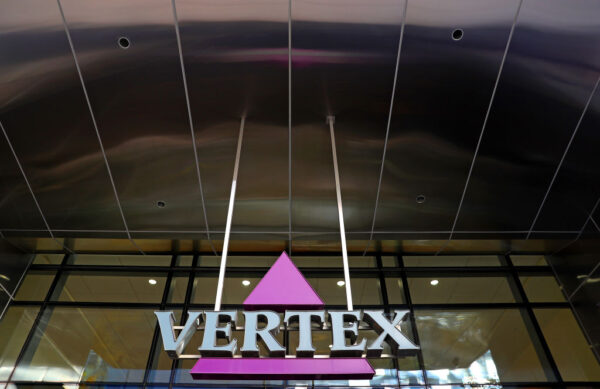
Vertex Pharmaceuticals is ramping up its portfolio and pipeline diversification efforts with the biggest deal in its history: the $10 billion acquisition of Crinetics Pharmaceuticals, a company with a newly launched medicine and a late-clinical asset, each offering blockbuster sales potential in multiple indications.
With the acquisition, Boston-based Vertex is adding endocrinology as a new therapeutic area of focus. The two lead Crinetics assets along with the rest of the biotech’s rare disease pipeline are projected to reach $5 billion in peak sales, Vertex CEO Reshma Kewalramani said during a Monday evening conference call. The deal comes weeks after the June presentation of long-term data for Palsonify, Crinetics’s FDA-approved therapy for acromegaly, a rare endocrine disorder.
“The [deal] timing is now because the company is available now, the data are available now, and we believe that we are the right group to take on Palsonify, add to what the Crinetics team has done, and take this around the globe,” Kewalramani said.


From Blind Spots to Better Outcomes: How SNF Data Transparency Strengthens LTSS
What if health plans could identify member decline before an avoidable hospitalization occurs? Real-time clinical visibility into long-stay SNF members uncovers risk earlier and drives better outcomes.
In acromegaly, high levels of growth hormone lead to joint pain, abnormally large hands and feet, and heart and metabolic problems. An estimated 20,000 people in the U.S. are diagnosed with the disorder. Last September, the FDA approved Crinetics’s Palsonify, an oral small molecule designed to bind to and activate a receptor that leads to suppression of growth hormone.
Vertex executives also have high hopes for Crinetics’s atumelnant, which is in clinical development for congenital adrenal hyperplasia (CAH), an inherited disorder that affects the ability of the adrenal glands to produce the hormone cortisol. Low cortisol levels lead to high levels of two other hormones, androgens and adrenocorticotropic hormone (ACTH). Atumelnant is a small molecule designed to block ACTH.
Standard CAH treatment includes high doses of glucocorticoids, synthetic versions of cortisol. But the super-high doses needed to treat CAH introduce a wide range of side effects. Vertex pointed to atumelnant’s Phase 2 results showing the study drug enabled patients to be treated with glucocorticoid doses closer to normal physiologic levels as well as normalization of androgen levels, dual goals that Kewelramani said represents “the holy grail of what physicians and patients want” from a CAH drug. A Phase 3 study in CAH is underway. This molecule is also in mid-stage clinical development for another rare endocrine disorder, ACTH-dependent Cushing’s syndrome.
In acromegaly and CAH, Crinetics’s therapies are intended to offer advantages over currently available products. Acromegaly can be treated with injectable drugs marketed by Novartis and Ipsen. Both are older medications now facing generic competition, but they’re still blockbuster products. Chiesi Group sells a pill for this disease, but it is only approved as a maintenance therapy for those who have responded to the injectable acromegaly drugs. The FDA approved once-daily oral Palsonify as a first-line acromegaly treatment, putting it on par with the injectable acromegaly drugs but with easier dosing.

Why Pharma Companies Should Look To Social Media For Better Patient Insight
Healthcare decision-makers, especially at pharmaceutical companies, must prioritize patient input. Data collected from social media listening is a significant step in the right direction.
CAH is a less crowded indication with only one FDA-approved therapy, the Neurocrine Biosciences drug Crenessity. This drug addresses a target in the pituitary gland. Kewalramani said what differentiates the Crinetics drug is its ability to both improve androgen levels and reduce glucocorticoids dosing to manage CAH.
Vertex calls its therapeutic areas of focus “pillars.” Cystic fibrosis (CF) remains the largest pillar and accounts for the lion’s share of the company’s $11.9 billion in 2025 revenue. But Vertex has been trying to diversify beyond CF, building pillars in pain, heme, and renal. The renal pillar was established through the 2024 acquisition of Alpine Immune Sciences, a $4.9 billion deal that at the time was Vertex’s largest acquisition. The lead asset from Alpine, a fusion protein called povetacicept, offers the potential to treat a range of kidney disorders. The first could be immunoglobulin A nephropathy; a regulatory submission is under FDA review.
Crinetics launched Palsonify, its first commercial product, last October. For the first quarter of this year, the San Diego-based biotech reported $10.3 million in product sales. The European Medicines Agency recently approved Palsonify and the drug is also under review by other regulatory agencies around the world.
When Crinetics went public in 2018, it priced its shares at $17 each. According to the financial terms of the acquisition agreement, Vertex will pay $85 in cash for each share of Crinetics, which is a 102% premium to the biotech’s closing stock price on Monday. Vertex Chief Operating & Financial Officer Charlie Wagner said his company saw value that justifies the purchase price, which at about twice the peak sales projection is in line with industry deals for commercial or near-commercial assets.
“We believe this combination makes Vertex a stronger, more diversified company, with a long runway of growth while staying true to the strategy that has driven our success,” he said.
The Crinetics acquisition price is a bit on the high side, William Blair analysts Myles Minter and John Boyle said in a Tuesday research note. But they added that the price will be viewed as reasonable if the acquired assets meet Vertex’s sales projections. That said, it’s the first the analysts have heard of multi-billion-dollar sales potential for atumelnant in CAH. Such projections would be bullish for Neurocrine’s drug, they said. William Blair believes most of the $5 billion in projected peak sales is weighted toward atumelnant, which carries more risk given that it is still in late-stage clinical development.
Vertex is financing the Crinetics acquisition with cash on hand and $4.5 billion in committed bridge financing. The deal still needs approvals from regulators and Crinetics shareholders. The companies expect to complete the transaction in the current quarter.
Photo: David L. Ryan/The Boston Globe, via Getty Images