
A growing group of companies is developing new immunology drugs to challenge Dupixent, the blockbuster Sanofi product with a dominating presence in multiple inflammatory indications. North Immunology is joining the pursuit through a merger deal that takes the biotech public and infuses it with $180 million to support plans to bring its main asset to the clinic next year in atopic dermatitis, also called eczema.
North’s path forward is a reverse merger with Aethlon Medical. According to terms announced Thursday, the combined company will keep the North Immunology name and will be overseen by North’s management team, including CEO Jonathan Barr. The deal is expected to close in the first quarter of 2027.
Antibody drugs abound in immunology, but many of them each address a single target. While Dupixent is a monoclonal antibody, it addresses two signaling pathways involved in inflammation, IL-4 and IL-13. North’s approach has some overlap with Dupixent, blocking IL-13 signaling. But North notes that inflammatory disorders are also driven by other pathways. In addition to blocking IL-13, the biotech’s bispecific antibody, NOR-101, is designed to block IL-18. The company contends this dual approach could offer deeper and broader response compared to IL-13 inhibition alone.

The Healthcare Payments Industry Faces a Perception Challenge
Healthcare payments are no longer about transactions. It’s about controlling the revenue cycle. And increasingly, that control is not sitting with ISOs.
Beyond potentially better efficacy, North aims to improve the patient experience. Conjunctivitis is a known side effect of Dupixent, and it’s more common in atopic dermatitis compared to the other indications where the drug is approved. North believes inhibition of IL-18 alongside IL-3 could reduce conjunctivitis. In an investor presentation, the company points to placebo-controlled tests of single-agent IL-18 inhibitors that showed efficacy on measures of lesions and itch. These results also showed no reported cases of conjunctivitis.
Dosing frequency is another area where North is aiming for an edge. NOR-101 is engineered to offer an extended half-life to enable less frequent dosing. Maintenance dosing for Dupixent is an injection every two weeks. North says its drug could be dosed every three or six months.
One of the IL-18 inhibitors that North referenced is EVO301, an Evommune fusion protein that posted positive Phase 2a data earlier this year. North’s most direct potential competitor might be Talawar Therapeutics, which is developing an IL-13/IL-18-blocking bispecific antibody called TALA-125. Talawar is going public in a SPAC merger and concurrent private placement set to infuse the biotech with $285 million. TALA-125 is slated to enter the clinic in early 2027 with preliminary data expected late in the year.
The pursuit of immunology and inflammation drugs with potential advantages over Dupixent has led to a recent flurry of dealmaking. Last month, Attovia Therapeutics raised $289 million from an IPO that will fund clinical development of its fusion proteins designed to bind to multiple targets to treat immunological indications. Days later, startup Infinimmune unveiled $75 million for clinical development of a pipeline that includes an internally discovered antibody designed to block IL-13. And AbbVie recently closed its $11 billion Apogee Therapeutics acquisition, a deal that brings zumilokibart, a Phase 3-ready long-acting antibody designed to inhibit IL-13 to treat atopic dermatitis.
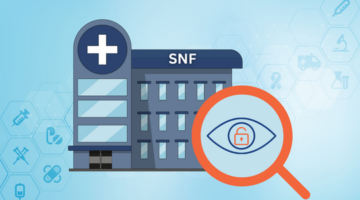
From Blind Spots to Better Outcomes: How SNF Data Transparency Strengthens LTSS
What if health plans could identify member decline before an avoidable hospitalization occurs? Real-time clinical visibility into long-stay SNF members uncovers risk earlier and drives better outcomes.
While atopic dermatitis is North’s lead indication, the presentation notes that NOR-101 has potential applications in eight additional immunological diseases. The company has not specified any clinical trial plans for those conditions. North plans to begin the Phase 1a test in atopic dermatitis in the first quarter of 2027; interim data are expected mid-year. The company then plans to proceed to Phase 1b and Phase 2b testing later in the year with preliminary data from both studies expected in 2028.
“If NOR-101 is able to demonstrate clinical data in line with its target profile, we believe it would be a material improvement to current standard of care,” North said in the presentation.
North’s clinical trial plans will be supported by a $180 million private placement. Investors include Bain Capital Life Sciences, Janus Henderson Investors, Deep Track Capital, Longitude Capital, Soleus Capital, Invus, Sirenia Capital Management LP, funds managed by Farallon Capital Management, Adage Capital Partners LP, and TCGX. North expects the capital will fund its operations into the second half of 2028.
Aethlon’s Hemopurifier, a medical device in development for organ transplant procedures, has no future at the combined company. North will look for a business deal placing the asset with another company. The merger agreement makes Aethlon shareholders eligible to receive a contingent value right tied to proceeds from a transaction related to Aetholon’s legacy business.
According to the terms of the merger agreement, North’s stockholders, including those participating in the private placement, will own about 95.25% of the combined company; Aethlon’s stockholders will own the remaining 4.75%. When the deal closes, North is expected to trade on the Nasdaq under the new stock symbol “NRTX.”