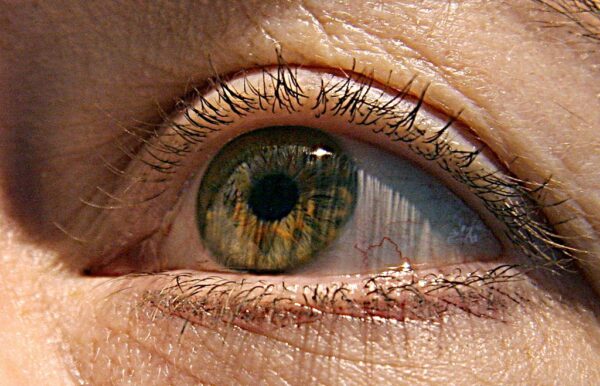
For glaucoma patients, the most difficult part of treatment usually isn’t the operation. It’s the aftermath, which involves cloudy, stinging eye drops administered every two hours for weeks on end, sometimes requiring the help of a caregiver or a temporary stay in a care facility.
LEP Biomedical, an Irish pre-clinical stage startup, is betting on a better way to recover. The company is developing a dissolvable implant that tucks under the eyelid during surgery and releases medication on a steady schedule for up to two years.
This approach seeks to eliminate the compliance problems that drive glaucoma surgery failure rates as high as 40%, said LEP CEO Alan Hibbitts.


Closing the Quality-Affordability Gap in Workplace Mental Health
In an interview, Kyan Health Co-Founder and Chief Commercial Officer Konstantin Struck discussed how Kyan gives mid-market and enterprise employers access to premium workforce mental healthcare, at a price point that is affordable.
He noted the key issue is that the body’s natural healing response works against the surgery itself. When surgeons create a new drainage channel to relieve eye pressure, the same inflammatory process that heals the incision also tends to scar it shut, which undoes the pressure relief the procedure was meant to provide.
Managing that inflammation is why patients get stuck on such an intensive drop schedule — and it is also why missing doses, or taking them inconsistently, leads to surgical failure so often, Hibbitts explained.
He pointed out that LEP’s implant is designed to match its drug release to the eye’s own inflammatory timeline. Glaucoma patients’ inflammation usually spikes right after surgery and then gradually fades, so the device releases its drug on a matching curve. It’s heaviest in the first days, then it tapers off.
The material itself is a polymer with an established safety record in humans, Hibbitts said.

Top 7 Modern AI-Powered EAP Providers for Global Workforces in 2026
Discover the top AI-powered EAP providers for 2026. Compare platforms like Kyan Health and Spring Health on triage speed, global reach, and clinical quality to transform workforce wellbeing.
“It’s a very slow-degrading polymer, which is to ensure safety and healing,” he stated, noting that a faster-dissolving alternative would risk breaking down into acidic byproducts that could irritate the eye and restart inflammation.
This reliability matters most for patients who face the steepest odds already, Hibbitts added.
Glaucoma disproportionately affects people of West African descent, a genetic predisposition that Hibbitts said also comes with a higher likelihood of post-surgical scarring. On top of this, many patients also face socioeconomic and geographic barriers, such as long drives to specialty clinics, missed work, and drops that go unreimbursed and unreplaced when a bottle is lost. This all makes it difficult to maintain a fixed dosing regimen, Hibbitts noted.
“If we can just take it all away from the patient’s hands,” he remarked, “there’s just a level of certainty.”
Hibbitts said LEP has funded its preclinical work so far through Enterprise Ireland support, as well as the founders’ own capital, but the company is now reaching the limits of what it can do without outside investment.
LEP is raising a €3 million seed round to move the implant into its first human trial — a milestone that will show whether its targeted drug release can actually translate into better surgical outcomes for patients.
The overall goal isn’t to replace glaucoma surgery, but rather to make it more predictable for both patients and surgeons, Hibbitts declared.
If LEP can prove that out in human trials, he added, it could shift how and when doctors recommend surgery in the first place — and it might reverse the current trend of delaying surgery in favor of less invasive but more reliable options.
Editor’s note: This story is based on discussions held during a trip hosted by Enterprise Ireland. The organization invited MedCity News Associate Editor Katie Adams to attend — travel expenses were covered by Enterprise Ireland, but company officials had no input in editorial coverage.
Photo: KAREN BLEIER/AFP via Getty Images