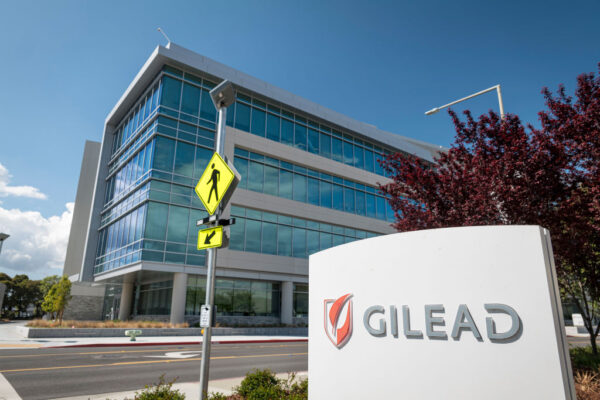
Inflammation is one of the therapeutic areas Gilead Sciences has singled out for future growth and this strategy is adding a key new piece through a nearly $1.3 billion deal for a clinical-stage oral drug with potential applications in inflammatory bowel disease, or IBD.
The deal announced after Thursday’s market close brings Gilead an IL-23 receptor program from PepStar Therapeutics, a privately held company based in Shanghai. Gilead gains global rights to this PepStar program, including lead asset HCXT-2001.
The IL-23 receptor is a validated target, addressed by several FDA-approved immunology and inflammation drugs. Most of them are administered as chronic injections. HCXT-2001 is designed for oral dosing. Peptides are typically administered by injection because the digestive environment of the gut breaks them down. It’s also hard for peptides to be absorbed by the intestines.

The Hidden Administrative Tasks Draining Small Practices
Small practices play a critical role in healthcare delivery, but they cannot continue to absorb ever-increasing administrative demands without consequences.
HCXT-2001 is a macrocyclic peptide in which the amino acids that make up the peptide are formed into a ring. This shape keeps peptide’s amino acids from being exposed to digestive enzyme and it also helps the drug pass through intestinal walls.
HCXT-2001 is currently in Phase 1 testing. To date, no data about the drug have been disclosed. In a media briefing during the J.P. Morgan Healthcare Conference at the start of this year, Gilead CEO Daniel O’Day said business deals would continue to be key to pipeline growth, but that strategy will play out differently in inflammation versus cancer.
“Inflammation, we knew, would always be a little bit of a longer-term strategy for us just because of the nature of the external environment and what medicines were available for us to bring into the company,” he said. “So our focus was for inflammation, earlier stage, and for cancer, really building our late-stage presence in the portfolio.”
In the announcement of the PepStar deal, Gilead Chief Medical Officer Dietmar Berger said the company sees potential for the oral peptide to be used as a standalone treatment or paired with other drugs. The combinations could include emvistegrast (formerly GS-1427), an internally discovered drug in development for IBD. This oral small molecule, formulated as a once-daily pill, is designed to inhibit alpha 4 beta 7 integrin, a receptor in the gut that plays a role in intestinal inflammation.

From Blind Spots to Better Outcomes: How SNF Data Transparency Strengthens LTSS
What if health plans could identify member decline before an avoidable hospitalization occurs? Real-time clinical visibility into long-stay SNF members uncovers risk earlier and drives better outcomes.
Gilead is currently developing emvistegrast for ulcerative colitis. During the United European Gastrenterology Week meeting in Barcelona on Monday, Gilead presented data from a Phase 2 dose-ranging study. Results showed the highest of three doses met the main goal of achieving a clinical response at 12 weeks. Specifically, 66% of patients who received emvistegrast achieved a clinical response compared to 37% of those who received a placebo; 31% of those in the study drug arm achieved clinical remission compared to 8% of those in the placebo group. Gilead said its drug was well tolerated. This study is continuing.
IBD patients already have the option of drugs that address IL-23, albeit administered as injections. AbbVie’s Skyrizi, Johnson & Johnson’s Tremfya, and Eli Lilly’s Omvoh are all antibodies designed to block a subunit of IL-23. J&J also markets the antibody medicine Stelara, which blocks IL-12 and IL-23. While this product’s approved indications include ulcerative colitis and Crohn’s disease, its patents have expired.
J&J does have a new once-daily oral option for blocking IL-23. Icotyde, an oral peptide developed in collaboration with Protagonist Therapeutics, won FDA approval in March for treating plaque psoriasis. J&J has ongoing clinical trials evaluating Icotyde in other indications, including ulcerative colitis and Crohn’s. The pharma company has projected that Icotyde could reach up to $5 billion in peak annual revenue.
Gilead said HCXT-2001 is designed to offer an extended half-life, though the company has not specified the drug’s potential dosing interval. In addition to IBD, Gilead said this PepStar drug has potential applications in psoriasis.
The PepStar deal is the latest in Gilead’s immunology growth strategy. In March, Gilead agreed to pay about $1.7 billion to buy Ouro Medicines, a startup developing drugs that treat autoimmune disorders by resetting the immune system. Last year, Gilead acquired a LEO Pharma oral small molecule inhibitor of STAT6, a protein that plays a role in two inflammatory pathways.
The $1.275 billion that Gilead agreed to pay PepStar is an upfront payment. No details about milestones were disclosed. The companies expect to close the deal by the end of this year.
Photo: David Paul Morris/Bloomberg, via Getty Images