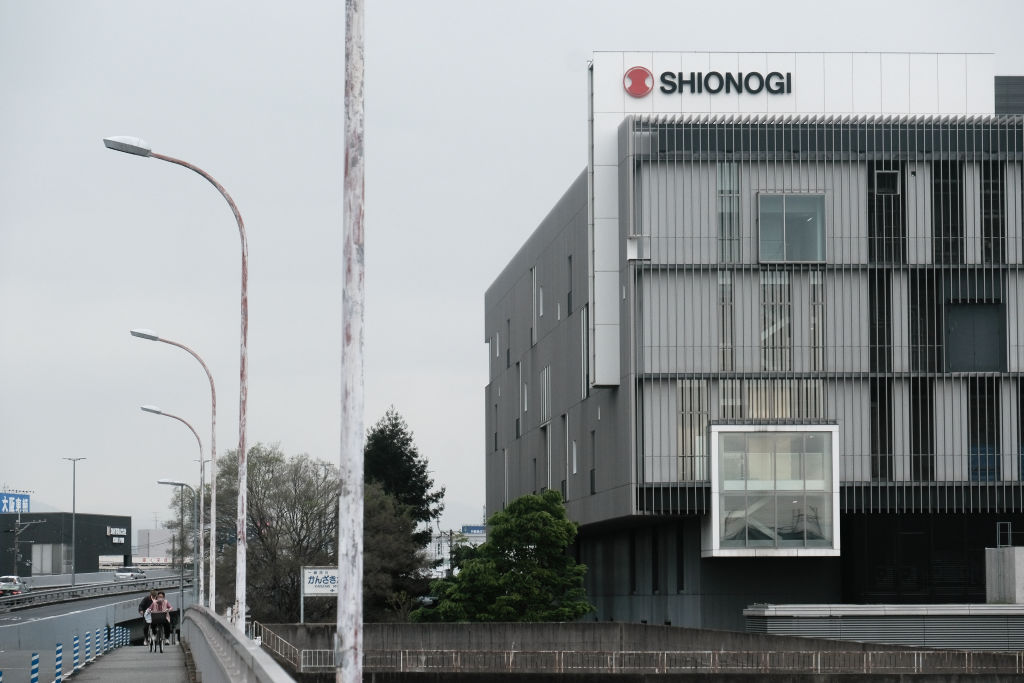
The growth strategy of Shionogi & Co. is picking up a new piece through the $2 billion acquisition of IntraBio, a biotech company that brings a drug approved in two rare indications along with experience and expertise that complement the Japanese firm’s pipeline of drugs for rare neurological diseases.
The main IntraBio asset in the deal announced Monday is levacetylleucine, brand name Aqneursa. The FDA initially approved this drug in 2024 as a treatment for the neurological manifestations of Niemann-Pick disease type C, a rare inherited enzyme deficiency. It’s one of just two FDA-approved therapies for this disorder. Last month, the FDA expanded Aqneursa’s label to include ataxia-telangiectasia (A-T), making it the first approved therapy for this rare neurodegenerative disorder.
Osaka, Japan-based Shionogi established a commercial presence in rare disease through a business deal earlier this year, the $2.5 billion acquisition of global rights to Radicava, an amyotrophic lateral sclerosis drug developed by Tanabe Pharma. Shionogi’s other rare disease drug candidates are also from business deals.

Where Will AI Deployment Benefit Payers the Most?
We are taking a look at how health insurers are using AI, defining success, and managing cybersecurity risks. Give us your opinions by completing our brief, anonymous survey.
S-606001, currently in mid-stage clinical development for the rare enzyme deficiency Pompe disease, was licensed from Maze Therapeutics in 2024. Zatolmilast came from Shionogi’s 2020 Tetra Therapeutics acquisition. In May, Shionogi disclosed that this oral small molecule failed two Phase 3 tests in Fragile X syndrome, a genetic disorder that leads to intellectual disability and developmental delays. A separate mid-stage study is still evaluating the molecule in Jordan syndrome, a rare neurodevelopmental disorder.
Privately held IntraBio was founded in 2015. Its scientific founders hailed from the University of Oxford and the University of Munich, where they discovered and developed small molecules that modulate lysosomal function and intracellular calcium signaling. Initially based in Oxford, U.K., IntraBio relocated to Austin, Texas, in 2024.
Aqneursa is a modified form of L-leucine, an essential amino acid sourced from food that the body needs for building and repairing muscle and for enabling cells to produce energy. IntraBio’s version of the amino acid is modified in a way intended to help it cross membranes, including the blood-brain barrier. But Aqneursa’s label states that the drug’s mechanism of action for treating Niemann Pick and A-T is unknown. The company has said this drug has potential applications in a range of rare and common neurological disorders. According to Shionogi, Aqneursa generated $67.8 million in revenue in fiscal 2025.
Shionogi’s largest source of revenue is royalties from HIV drugs marketed by ViiV Healthcare, a company majority owned by GSK. Earlier this year, Shionogi increased its minority ownership stake in ViiV from 10% to 21.7%. Those HIV medicines are part of a broader Shionogi business strategy with a 2030 target date for achieving growth goals. Another goal in this strategy is entering the rare disease business overseas.

Why Pharma Companies Should Look To Social Media For Better Patient Insight
Healthcare decision-makers, especially at pharmaceutical companies, must prioritize patient input. Data collected from social media listening is a significant step in the right direction.
Beyond Aqneursa’s FDA approvals, the drug also received European Commission approval early this year for Niemann Pick disease type C. An additional European regulatory review is ongoing in A-T. In a prepared statement, Shionogi CEO Isao Teshirogi said the IntraBio acquisition shows his company’s commitment to building a global business in rare disease.
“Bringing Aqneursa to Shionogi after our acquisition of Radicava will deepen our commitment to rare disease communities, expand our capabilities and strengthen our portfolio as we advance future innovation for patients with significant unmet needs,” he said.
The IntraBio acquisition still needs to clear regulatory reviews. Shionogi said it expects the transaction will close by the end of this year.
Photo: Soichiro Koriyama/Bloomberg, via Getty Images