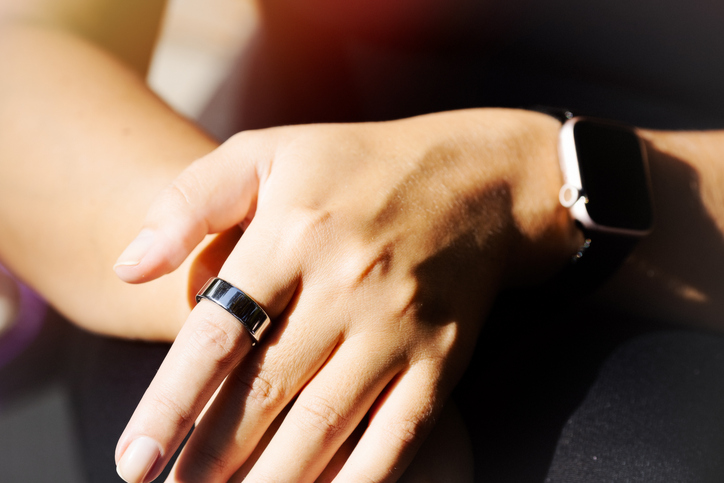
HealthTech seems to be having a tough year. The Oura lawsuit has sparked rising skepticism and growing scrutiny over biometric accuracy claims. Users are, rightfully, upset that the devices they bought are not delivering the results they were promised. But is that indignation pointed at the right flaw? Are users actually upset that sleep stages are not perfectly measured? Or, are they feeling let down that the technology is failing to fulfill that grander goal of making them feel “better”?
Research suggests that, for younger adults, they picked up a tracker to help them enhance their fitness: run faster, longer, or increase your VO2max. For older users, the goals shift towards improving health, keeping an eye on heart health, and managing symptoms from chronic illnesses. Users hand over their money because they believe that this is a tool that will help them feel healthier, and therefore better. But over time, this outsourcing of information about their body disconnects people from what they are feeling: looking at the data to see if that was a good workout, or if they are having a high-energy day. After three months, half of users give up on their tracker. The novelty has worn off, and the promise of self-optimization has not been met.
As in any relationship, the breakdown between user and technology is a two-way street. Yes, there are flaws in the execution of the technology, but are we asking it to be something that it could never be? After more than a decade of studying health psychology, I would argue that before we can design and produce effective HealthTech solutions we need to come to an agreement on what the problem is. HealthTech is being asked to produce highly sophisticated trackers that can support users in optimizing their health. But will that actually make people feel better? So far, research shows that even when users stay engaged with trackers and meet physical activity goals, they are not any happier. Somewhere along the way, that goal gets disconnected from its purpose. When quantifying every action, activity is performed to close rings, maintain streaks, and earn badges. The result is that, even when goals are reached, it fails to fulfill the greater needs of autonomy and capability, and therefore prevents users from feeling like they are flourishing.

Why Pharma Companies Should Look To Social Media For Better Patient Insight
Healthcare decision-makers, especially at pharmaceutical companies, must prioritize patient input. Data collected from social media listening is a significant step in the right direction.
This gap between activity tracking and true psychological flourishing is explained by the Tracker Goal Evolution Model, a framework developed by researchers Jasmin Niess and Pawel Wozniak. Their model suggests that our well-being exists across various levels of abstraction. At the highest level, we find our eudaimonic needs: those internal desires to feel authentic, vital, and purposeful. To become actionable, these desires must first evolve into qualitative intentions, such as wanting to be more physically active. Only after this shift can they be translated into the quantitative metrics we currently measure with our trackers.
It’s not theory that this works. In a randomized controlled trial conducted by Barbara Stiglbauer and her team at Johannes Kepler University, researchers observed that wearing a device only made participants feel happier when they also used an app that placed their data within their personal context and facilitated meaningful reflection. This meaningful personalization — choosing a screensaver does not count — allowed them to keep the “why” of their goals in the loop, and stay in touch with their own feelings.
This does not just apply to HealthTech. A shift towards emphasizing value-based living is sweeping psychological practice, as the evidence builds for the effectiveness of mindfulness-based and acceptance-based therapeutic techniques. However, implementing what we have learned into HealthTech seems to have stalled at reminding us to breathe a couple of times a day. The problem lies in building devices that can handle the level of personalization and qualitative input that would be required. However, there are practices being used in psychotherapy that could provide a solution. In clinical environments, we often use external tools or expert observations as temporary scaffolding: encouraging people to tune into bodily sensations and behavioral patterns until they can do so without the prompt.
For HealthTech to really become effective at increasing our patients’ well-being, it must adopt a similar perspective. Rather than simply displaying the stats, it needs to also prompt users to reflect on how they feel after activity, ideally drawing attention to the personalized goal of the user. If we are willing to accept full oversight from devices, then they could even observe patients’ behaviors: how much are they scrolling? Picking-up their phone? Or showing other signs that they are not actively engaged in a task and experiencing feelings of vitality.


From Blind Spots to Better Outcomes: How SNF Data Transparency Strengthens LTSS
What if health plans could identify member decline before an avoidable hospitalization occurs? Real-time clinical visibility into long-stay SNF members uncovers risk earlier and drives better outcomes.
Developing these solutions is not a question of fine-tuning a vanity accessory for a privileged few. According to the WHO, there are an estimated 1.8 billion adults who are not meeting the daily recommended levels of physical activity, and according to Gallup, less than half (48.9%) of US adults would say that they are “thriving”. The global wearable fitness tracker industry is currently valued around $80 billion. That is a huge industry that has the potential to solve a very pressing public health concern. But the way we are currently doing it, is not working. I am going to assume that after the Oura lawsuit, the labs of Silicon Valley are currently very full with experts fine-tuning the tech so that it really does accurately measure sleep stages, and steps, and calorie burn, and every movement a patients’ heart makes. But perhaps while they are doing so, they can also integrate more of this meaningful personalization into their designs, so that people can get moving – and feel good doing it.
Photo: Alena Frolova, Getty Images

Dr. Emma Biggs holds a joint PhD in Psychology from KU Leuven, Belgium, and Maastricht University, The Netherlands, and has spent over a decade conducting cutting-edge research at leading global institutions. Most recently, she served as a Life Science Research Professional at Stanford School of Medicine and as an Assistant Professor of Medical and Clinical Psychology at Tilburg University. Her scientific publications - appearing in international peer-reviewed journals including Nature Communications, Pain, and Neuroscience & Biobehavioral Reviews - focus on the neural and psychological mechanisms of illness-related disability.
Today, Dr. Biggs operates an independent research consultancy in Belgium, advising biomedical R&D teams, digital health innovators, and healthcare organizations on translating neurocognitive evidence into actionable strategy. Dr. Biggs also maintains an active practice providing evidence-based psychosocial support to individuals navigating life with chronic illness.
This post appears through the MedCity Influencers program. Anyone can publish their perspective on business and innovation in healthcare on MedCity News through MedCity Influencers. Click here to find out how.