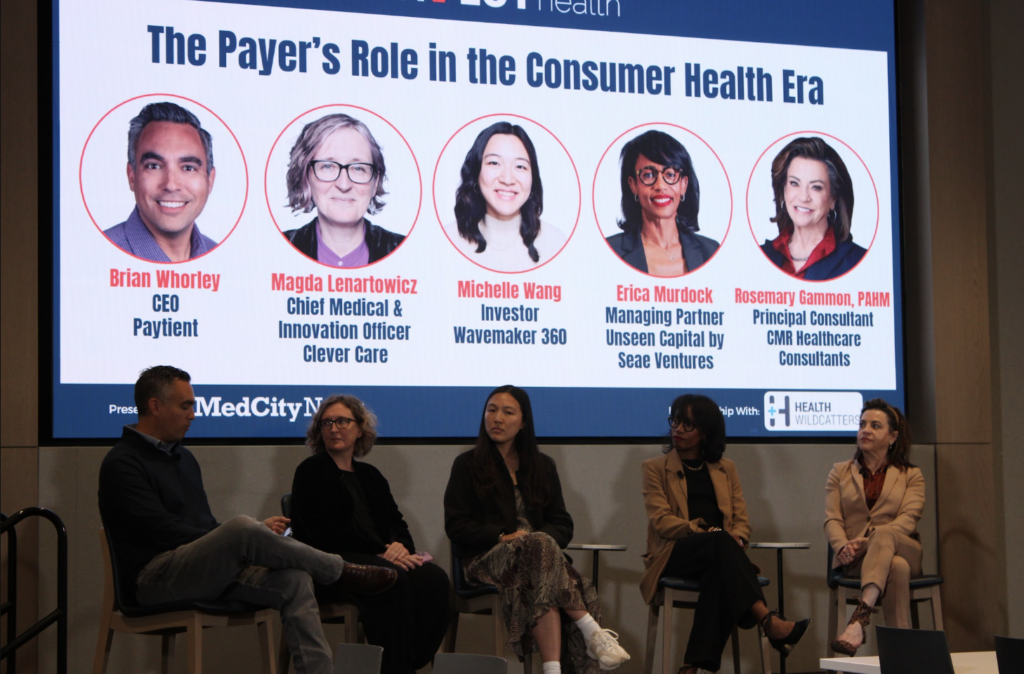
Healthcare is becoming more and more consumer-driven. So how can payers fit in this new era?
This was the topic of conversation during a recent panel at the MedCity INVEST Digital Health Conference in Dallas. The panel was moderated by Brian Whorley, CEO of Paytient, a company that offers health payment accounts for employers and health plans.
One panelist noted that one of the biggest issues she sees in the payer space is that medical policies and guidelines vary from health plan to health plan.


Automation Didn’t Dehumanize Care. Bad Systems Did.
We have the opportunity to design systems that give people greater capacity for the work where human presence matters most: listening, understanding, reassuring, deciding, and caring.
“CMS has a set of guidelines. So does Aetna, Blue Cross Blue Shield, they all vary, and it’s really complicated being a provider to meet their expectations and understand what they’re looking for. And that’s part of what I do, is kind of dig deep, particularly with new medical innovation. That’s a whole process,” said Rosemary Gammon, PAHM, principal consultant at CMR Healthcare Consultants.
Another panelist noted that it’s important for payers to keep patient or member trust at the core of everything they’re doing.
“I think a lot of times they’re so consumed with thinking about the dollar, which is important. Obviously, they have to make money and protect the dollars at the plan. … But when they put forth a new product or a new platform or a new solution, if the patient or the member doesn’t trust that, then they’re never going to adopt it. If they want to continue to be part of this ecosystem outside of just being the bill-transactor, then I think that that’s going to be one of the most important things as they go forward,” said Erica Murdock, managing partner of Unseen Capital by Seae Ventures.
Michelle Wang, investor at Wavemaker 360, said she would like to eventually see a world in which the payers care for patients’ longitudinal health journeys.

Inside an Automated Healthcare Practice: Redesigning Care Around People, Not Paperwork
By reducing administrative burden and redesigning workflows around human needs, it creates space for what matters most: connection between clinicians and patients.
“In an ideal world, that goes beyond just the complex, high-cost patients, but also to those in maybe like the yellow zone, where we can actually bend the cost trajectory for them, and then also for everyone else that wants to be more proactive and engaged and preventative in how we do care,” she said. “I think a big opportunity now is around engagement. … I think it’s the payer’s role once they’ve gotten that engagement down to help with steerage and navigation to more value-centric care at lower-cost sites, and then hopefully tie that to clinical outcomes.”
Another panelist — Magda Lenartowicz, chief medical and innovation officer of Clever Care — echoed Wang’s comments, emphasizing the importance of addressing fragmentation in the healthcare system. Clever Care is a Medicare Advantage insurance company based in California.
“What I’m seeing is that especially older folks have different, varying degrees of being comfortable with digital technology. Some are super savvy, some are not. … We have members that have different apps for different disease conditions, and [we’re] trying to figure out how to help them,” Lenartowicz said.