A personalized messenger RNA cancer treatment developed by Moderna and Merck enabled melanoma patients to live longer without signs of their disease coming back, results the companies say mark the first successful data readout of this type of therapy in a Phase 3 clinical trial.
Specific trial results are being withheld for now, as the study is ongoing. But in the Wednesday announcement, the companies said a pre-specified interim analysis shows the mRNA treatment, intismeran autogene, combined with the approved Merck immunotherapy pembrolizumab, brand name Keytruda, led to statistically significant and clinically meaningful results. The companies said more details will be presented at an upcoming medical meeting. But based on the data so far, the partners said they will start talking with health authorities about potential submissions seeking regulatory approvals in this indication.
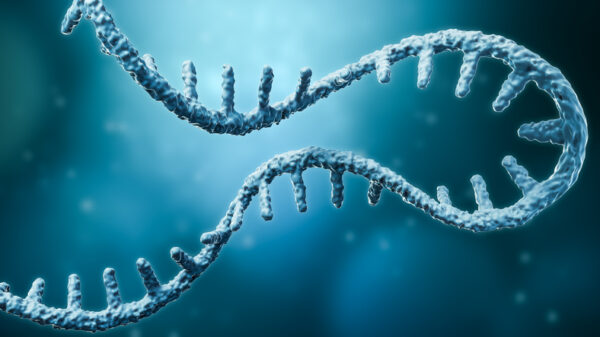
Intismeran is tailored to each patient’s cancer. The process for making the therapy starts by analyzing a tumor sample to identify neoantigens, proteins that are unique to that patient’s tumor and no one else’s. Intismeran consists of mRNA designed to code for up to 34 neoantigens. Encapsulated in lipid nanoparticles, the mRNA is injected into a patient to get the body’s protein-making machinery to produce those neoantigens. These proteins train and activate the immune system to mount a response against the patient’s tumors.


The Healthcare Payments Industry Faces a Perception Challenge
Healthcare payments are no longer about transactions. It’s about controlling the revenue cycle. And increasingly, that control is not sitting with ISOs.
The Phase 3 trial enrolled 1,137 patients whose melanoma had been surgically removed. The trial evaluated intismeran as an adjuvant, a therapy given after an initial treatment (in this case, surgery) to prevent cancer recurrence. The study drug was tested alongside Merck’s Keytruda, whose approved indications include adjuvant treatment for melanoma. This combination was compared to Keytruda alone.
The main trial goal is measuring recurrence-free survival, which is how long a patient survives without signs of the cancer returning. A key secondary goal is distant metastasis-free survival, a measure of how long a patient survives without the disease spreading to distant parts of the body. These are the measures where the companies said intismeran and Keytruda achieved statistically significant and clinically meaningful improvement compared to Keytruda alone.
In the companies’ announcement of the interim readout, Professor Georgina Long, medical director of Melanoma Institute Australia, Chair of Melanoma Medical Oncology and Translational Research at the University of Sydney, and principal investigator of the study, called the results “a landmark moment for adjuvant melanoma treatment.”
“Intismeran in combination with pembrolizumab has the potential to establish a new treatment paradigm in the adjuvant melanoma setting, helping patients remain cancer-free for longer,” she said.

Where Will AI Deployment Benefit Payers the Most?
We are taking a look at how health insurers are using AI, defining success, and managing cybersecurity risks. Give us your opinions by completing our brief, anonymous survey.
Merck and Moderna have been mRNA R&D partners since 2016. Merck paid Moderna $200 million up front to begin the alliance on what was then called personalized cancer vaccines. The companies now call them individualized neoantigen therapies (INTs). In 2022, Merck paid $250 million to exercise its option for intismeran, known in earlier stages of development as mRNA-4157. Per the agreement, the companies share equally in further development and commercialization of the therapy, if it’s approved.
The interim results announced Wednesday build on the January report of five years of follow-up for melanoma patients who received intismeran and Keytruda as an adjuvant treatment in a Phase 2b trial. The data showed the drug combination reduced the risk of cancer recurrence or death by 49%. The ongoing pivotal test of intismeran as an adjuvant melanoma treatment is the most advanced of eight total Phase 2 and Phase 3 studies underway in a range of tumor types including non-small cell lung cancer, bladder cancer, and renal cell carcinoma.
In a Wednesday research note, Leerink Partners analyst Daina Graybosch, who covers Merck, characterized the results as a “historic cancer vaccine success.” While these results were unexpected, she said Merck and other companies can build on them to develop next-generation cancer vaccines.
William Blair analysts who cover Moderna said in their investor note that in addition to putting Merck and Moderna in position to seek regulatory approval for intismeran as an adjuvant treatment for melanoma, the positive Phase 3 results offer positive readthrough to other ongoing studies of the therapy. They added that neoantigen therapies are crucial for Moderna’s effort to broaden its revenue beyond infectious disease vaccine. The bank said it views the data readout as positive for Moderna’s fundamental business, adding that the mRNA company “has a clear line of sight to revenue diversification” from its two Covid-19 vaccines, Spikevax and mNexspike.
Illustration: libre de droit, Getty Images