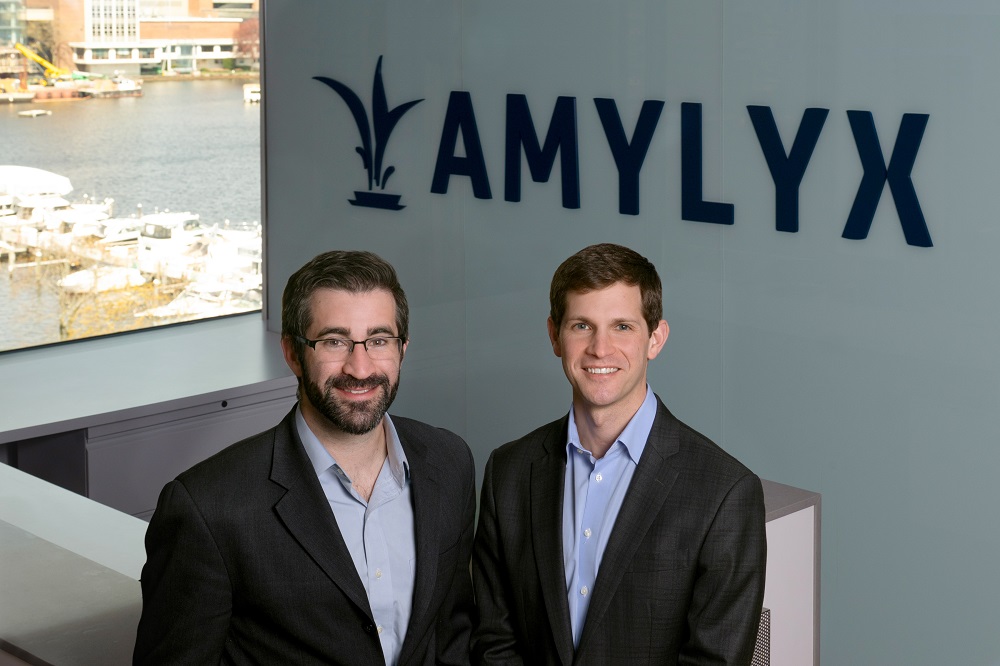
An Amylyx Pharmaceuticals drug has results from a pivotal study showing the experimental daily treatment reduced debilitating effects of a rare metabolic disorder by more than half, positioning the company to seek FDA approval for what could become the first therapy for this chronic condition.
The disorder is post-bariatric hypoglycemia (PBH), a steep drop in blood sugar levels that is a rare and serious complication of bariatric surgery. The Cambridge, Massachusetts-based biotech has been working on a new drug application for the molecule, avexitide, for the past year, co-CEO Justin Klee said during a Tuesday morning conference call. With the positive Phase 3 results in hand, Amylyx is now aiming for a regulatory submission by the end of this year. Klee added that avexitide could be eligible for priority review and the company is planning for a 2027 product launch if the drug is approved.
In PBH, some patients experience hypoglycemia after a meal, low blood sugar that can lead to seizures, dizziness, cognitive dysfunction, and loss of consciousness. The condition can restrict a patient’s ability to work and care for children. PBH does not develop in all patients who have had bariatric surgeries, but for those who do develop it, the disorder becomes a chronic condition. What happens is that the surgical alteration of the gut’s anatomy results in metabolic changes, including abnormally high levels of the gastrointestinal hormone GLP-1. High GLP-1 levels enhance the release of insulin, a hormone that lowers blood sugar.


Closing the Quality-Affordability Gap in Workplace Mental Health
In an interview, Kyan Health Co-Founder and Chief Commercial Officer Konstantin Struck discussed how Kyan gives mid-market and enterprise employers access to premium workforce mental healthcare, at a price point that is affordable.
The GLP-1 drugs that are currently available for obesity are agonists — they target and activate the GLP-1 receptor. Avexitide is an antagonist, a peptide designed to bind to and block GLP-1 receptors on pancreatic islet beta cells. Doing so is intended to bring the excessively high levels of GLP-1 back down to a healthy range.
The placebo-controlled Phase 3 study enrolled 78 participants who had PBH following roux-en-Y gastric bypass, a common type of weight-loss surgery. Avexitide was administered by injection each morning at least 60 minutes prior to breakfast. The main goal was measuring hypoglycemia events through week 16. The preliminary results reported Tuesday show a 55% reduction in such events. Amylyx said the study drug was generally well tolerated with adverse effects characterized as mild to moderate. The most common adverse events reported were diarrhea and injection site reactions.
Dr. Marilyn Tan, a clinical professor at the Stanford School of Medicine and principal investigator of the Phase 3 study, said during the call that none of the participants she treated in the trial discontinued the therapy and all of them went on to the open-label extension study. As for avexitide’s impact on patient quality of life, Tan said patients told her the drug enabled them to function independently and return to work.
“It’s life altering, not only for the patient but also for their families,” she said.

Why Pharma Companies Should Look To Social Media For Better Patient Insight
Healthcare decision-makers, especially at pharmaceutical companies, must prioritize patient input. Data collected from social media listening is a significant step in the right direction.
Avexitide could also be altering for Amylyx. Two years ago, Amylyx won the therapeutic candidate in the bankruptcy auction of Eiger Biopharmaceuticals, which had advanced the peptide through Phase 2 testing. That deal brought Amylyx a new lead program months after its amyotrophic lateral sclerosis drug, Relyvrio, failed a post-marketing study. Amylyx voluntarily withdrew the product from the market and restructured operations. In an interview, Amylyx co-CEO Josh Cohen said the company looked at hundreds of drug candidates, mostly for rare diseases. That search led to avexitide, which he said stood out because of its potential to make a difference in patients’ lives.
“We didn’t want to do anything that was me too or me better,” he said. “We wanted to do things that were going after diseases that really didn’t have much and where patients really needed our help.”
Amylyx estimates that about 160,000 people in the U.S. have PBH. About 120,000 of these patients have had roux-en-Y gastric bypass surgery, though other gastric procedures can lead to the condition. Klee said the company believes avexitide can address PBH regardless of the surgical procedure, but if the FDA asks for another study evaluating the drug in patients who have had other types of surgery, the company can do that.
Bariatric surgery rates are declining, but Amylyx does not view PBH as a shrinking market. Cohen said the average age for a bariatric surgery patient is 40, and those who develop PBH have the condition for the rest of their lives. As these procedures continue, that population of patients will grow. Also, even though the market for obesity drugs is growing, clinicians have told Amylyx that bariatric surgery remains the gold standard in cases of severe obesity. These patients need a PBH treatment option.
Daily dosing is not expected to be obstacle for patient adoption of avexitide. Tan said that in some chronic diseases, adherence to frequent dosing can be a challenge if the disorder is asymptomatic. But in PBH, missing a shot means a patient becomes hypoglycemic after eating, so patients are extremely motivated to maintain the dosing regimen, she said. Even so, Amylyx acknowledges the burden of daily dosing. The pipeline includes AMX0318, a next-generation GLP-1 antagonist offering the potential for weekly dosing. This drug candidate, which Amylyx developed in partnership with Danish peptide discovery company Gubra, is in late preclinical development. Klee said the company aims to start clinical testing in 2027.
In June, Leerink Partners projected that avexitide, if approved, could reach $1 billion to $1.5 billion in peak sales. The lack of available treatments for PBH has sparked competitive research interest in the indication. Pasireotide, a former Novartis peptide drug marketed by Recordati as Signifor for the rare endocrine disorder Cushing’s disease, is in development for PBH. Earlier this year, Recordati reported the drug met the goals of a Phase 2 test in PBH. The company is working to finalize a Phase 3 plan by the end of 2026. Newly public Vogenx is taking yet another approach with mizagliflozin. This oral small molecule, taken before each meal, inhibits SLGT1, a glucose transporter protein. Vogenx said it will apply its IPO proceeds toward Phase 2b testing in PBH; preliminary data are expected in 2027.
Cohen said during the call that Amylyx believes avexitide’s results show that no other drug candidate has a comparable profile. Klee added that the company thinks a GLP-1 antagonist gets to the heart of PBH. The executives said more detailed data will be published in a scientific journal and presented at an upcoming medical meeting.
Photo by Amylyx Pharmaceuticals