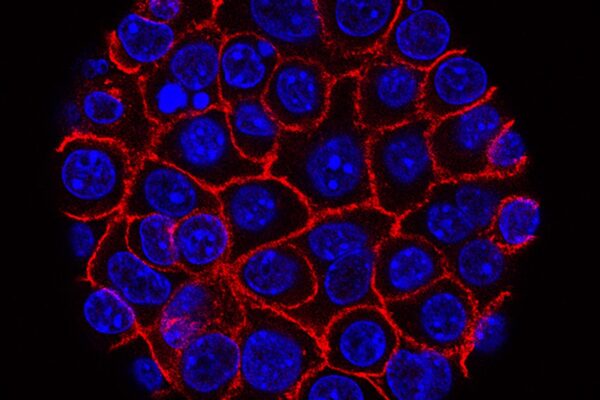
GSK has experience with cancer therapies that use antibodies as their targeting mechanism. Its newest candidate belongs to a new class of antibody-based medicines offering a dual approach to tackling tumors.
The drug comes from Hutchmed. According to deal terms announced Sept. 3, GSK is paying $110 million up front for global rights, excluding Greater China, where Hong Kong-based Hutchmed retains rights to the asset.
Hutchmed is developing a type of cancer drug called an antibody-targeted therapy conjugate, or ATTC. These drugs are similar to antibody drug conjugates (ADCs), a class of targeted cancer drugs that GSK knows well. Such drugs are made by linking a targeting antibody to a toxic drug payload. GSK has commercialized the multiple myeloma ADC Blenrep and its pipeline includes two ADCs licensed from China-based Hansoh Pharma.


Closing the Quality-Affordability Gap in Workplace Mental Health
In an interview, Kyan Health Co-Founder and Chief Commercial Officer Konstantin Struck discussed how Kyan gives mid-market and enterprise employers access to premium workforce mental healthcare, at a price point that is affordable.
An ATTC is also made by bringing together two molecules. But unlike an ADC, the antibody is more than a targeting molecule. The antibody in Hutchmed’s drug, HMPL-A830, is an inhibitor of EGFR, a protein abundant on the surface of some cancers. That component of the ATTC is linked to a small molecule KRAS inhibitor. KRAS is a protein that, when mutated, can drive many types of cancer.
Amgen and Bristol Myers Squibb each market drugs that address a particular KRAS mutation called KRAS G12c. These drugs have approvals in non-small cell lung colorectal cancers. Revolution Medicines recently received FDA approval for its KRAS inhibitor in pancreatic cancer.
All three approved KRAS inhibitors are oral small molecules that circulate systemically throughout the body, which can cause toxic effects as they hit the target protein in healthy tissue. These drugs also have problems with long term tolerability and present challenges for use in combination with chemotherapies and immunotherapies that are standard first-line treatments.
Hutchmed says its ATTC offer a more selective approach by directly delivering a KRAS inhibitor to EGFR-expressing tumors. The company believes the dual mechanism of an ATTC offers better safety and efficacy than either an antibody or a small molecule alone. This approach is intended to enhance efficacy, durability, and tolerability. In preclinical research, Hutchmed said its ATTCs worked better than either antibodies or small molecules alone.

From Blind Spots to Better Outcomes: How SNF Data Transparency Strengthens LTSS
What if health plans could identify member decline before an avoidable hospitalization occurs? Real-time clinical visibility into long-stay SNF members uncovers risk earlier and drives better outcomes.
The agreement makes Hutchmed responsible for HMPL-A830’s global Phase 1 clinical trial, which is expected to start later this year. GSK will be responsible for all subsequent clinical development as well as commercialization of the drug outside of China, if it’s approved. Initial development will focus on colorectal, pancreatic, and lung cancers. Beyond the $110 million upfront payment, Hutchmed could receive up to $1.29 billion in milestone payments plus royalties from sales of an approved drug.
“This agreement reflects GSK’s growing leadership across oncology and our commitment to advance the latest innovation for patients living with cancer,” Hesham Abdullah, GSK’s senior vice president, global head oncology, R&D, said in a prepared statement. “The dual KRAS-EGFR mechanism of HMPL-A830 has the potential to significantly improve upon current standard of care.”
Public domain image by the National Cancer Institute