
PBM Transparency Is Still Too Opaque — How Can Employers Rein In Drug Costs?
Employers are trying to comparison shop in a market where all the price tags are hidden. And most can’t simply switch PBMs to find better pricing for their members.
Employers are trying to comparison shop in a market where all the price tags are hidden. And most can’t simply switch PBMs to find better pricing for their members.

The next evolution in ADHD therapy needs to focus not only on drug efficacy but also on how treatment aligns with the ever-busy and demanding lives of patients, families, and caregivers.

Enterprise EHR boosts scalability, interoperability, and governance for large healthcare systems.

As adoption accelerates, organizations must ensure that the use of AI strengthens and not weakens accountability and patient safety.
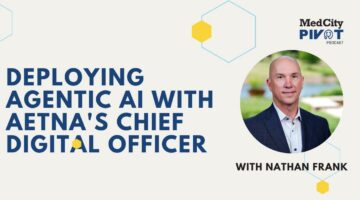
In this episode of the MedCity Pivot Podcast, CVS Health Aetna's chief digital and technology officer talks about how the insurance business is using AI, especially agentic AI, in healthcare. Point to note: AI is not used in automatic denials of coverage.

Cold chain is a logistics problem — not just a throughput problem. Pharmacies must rethink their strategy, not just automate it.
HHS is reviving a rebate program for 340B drug discounts after the previous pilot was blocked in court earlier this year. Providers say the change will burden already cash-strapped providers with new administrative and financial costs.

We have the opportunity to design systems that give people greater capacity for the work where human presence matters most: listening, understanding, reassuring, deciding, and caring.

The policy conversation needs to shift from just deprescribing alone to building the clinical infrastructure that delivers consistent, high-quality behavioral health care.

The PBM reform efforts are directional, not temporary. Meeting these expectations requires automated systems that can reconstruct claim logic on demand and provide real-time alignment between pricing, rebates and financial outputs.

For someone already managing chronic disease, menopause can disrupt stability and complicate treatment plans in ways that aren’t always immediately visible but show up over time in outcomes and utilization.
The organizations that move now — with the right foundation and the right partners — will enter the next planning cycle with a specialty pharmacy that functions as a true strategic asset.


Discover the top AI-powered EAP providers for 2026. Compare platforms like Kyan Health and Spring Health on triage speed, global reach, and clinical quality to transform workforce wellbeing.

AI performs best where a problem is well-defined, data-intensive, repetitive and operates at a scale that exceeds human tracking capacity. The supply chain hits all four.

When workers feel stuck in place, with limited opportunities to advance or deepen their skills, disengagement tends to follow. In allied health roles, where burnout is already high and many touch the patient experience, it is a risk healthcare employers cannot afford to ignore.

We aren't killing the problem that fax created. We are migrating it into a format that carries a higher expectation of automated processing — without yet having solved the underlying challenge that made automation hard in the first place.

For seniors, the change in policy will dramatically expand access to a revolutionary medication. But there are also significant risks.

How America's outdated insurance model is failing at its most important job