
Why Staff Safety is the Foundation of Clinical Excellence
When healthcare staff feel unsafe, they are more likely to feel overwhelmed and distracted, increasing their risk of error. This directly links provider safety to patient safety.
When healthcare staff feel unsafe, they are more likely to feel overwhelmed and distracted, increasing their risk of error. This directly links provider safety to patient safety.

The move toward infusion centers as the preferred site of care is not a short-term response. It aligns with broader industry trends, including specialty drug pipelines that continue to favor infused biologics and a sustained rise in infusion demand.

How can AI benefit and improve patient outcome in the emergency department? Watch the latest episode to find out.

Sustainable quality doesn’t live in binders or dashboards; it lives in the small, repeatable actions that happen every day.

Early experience and comfort with AI benefits everyone. Nurses who understand how to work alongside technology are better equipped to deliver high-quality care, adapt to new systems, and navigate increasingly complex clinical environments.

We now have technology that can address the problems faced by so many rural hospitals, improving both patient outcomes and an organization’s bottom line.

The real value of AI in post-acute care is not how quickly it can process documents, but whether it can provide foresight. That means understanding how clinical indicators, regulatory requirements, and reimbursement rules interact, and identifying risk before it turns into a denial or an audit finding.

MedCity News was at the Vive conference and spoke with executives who shared their insights for the healthcare industry.

The true foundation of capacity isn’t only laid with steel and glass; it’s also built through investment in platforms and processes, and benchmarks that prevent those beds from being needed in the first place.

Organizations can take steps now, in the early months of the program, to position themselves for success by evaluating past performance, identifying opportunities for improvement, and implementing episode-driven clinical and operational workflows.

Hospitals have an opportunity to make strategic changes now that can better position both their organizations and their patients for what’s ahead. Here’s what to expect and where to focus next.

Upended by chronic diseases and community realities, healthcare needs to shift its priorities to post-acute environments.

At the ViVE conference in LA, Smarter Technologies Chief Medical Officer Ruben Amarasingham MD talked with Katie Adams about the company's larger goals for AI: to improve the accuracy of data and make healthcare less burdensome for physicians and clinicians.

There is no question the pressures are heavy, but there is also an opportunity for organizations to rethink how they deliver care, how they support the people they serve, and how they invest limited resources.
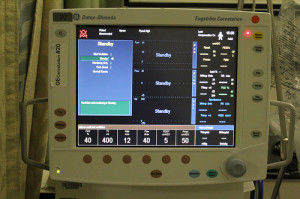
Addressing diaphragm atrophy has the potential to significantly improve outcomes while lowering the negative impact of mechanical ventilation in ICUs.
The future of hospital operations will be defined not by who has the most AI, but by who can turn AI into consistent, reliable operational outcomes.

What many organizations haven't yet connected is how security decisions ripple through their entire financial picture, from recruitment to retention to operational efficiency.
How can AI benefit and improve patient outcome in the emergency department? Watch the latest episode to find out.