
Weaving a Unified Fabric of Care Will Heal the Patient-Provider Relationship
Healthcare can transform only when strategy, workflow, data, and human connection operate together with a single purpose: strengthen the relationship at the center of care.
Healthcare can transform only when strategy, workflow, data, and human connection operate together with a single purpose: strengthen the relationship at the center of care.

A recent webinar, sponsored by Overjet, offered insights from Affinity Dental Management executives on how AI-driven clinical intelligence software can transform dental service organizations.

Artera President Tom McIntyre talks about the practical application of AI in healthcare.

I lived for nine years with ALS while navigating a healthcare system that routinely obscured my own medical reality. But I know that pain is only amplified for individuals without medical expertise like mine.

A quick conversation about coverage, availability and pricing can help patients make informed decisions.

Here are three things providers should consider when it comes to Medicare.

It doesn’t have to be this way. For the medical groups that lay the right foundation for patient collections, January is simply business as usual. Here are four ways to get ahead of the inevitable deductible reset.

MedCity News was at the Vive conference and spoke with executives who shared their insights for the healthcare industry.

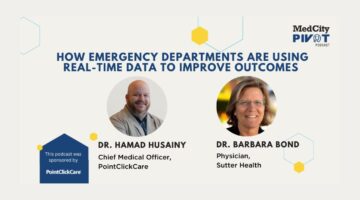
How can AI benefit and improve patient outcome in the emergency department? Watch the latest episode to find out.

Open enrollment 2026 marks a turning point in U.S. healthcare. The cost pressures are no longer cyclical; they are structural. For payers and providers alike, the challenge is clear: we must modernize operations, not just manage costs.

The MedTech giants remain indispensable in driving large-scale adoption and validating the market, but the smaller players are increasingly showing us what the future of robotics care can look like.

Too often, providers handle all military claims the same way — sending them to the VA and hoping for the best. But there are multiple payer types, and they function very differently.


Zelis highlights how employers, payers, and consumers are integrating digital tools to manage healthcare costs.


Turn complex healthcare data into clear, context-rich insights that drive faster, smarter decisions.

Picture each patient with a computational model of their health where each treatable parameter (like weight, blood pressure, heart rate, exercise, inflammation, and blood chemistry) serves both as a marker for diagnosis and as an opportunity for treatment.

A family vacation with 25 relatives was interrupted by a trip to an ER in Rome.

The real issue isn’t one payer, one policy or one bad actor. It’s a deeply fragmented system built on competing incentives, misaligned responsibilities and layers of administrative friction.

Too often, the very systems meant to provide flexibility and control are undermined by delayed reimbursements, fragmented data, and a lack of transparency across the ecosystem. Solving this isn’t about tweaking the status quo, it requires a full redesign.