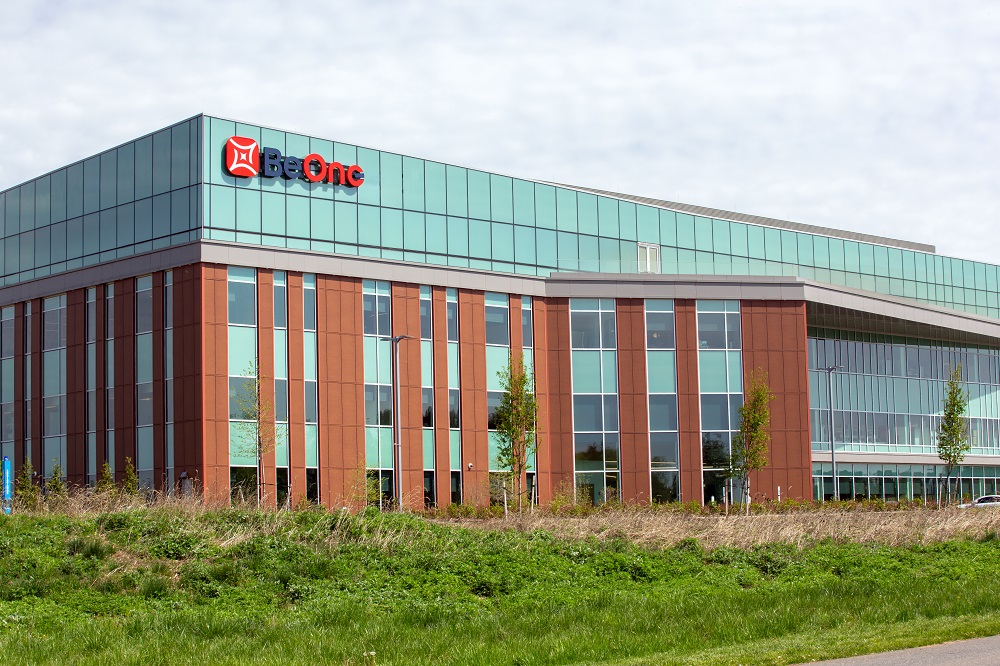
Several drugs are available for mantle cell lymphoma, but relapse is common in this rare blood cancer. When that happens, the disease typically does not respond to the therapy the patient received previously, leaving a need for alternatives. A drug developed by BeOne Medicines is now the first in its class approved to treat this cancer, giving patients a new late-line therapeutic option.
The regulatory decision for the drug, sonrotoclax, covers the treatment of relapsed or refractory mantle cell lymphoma (MCL) in adults who have received at least two prior lines of systemic therapy. Basel, Switzerland-based BeOne will market this new daily pill under the brand name Beqalzi. The Wednesday regulatory decision for Beqalzi gives BeOne another product to compete against a blockbuster blood cancer medication from AbbVie and Roche subsidiary Genentech.
MCL is a cancer that starts in lymphocytes, a type of white blood cell. Chemotherapy is a standard first-line treatment. The next treatment options include Rituxan, an antibody drug from Roche. Rituxan is often used in combination with chemo or other MCL drugs. Other MCL treatment options are Gilead Sciences CAR T therapy Tecartus and BTK inhibitors, a class of medicines that includes AstraZeneca’s Calquence and BeOne’s Brukinsa.


Top 7 Modern AI-Powered EAP Providers for Global Workforces in 2026
Discover the top AI-powered EAP providers for 2026. Compare platforms like Kyan Health and Spring Health on triage speed, global reach, and clinical quality to transform workforce wellbeing.
Brukinsa is BeOne’s flagship product, following its 2019 regulatory nod in MCL with additional approvals in other types of blood cancers. This drug generated $3.9 billion in global revenue in 2025, a 48.6% increase compared to the prior year. But despite Brukinsa’s contributions to the treatment of MCL, there’s a still a need for new therapies for patients who have already received a BTK inhibitor.
Beqalzi is an oral small molecule designed to inhibit B-cell lymphoma 2 (BCL-2), a protein that is overexpressed in some cancers. BCL-2 mediates cell survival and has been associated with resistance to chemotherapy. BeOne’s regulatory submission for Beqalzi was based on a single-arm Phase 1/2 study that enrolled 103 adult MCL patients who previously received Rituxan and a BTK inhibitor. Results showed a 52% overall response rate. The median time to a response was 1.9 months; the median duration of response was 15.8 months. Preliminary results were presented last year during the annual meeting of the American Society of Hematology.
The most common adverse reactions reported in the study were pneumonia and fatigue. In BeOne’s approval announcement, Dr. Michael Wang, global principal investigator in Beqalzi’s study and a professor in the department of lymphoma and myeloma at The University of Texas MD Anderson Cancer Center, said the clinical data confirm the drug’s role as a “foundational therapy for mantle cell lymphoma in the post-BTK inhibitor setting.”
“From a clinical perspective, this provides physicians with an important new option grounded in both efficacy and tolerability, fundamentally changing how we think about sequencing therapy in this disease,” Wang said.


From Blind Spots to Better Outcomes: How SNF Data Transparency Strengthens LTSS
What if health plans could identify member decline before an avoidable hospitalization occurs? Real-time clinical visibility into long-stay SNF members uncovers risk earlier and drives better outcomes.
A BCL-2 inhibitor has been commercially available for a decade, though not for MCL. AbbVie and Roche drug venetoclax, brand name Venclexta, was the first BCL-2 inhibitor to pass FDA muster, first for chronic lymphocytic leukemia (CLL) and then for acute myeloid leukemia (AML). Though this daily pill is not approved for MCL, it has been used as an off-label treatment for this cancer. For 2025, AbbVie reported nearly $2.8 billion in Venclexta revenue, an 8% increase compared to the prior year.
BeOne describes Beqalzi as a next-generation BCL-2 inhibitor that’s designed to offer more selective and potent inhibition of its target. It’s also designed with a short half-life — four to six hours versus about 26 hours for Venclexta. The short half-life means the drug does not accumulate in the body, but rather clears it quickly. That property is intended to improve the medicine’s safety profile.
Dosing of BLC-2 inhibitors starts with a ramp-up schedule, which is intended to avoid tumor-lysis syndrome, a complication in which the rapid death of cancer cells floods the blood with toxic substances faster than the kidneys can filter them out. This syndrome can lead to kidney failure and cardiac arrest. Beqalzi’s ramp-up schedule slowly increases the dose over four weeks. Venclexta’s ramp-up schedule uses higher doses and extends over five weeks.
Beqalzi has the potential to treat other blood cancers, and an ongoing clinical program could offer a clearer picture of how the BeOne drug matches up against Venclexta. Three studies are underway, one evaluating Beqalzi as a monotherapy and two testing it as part of combination treatments for CLL. The two combination studies are comparing Beqalzi and Brukinsa against Venclexta paired with other drugs used to treat blood cancers.
Leerink Partners models Beqalzi will reach about $100 million in sales in the MCL indication by 2030. In a Friday research note, analyst Andrew Berens said that while Beqalzi is initially approved as a monotherapy for MCL, it has more riding on the combination studies, particularly the tests of the drug in combination with Brukinsa as a first-line CLL treatment. Berens also highlighted Beqalzi’s greater potency and selectivity as well as its shorter half-life.
“These features could facilitate a simpler ramp-up, which could have positive commercial implications,” he said.
The FDA decision for Beqalzi is an accelerated approval. A Phase 3 clinical trial underway could serve as the confirmatory study for the drug.
[Story updated with analyst comments.]
Photo by BeOne Medicines