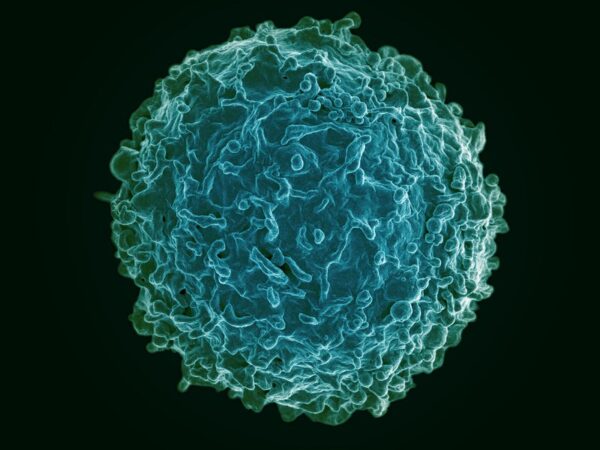
One of the hottest areas of immunology involves immune reset, therapies that give the immune system the opportunity for a fresh start. This field has taken off in recent years with a flurry of research and dealmaking. Startup Boulevard Bio is joining in, emerging from stealth Wednesday with three drugs in its pipeline and Georg Schett, one of the pioneers of immune reset, as a co-founder.
Boulevard’s sole financial backer to date is Deerfield Management, which formed the company. The New York-based startup developed within Deerfield Discovery Development Corporation, or 3DC, a biotech discovery and development arm of the investment firm.
Schett rose to prominence about five years ago after reporting clinical results showing CAR T-cell therapy for cancer led to complete remission, first in lupus, and then in other inflammatory disorders. The German physician and scientist has known Frank Nestle, a Deerfield partner and 3DC’s CEO, for years, dating back to Nestle’s time in academia in the United Kingdom, said Boulevard CEO Mahesh Karande. They had been looking for an opportunity to work together.


The Power of Real World Data to Study Women’s Health at Scale
Veradigm examines key clinical trends, comorbidity profiles, and treatment trends across adolescence, reproductive years, and peri-/post-menopause. Download it today!
“Boulevard is a special company because if you think about the products that we have — they’re either best in class or first in class — there’s deep understanding of B cell biology, and that comes from this collaboration,” Karande said.
Schett did not bring any molecules or technologies to Boulevard. What he does bring is his immunology knowledge and experience, which Boulevard tapped into to develop its pipeline, Karande said. While one of those therapeutic candidates offers the opportunity for immune reset, its most advanced program is in development for a rare and chronic autoimmune disorder that affects the kidneys.
BLVD101 is an internally discovered bispecific antibody designed to inhibit BAFF and APRIL, proteins that promote the proliferation and maturation of B cells that can drive autoimmune disorders. Blocking both targets with a single drug has clinical and regulatory validation from Trutakna, a Vera Therapeutics drug that last month won FDA approval for treating immunoglobulin A nephropathy (IgAN). Trutakna is the first approved drug that hits both BAFF and APRIL, though Otsuka’s APRIL-blocking antibody drug, Voyxact, is approved in this indication. Competition could be coming soon from Vertex Pharmaceuticals, whose BAFF/APRIL-blocking drug povetacicept is expected to receive an FDA decision in November.
The Vera and Vertex drugs are both fusion proteins, and Karande said that’s a key difference compared to BLVD101, which Boulevard is developing for IgAN. As a bispecific antibody, BLVD101 can offer independent coverage of both BAFF and APRIL, whereas a fusion protein is competing for coverage of the two targets.
Karande said more details are forthcoming about the Boulevard drug, but the company is now reporting that preliminary Phase 1 results in healthy volunteers support dosing of the injectable therapy every three months. That would be an advantage over weekly injections of Vera’s medicine and monthly injections of Vertex’s drug candidate. Karande said dosing interval is a particularly important consideration for young IgAN patients, who may need to receive a therapy for the rest of their lives in order to avoid progressing to end-stage renal failure.

From Blind Spots to Better Outcomes: How SNF Data Transparency Strengthens LTSS
What if health plans could identify member decline before an avoidable hospitalization occurs? Real-time clinical visibility into long-stay SNF members uncovers risk earlier and drives better outcomes.
“The fact of the matter is, if you think about injection volume, 12 injections a year for so many years, versus 52 injections a year for so many years, versus four injections a year for so many years — that tells you the value proposition of this,” Karande said.
The immune reset opportunity comes from BLVD201, a drug licensed in June from China-based Metis TechBio for $20 million up front. This drug is a T cell engager designed to hit three targets: CD19, BCMA, and CD3. Therapies being developed for immune reset are intended to deplete the body of disease-driving immune cells. Reset would be achieved if the immune cells that repopulate the immune system do not attack healthy tissue.
The third Boulevard program, BLVD301, was internally discovered. The startup isn’t disclosing much about this therapy yet, other than to say it addresses a novel target combination in B cell-driven autoimmune disease and that this approach is supported by established genetic evidence.
With Boulevard now out of stealth, Karande, who joined Boulevard about a year ago after serving as the CEO of programmable messenger RNA therapies developer Omega Therapeutics, said the startup would be looking to raise additional funding. Boulevard is financially backed by $65 million from Deerfield Management. That capital is supporting clinical development of the lead program for IgAN. The startup also aims to bring the T cell engager into the preclinical research that could support an investigational new drug application and continue development of the third program. Karande noted that all of Boulevard’s therapeutic candidate offer the potential to address a wide range of autoimmune disorders.
“These five million patients in the U.S. who suffer from autoimmune diseases, if we can make their lives better, that’s what this company is all about,” he said.